
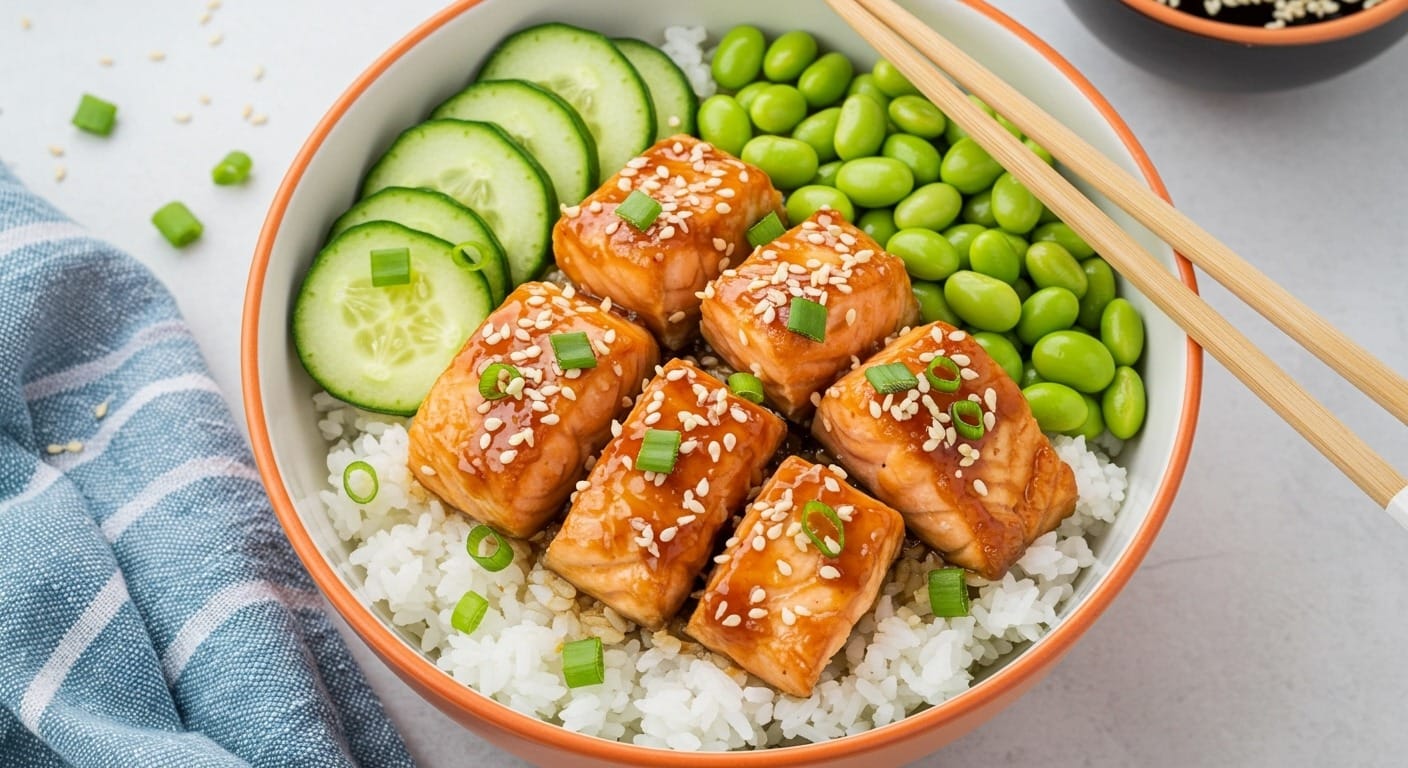
My weeknight dinner routine changed completely after I discovered how fast salmon could turn into something that tastes like takeout. There’s really nothing quite like breaking into that sticky, caramelized glaze and watching it coat perfectly cooked fish. The best part? You probably have most of these ingredients sitting in your pantry right now.
These sticky salmon rice bowls hit every note – sweet from honey, salty from soy sauce, and rich from the fish itself. The whole thing comes together in about 20 minutes, which means you can have dinner on the table faster than ordering delivery. Whether you’re trying to eat more healthy meals or just need a reliable weeknight dinner that doesn’t feel boring, this salmon bowl recipe delivers every single time.
The sticky glaze salmon technique here creates this beautiful caramelized coating that clings to each piece. And unlike some fish recipes that require precise timing or fancy equipment, this one is genuinely foolproof.
Tired of Deciding What to Cook Every Night?
I’ve put together a simple 7-day dinner meal plan using my most-loved recipes — complete with a grocery list and flexible swaps.
Just $2.99 – Instant Download
Get the Meal PlanWhy This Salmon Bowl Recipe Works
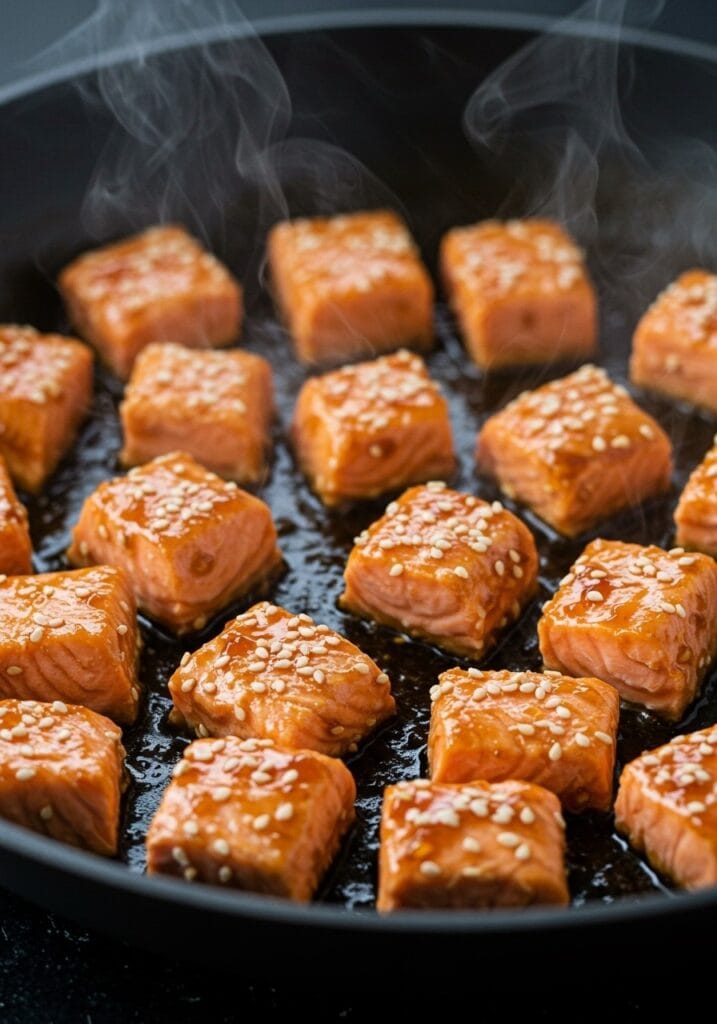
The magic happens in that glaze. When honey meets soy sauce and a touch of rice vinegar, it creates this thick, glossy coating that transforms ordinary salmon into something crave-worthy. I’ve made this recipe on autopilot during chaotic evenings when my brain was barely functioning, and it still turned out great.
What makes these sticky salmon rice bowls different from other quick and easy meals? The cooking method. Instead of baking the salmon separately, you pan-sear it and let the glaze reduce right in the same pan. This means the fish gets those crispy edges while soaking up all that flavor. The result tastes way more complex than the effort suggests.
The healthy rice dinner concept here isn’t about cutting corners on taste. You’re getting omega-3s from the salmon, fiber from the rice, and whatever fresh vegetables you decide to pile on top. It feels virtuous without tasting like rabbit food. Similar to how baked honey garlic salmon brings out natural sweetness in fish, this recipe uses honey to balance the salty elements perfectly.
Ingredients You’ll Need
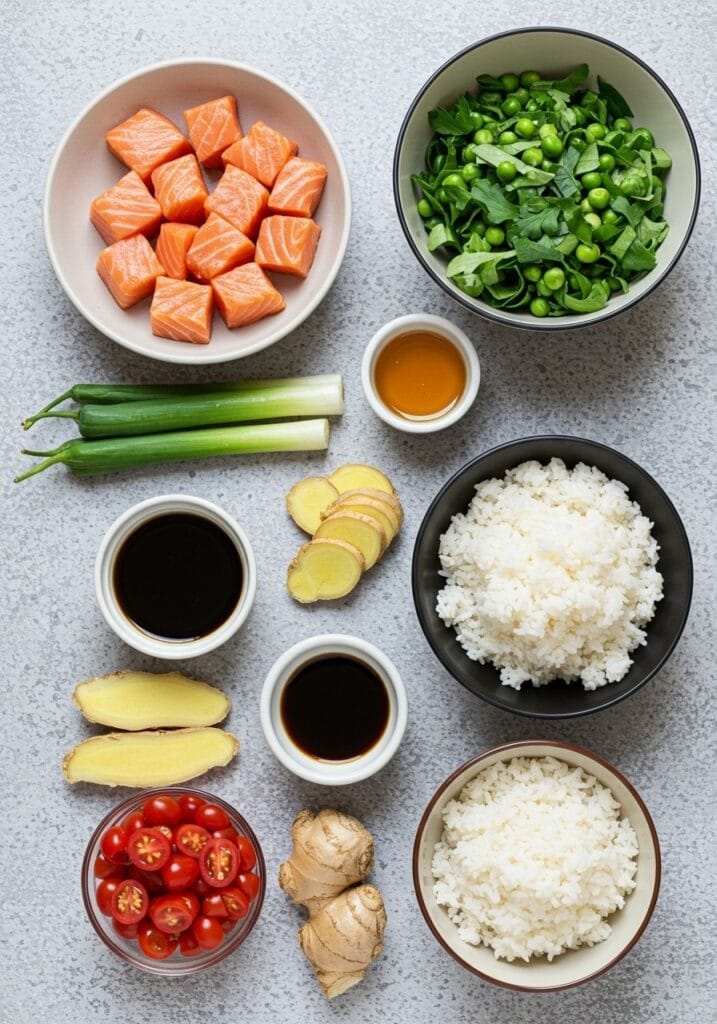
For the Salmon and Glaze
- 450g salmon fillet (skin removed, cut into 2.5cm cubes)
- 3 tablespoons soy sauce (or tamari for gluten-free)
- 2 tablespoons honey
- 1 tablespoon rice vinegar
- 1 teaspoon sesame oil
- 2 cloves garlic (minced)
- 1/2 teaspoon fresh ginger (grated)
- 1 tablespoon cornstarch
- 2 tablespoons water
- 1 tablespoon neutral cooking oil (vegetable or avocado)
- 1 teaspoon sesame seeds
For the Rice and Toppings
- 300g cooked white or brown rice (about 2 cups)
- 1 medium cucumber (thinly sliced)
- 100g edamame (shelled, cooked)
- 2 green onions (sliced)
- 1 medium avocado (sliced, optional)
- 1/4 cup pickled ginger (optional)
- Extra sesame seeds for garnish
- Sriracha or chili oil (optional, for heat)
Ingredient Notes: Can’t find fresh ginger? Use 1/4 teaspoon ground ginger instead. If you don’t have rice vinegar, apple cider vinegar works in a pinch. For a lower-carb version similar to keto salmon avocado bowls, swap the rice for cauliflower rice.
Step-by-Step Instructions
Prep the Glaze
- Combine soy sauce, honey, rice vinegar, sesame oil, minced garlic, and grated ginger in a small bowl.
- Whisk everything together until the honey dissolves completely.
- Mix cornstarch with 2 tablespoons of water in a separate tiny bowl to create a slurry.
- Set both aside while you prep the salmon.
Cook the Salmon
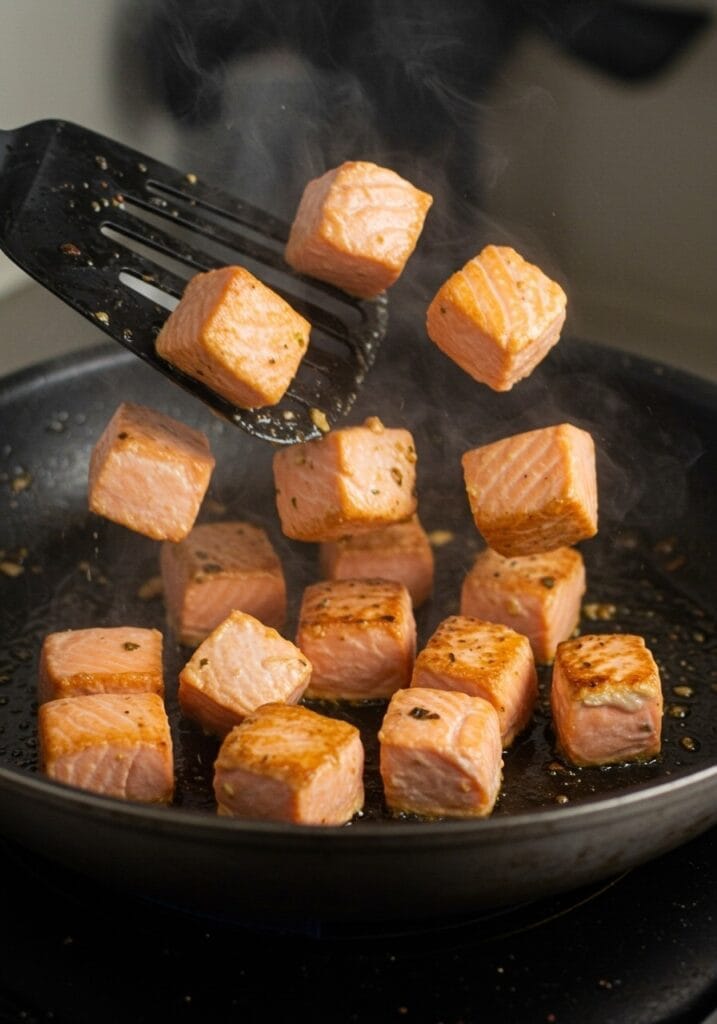
- Pat salmon cubes completely dry with paper towels (this helps them sear properly).
- Heat cooking oil in a large non-stick skillet over medium-high heat for about 1 minute.
- Add salmon cubes in a single layer, making sure they’re not crowded.
- Let them cook undisturbed for 2-3 minutes until the bottom turns golden brown.
- Flip each piece carefully and cook another 2 minutes on the second side.
Create the Sticky Glaze
- Reduce heat to medium and pour the prepared sauce mixture over the salmon.
- Let it bubble for about 30 seconds, then add the cornstarch slurry.
- Stir gently to coat all the salmon pieces as the sauce thickens.
- Cook for another 1-2 minutes, stirring occasionally, until the glaze becomes thick and glossy.
- The sauce should cling to the salmon rather than pooling at the bottom.
- Remove from heat and sprinkle with sesame seeds.
Assemble Your Bowls
- Divide cooked rice evenly between two or three bowls.
- Place a generous portion of sticky glaze salmon on one side of each bowl.
- Arrange cucumber slices, edamame, and avocado slices around the salmon.
- Scatter green onions and extra sesame seeds over everything.
- Add a small mound of pickled ginger if you’re using it.
- Drizzle with sriracha or chili oil if you want some heat.
Recipe Tips and Variations
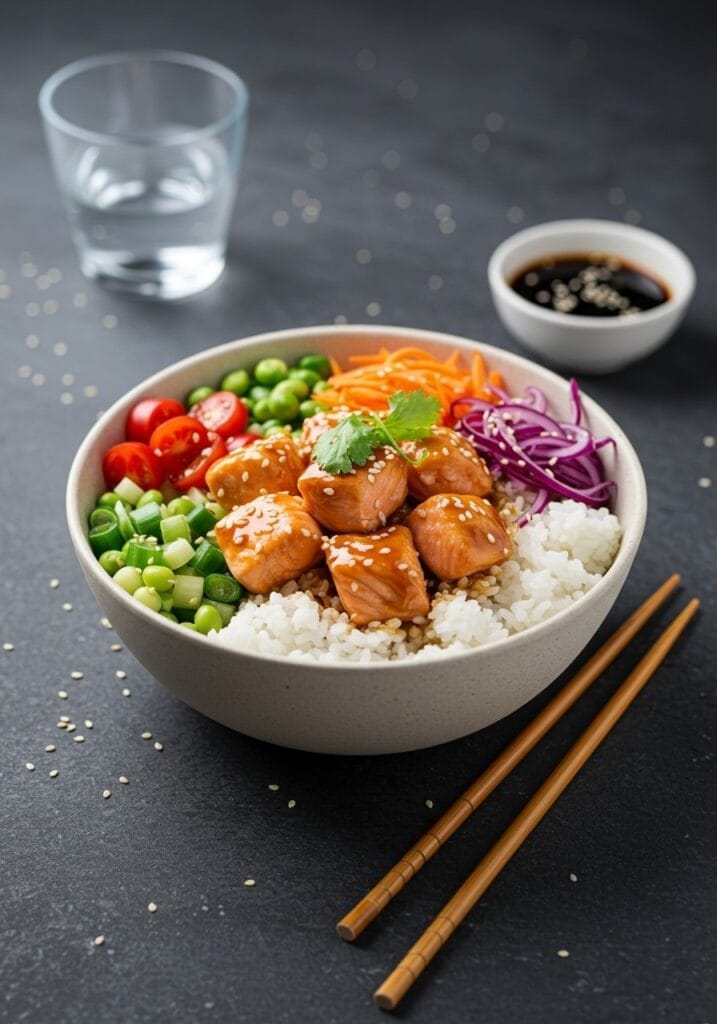
The key to getting that restaurant-quality sticky glaze is not rushing the reduction. When you add the sauce to the pan, give it a minute to bubble and thicken before stirring too much. If your sauce seems thin, let it cook a bit longer – it’ll thicken as it cools anyway.
For the salmon itself, cutting even-sized cubes matters more than you’d think. Uneven pieces means some will overcook while others stay underdone. I aim for roughly 2.5cm cubes, but anywhere between 2-3cm works fine. Just try to keep them consistent.
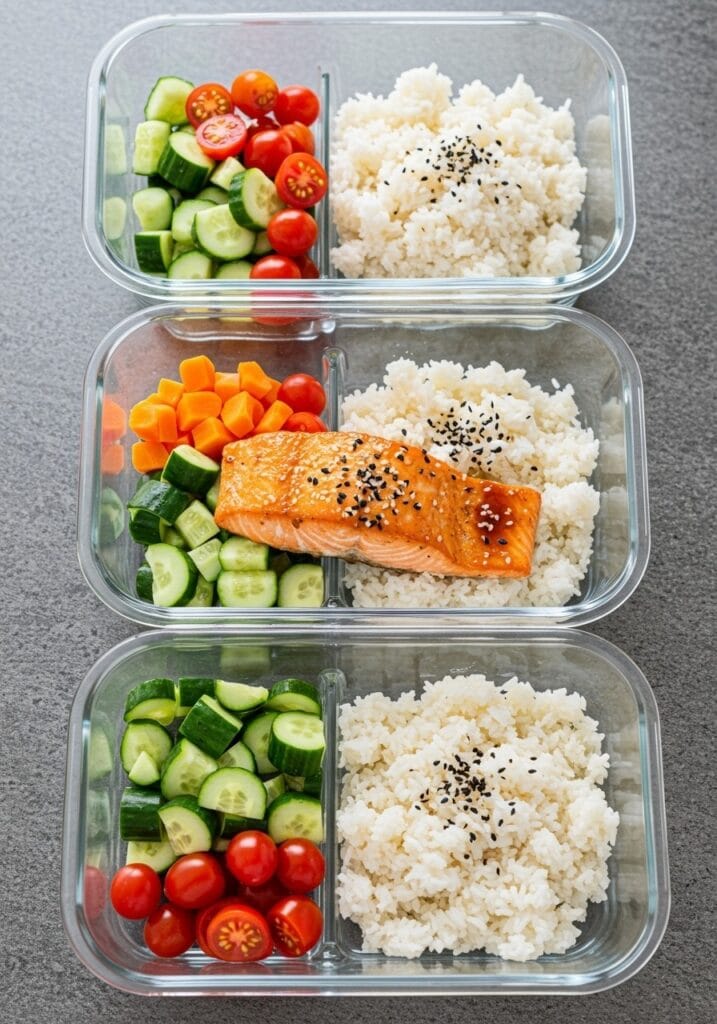
Want to meal prep these bowls? Cook the salmon and rice separately, then store them in different containers for up to 3 days. The glaze will solidify in the fridge but melts beautifully when you reheat the salmon. Just add 30 seconds in the microwave or a quick pan reheat. Keep the fresh toppings separate until you’re ready to eat.
If you’re into trying different teriyaki chicken rice bowls, you can actually use this same glaze technique with cubed chicken thighs. The cooking time stays almost identical. You could also try this method with firm tofu for a vegetarian version – just press the tofu really well first.
Some nights I add a soft-boiled egg on top because why not. The runny yolk mixes with the sticky glaze and creates this incredible sauce situation. Other times I’ll throw in some quick-pickled carrots or radishes for extra crunch. The base recipe is solid enough that you can riff on the toppings based on whatever’s in your fridge.
Pro Tip: Make double the glaze. Seriously. You’ll want to drizzle extra over the rice, and having leftovers means you can make these bowls again in two days with zero prep work.
Serving Suggestions
These sticky salmon rice bowls work great as a standalone meal – they’re filling enough on their own. But if you’re feeding a crowd or want to make it feel more like a spread, pair them with a simple side like Mediterranean chickpea salad or some miso soup.
The beauty of bowl meals is how customizable they are. Some people love adding crispy wonton strips for texture. Others prefer mixing in some spicy mayo or a drizzle of regular mayo mixed with sriracha. I’ve seen people add shredded cabbage, roasted broccoli, or even mango chunks. There’s really no wrong answer here.
If you’re making these for meal prep throughout the week, consider prepping several different topping combinations. Monday could be classic with cucumber and edamame. Wednesday might have roasted sweet potato and spinach. Friday could feature avocado and spicy mayo. Same base recipe, completely different experience.
Nutritional Information (Per Serving)
- Serving Size: 1 bowl (with salmon, rice, and basic toppings)
- Calories: 485
- Protein: 32g
- Carbohydrates: 52g
- Fat: 14g
- Fiber: 4g
- Sodium: 890mg
- Prep Time: 10 minutes
- Cook Time: 10 minutes
- Total Time: 20 minutes
- Difficulty Level: Easy
- Servings: 2-3 bowls
- Equipment Needed: Large non-stick skillet, mixing bowls, whisk
Note: Nutritional values are approximate and vary based on specific ingredients and portion sizes used.
Why These Bowls Beat Takeout
I used to order salmon bowls from our local poke place at least twice a week. Then I realized I was spending close to $15 per bowl for something I could make at home in the same time it took to drive there and back. These homemade sticky salmon rice bowls cost maybe $6-7 per serving, and honestly? They taste better.
The difference is freshness. Restaurant bowls often use pre-cooked, chilled salmon that gets reheated. When you make this at home, you’re eating salmon that went from pan to bowl in minutes. That makes a huge difference in texture and flavor. Plus you control the glaze intensity – want it sweeter? Add more honey. Prefer it saltier? Extra soy sauce.
This recipe also fits perfectly into that category of meals that feel special enough for guests but easy enough for a random Tuesday. Similar to how sheet pan salmon and veggies simplifies fish dinners, this bowl method removes any intimidation factor from cooking salmon.
The sticky glaze technique here is something you’ll use again and again. Once you nail this ratio of soy sauce to honey to vinegar, you can apply it to other proteins. I’ve used this exact glaze on pork chops, shrimp, and even roasted Brussels sprouts. It’s one of those foundational recipes that opens doors to dozens of other meals.
Common Questions
Can I use frozen salmon? Absolutely. Just thaw it completely first and pat it super dry before cutting and cooking. Frozen salmon tends to release more moisture, so taking extra time to dry it prevents steaming instead of searing.
What if I don’t eat fish? Try this glaze with chicken thighs cut into cubes, or even extra-firm tofu. The cooking method stays the same – you just might need an extra minute or two for chicken to cook through completely.
How do I know when the salmon is done? It should flake easily with a fork and look opaque in the center. Since you’re using cubes, they cook fast – usually 4-5 minutes total. Better to slightly undercook than overcook salmon.
Can I make this spicier? For sure. Add red pepper flakes to the glaze while it’s cooking, or stir in a teaspoon of gochujang or sambal oelek. You can also just top your finished bowl with hot sauce.
Make It Your Own
Once you’ve made these sticky salmon rice bowls a couple times, start experimenting. Maybe you want to try it with quinoa instead of rice for more protein. Or perhaps brown rice for extra fiber. Some nights I use leftover rice from other meals, which actually works even better since day-old rice has less moisture.
The vegetable toppings are completely flexible based on season and preference. In summer, I load these bowls with fresh corn, cherry tomatoes, and lots of herbs like cilantro or mint. Winter versions might include roasted butternut squash, massaged kale, or pickled vegetables. The sticky glaze salmon is the star, but the supporting cast can change with your mood.
For anyone following a specific eating plan, this recipe adapts easily. Keep it low-carb by using cauliflower rice. Make it Whole30-compliant by swapping honey for date paste and using coconut aminos instead of soy sauce. Add more vegetables and less rice if you’re watching carbs. The flexibility is what makes this such a reliable dinner option.
Final Thoughts
These sticky salmon rice bowls have become my answer to “what’s for dinner?” more times than I can count. They’re fast enough for hectic evenings but impressive enough when unexpected company shows up. The sweet-savory balance hits that takeout craving without the guilt or expense. And unlike complicated recipes that require a perfectly stocked pantry, this one works with basics you probably already have.
The best part might be how this recipe builds confidence with cooking fish. Salmon can feel intimidating, but when you break it into cubes and cook it in a flavorful glaze, there’s much less pressure. You’re not trying to nail a perfect whole fillet – just coating some pieces in delicious sauce until they’re done.
Next time you’re craving something satisfying but don’t want to spend an hour in the kitchen, give these bowls a try. Start with the basic version, then make it your own. Add your favorite vegetables, adjust the sauce to your taste, or throw in whatever protein you prefer. That’s the beauty of bowl meals – they’re a framework, not a rigid recipe. Just make sure you have plenty of napkins handy for that sticky glaze.
If you loved this easy salmon dinner, you might also enjoy browsing through more quick and easy meals on our site for other weeknight winners.
Still wondering what to cook tomorrow? Take the stress out of dinner with my simple 7-day meal plan.
Get the 7-Day Meal Plan for $2.99