
My mom used to joke that pad Thai was her “gateway” to Thai food. She’d order it every single time we went out, even when the waiter suggested other dishes. Now I get it. There’s something about that sweet-salty-tangy combo that just works. But after years of heavy rice noodles leaving me sluggish, I started wondering – could I get that same flavor hit without the carb crash?
That’s when spaghetti squash entered the picture. At first, I was skeptical. Would it really hold up to the bold sauce? Would it feel like I was missing out? Turns out, this veggie does something brilliant. It soaks up every bit of that tamarind-lime dressing while keeping things light and fresh. You get all the satisfaction of healthy meal favorites without feeling weighed down afterward.
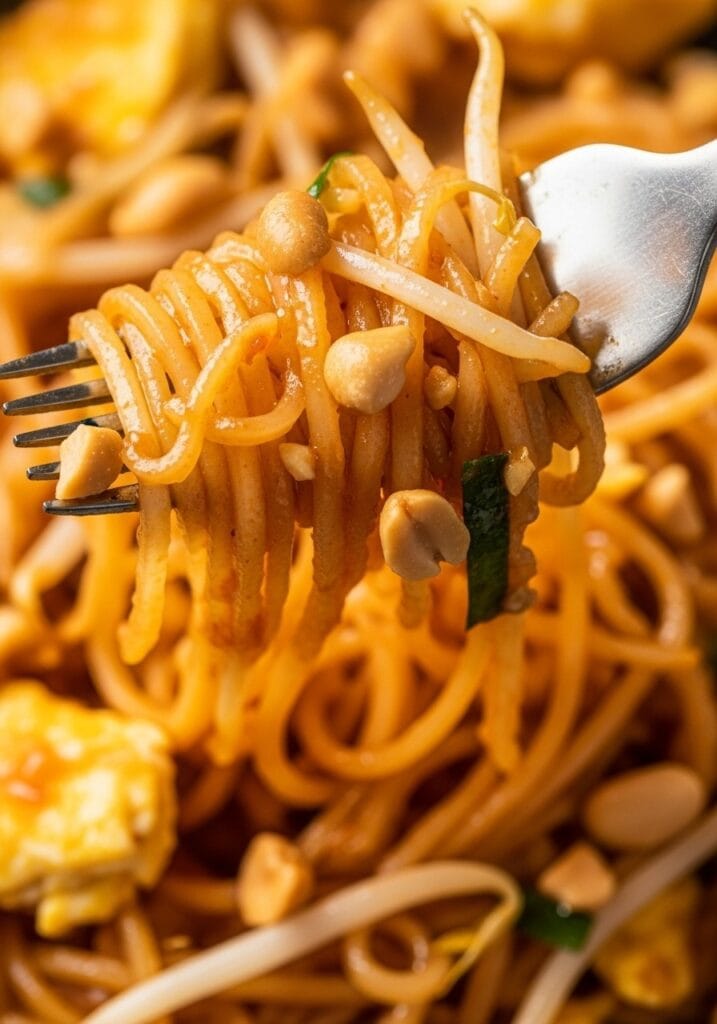
This recipe takes about 35 minutes start to finish, most of which is hands-off roasting time. The skill level? Beginner-friendly. The taste? Tangy, slightly sweet, with a hint of heat and that nutty crunch from peanuts. If you’re looking for a low carb meal that doesn’t taste like you’re sacrificing anything, this is it.
Tired of Deciding What to Cook Every Night?
I’ve put together a simple 7-day dinner meal plan using my most-loved recipes — complete with a grocery list and flexible swaps.
Just $2.99 – Instant Download
Get the Meal PlanWhy This Spaghetti Squash Recipe Works
I’ve made pad Thai a hundred different ways. With zoodles (too watery), shirataki noodles (weird texture), and even shredded cabbage (not bad, actually). But spaghetti squash? It’s in a league of its own.
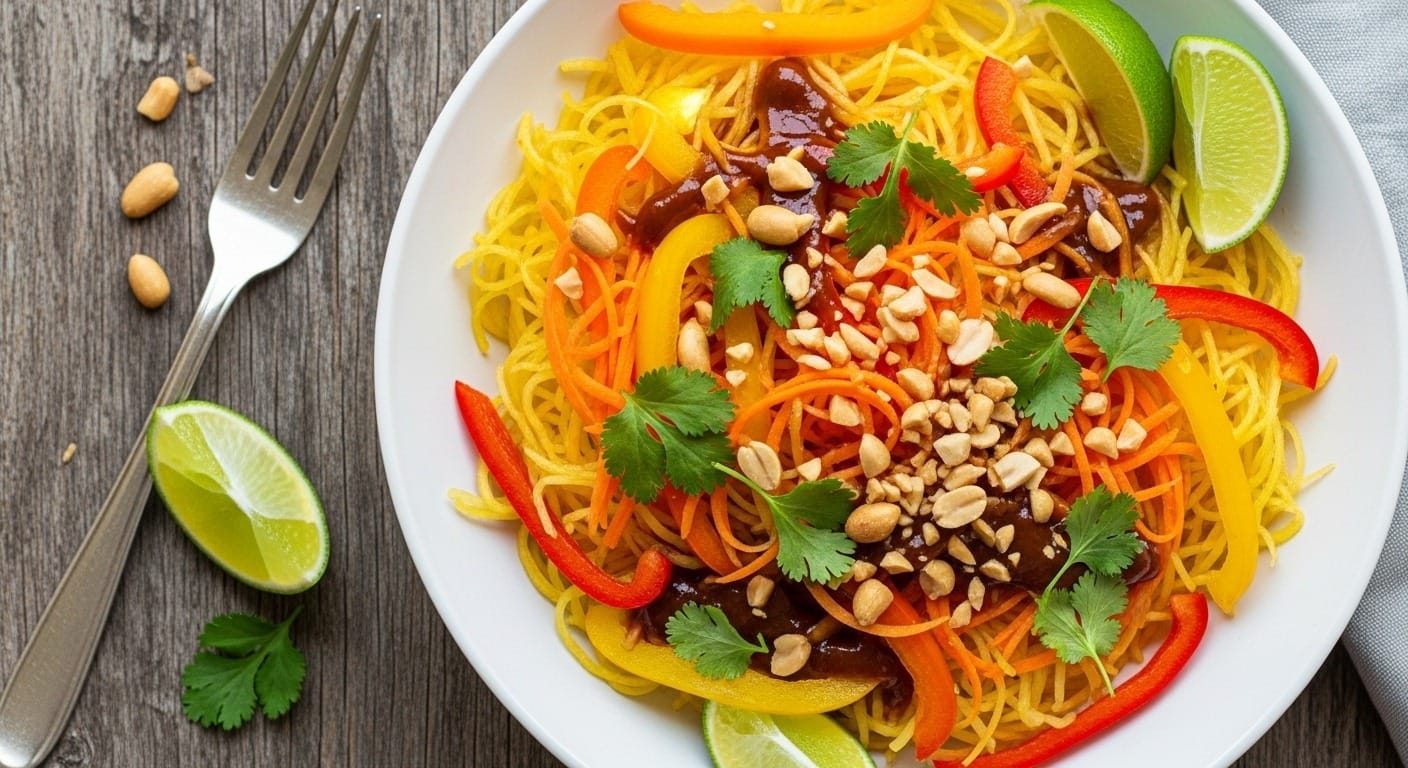
The strands are sturdy enough to handle stir-frying without turning to mush. They’re naturally mild, so they don’t compete with the sauce. And honestly, they look the part. When you twirl them on your fork, you’d almost swear you were eating traditional noodles.
Another thing I love is how forgiving this dish is. Forgot to buy tamarind paste? A splash of lime juice and a bit of brown sugar can fill in. No fish sauce? Soy sauce works in a pinch. It’s the kind of recipe that adapts to what you have on hand, which makes it perfect for weeknight dinners when you don’t want to run to three different stores.
Plus, this version packs in veggies without trying too hard. Bell peppers, carrots, and bean sprouts add color and crunch. You’re basically sneaking in half your daily veggie intake while thinking you’re just eating takeout-style comfort food.
Ingredients You’ll Need
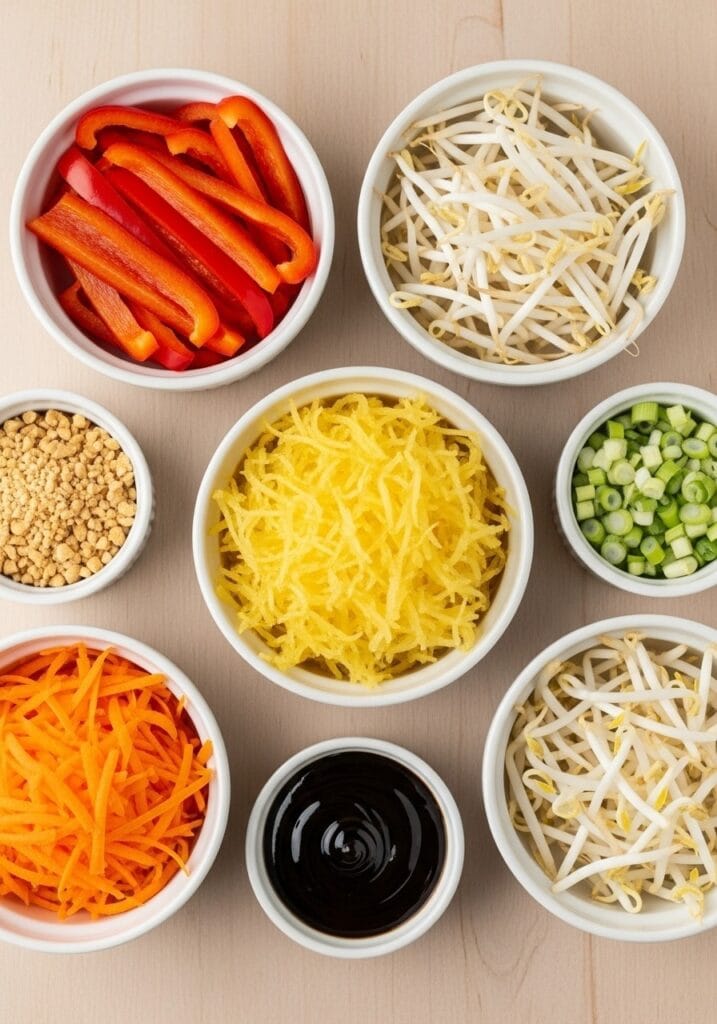
For the Spaghetti Squash Base
- 1 medium spaghetti squash (about 1.2 kg)
- 1 tbsp olive oil
- 1/4 tsp salt
- 1/4 tsp black pepper
For the Pad Thai Sauce
- 3 tbsp tamarind paste
- 2 tbsp fish sauce (or soy sauce for vegetarian)
- 2 tbsp brown sugar
- 1 tbsp rice vinegar
- 1 tsp sriracha (adjust to taste)
- 1 tbsp water
For the Stir-Fry
- 2 tbsp vegetable oil (divided)
- 2 large eggs, lightly beaten
- 3 cloves garlic, minced
- 1 red bell pepper, thinly sliced
- 1 cup shredded carrots (about 120 g)
- 1 cup bean sprouts (about 100 g)
- 3 green onions, chopped
- 1/3 cup roasted peanuts, roughly chopped (about 50 g)
- Fresh cilantro leaves for garnish
- Lime wedges for serving
Substitutes: No tamarind paste? Use 2 tbsp lime juice + 1 tbsp extra brown sugar. Can’t find bean sprouts? Shredded cabbage adds a similar crunch. For a nut-free version, try sunflower seeds instead of peanuts.
How to Make Spaghetti Squash Pad Thai
Step 1: Roast the Spaghetti Squash
Preheat your oven to 200°C (400°F). Cut the spaghetti squash in half lengthwise and scoop out the seeds with a spoon. Drizzle the inside of each half with olive oil, then sprinkle with salt and pepper. Place cut-side down on a baking sheet lined with parchment paper. Roast for 30-35 minutes until the flesh is tender and easily pierced with a fork. The edges should look slightly caramelized.
Step 2: Prepare the Sauce
While the squash roasts, whisk together tamarind paste, fish sauce, brown sugar, rice vinegar, sriracha, and water in a small bowl. Taste and adjust – if you like it sweeter, add a bit more sugar. Want more heat? Extra sriracha does the trick. Set aside.
Step 3: Shred the Squash
Once the squash is cool enough to handle (about 5 minutes), use a fork to scrape the flesh into spaghetti-like strands. Start from the outer edges and work your way in. You should get about 3-4 cups of strands. Don’t worry if some pieces are longer than others – it adds to the texture.
Step 4: Scramble the Eggs
Heat 1 tbsp vegetable oil in a large skillet or wok over medium-high heat. Pour in the beaten eggs and let them sit for about 20 seconds until they start to set. Scramble gently with a spatula, breaking them into small pieces. Cook for 1-2 minutes until just set. Transfer to a plate.
Step 5: Stir-Fry the Vegetables
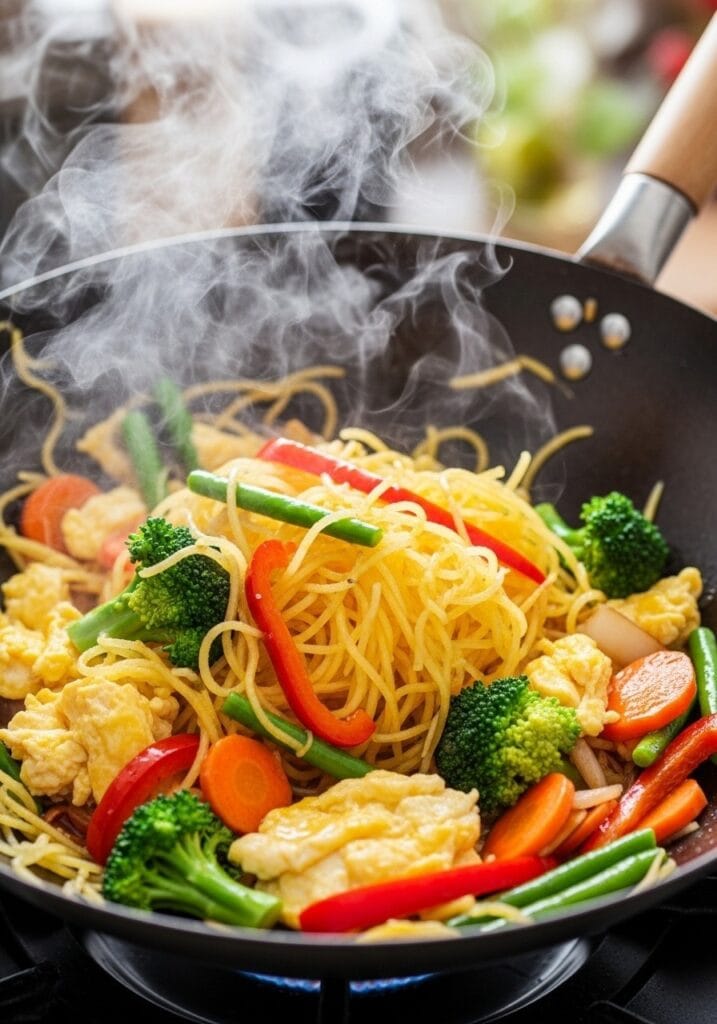
Add the remaining 1 tbsp oil to the same skillet. Toss in minced garlic and cook for 30 seconds until fragrant. Add bell pepper and carrots, stirring constantly for 2-3 minutes until they start to soften but still have a bit of crunch. This is key – you don’t want mushy veggies.
Step 6: Combine Everything
Add the spaghetti squash strands to the skillet and pour the sauce over everything. Toss well to coat, cooking for 2-3 minutes until the squash is heated through and the sauce clings to the strands. Fold in the scrambled eggs, bean sprouts, and half the green onions. Cook for another minute until the bean sprouts are just wilted.
Step 7: Serve and Garnish
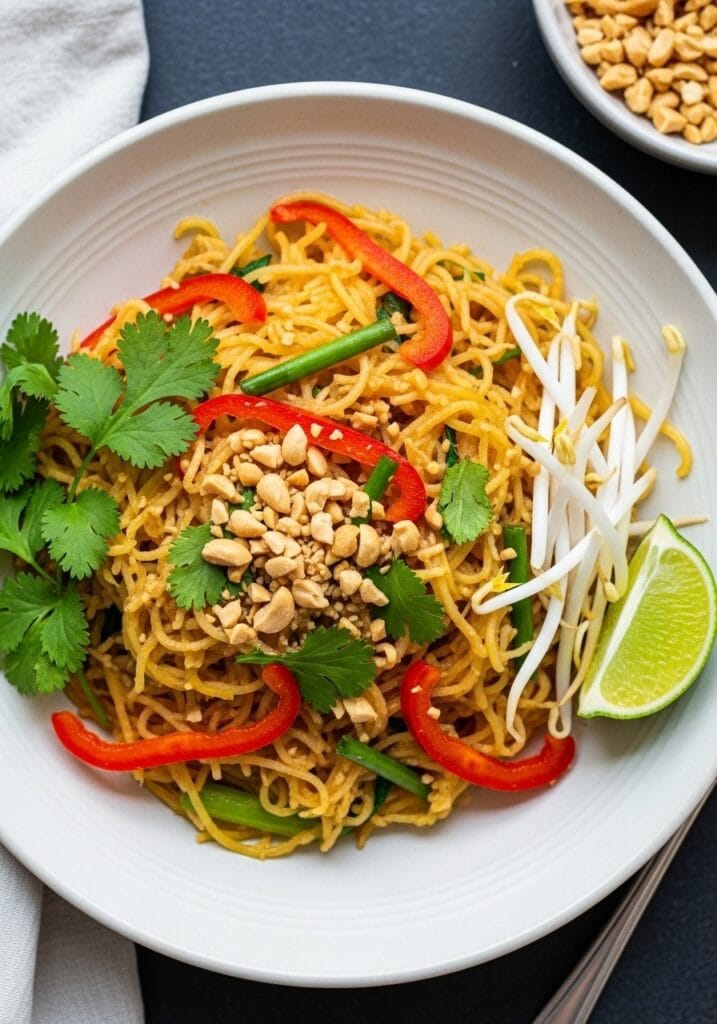
Transfer to serving bowls and top with chopped peanuts, remaining green onions, and fresh cilantro. Serve with lime wedges on the side – a good squeeze of lime right before eating really makes the flavors pop.
Recipe Details
Serving Size: 4 servings Prep Time: 10 minutes Cook Time: 35 minutes Total Time: 45 minutes Difficulty Level: Easy Equipment Needed: Baking sheet, large skillet or wok, whisk, knife, cutting board
Tips for the Best Healthy Pad Thai
The first time I made this, I didn’t drain the spaghetti squash well enough. The sauce got diluted and the whole thing turned soupy. Lesson learned. After you scrape out the strands, let them sit in a colander for a minute or two. You can even press them gently with paper towels to remove excess moisture.
Another trick? Don’t overcrowd the pan when stir-frying. If your skillet isn’t big enough, cook the vegetables in two batches. When ingredients are packed too tight, they steam instead of getting that nice sear. You want a bit of char on those bell peppers.
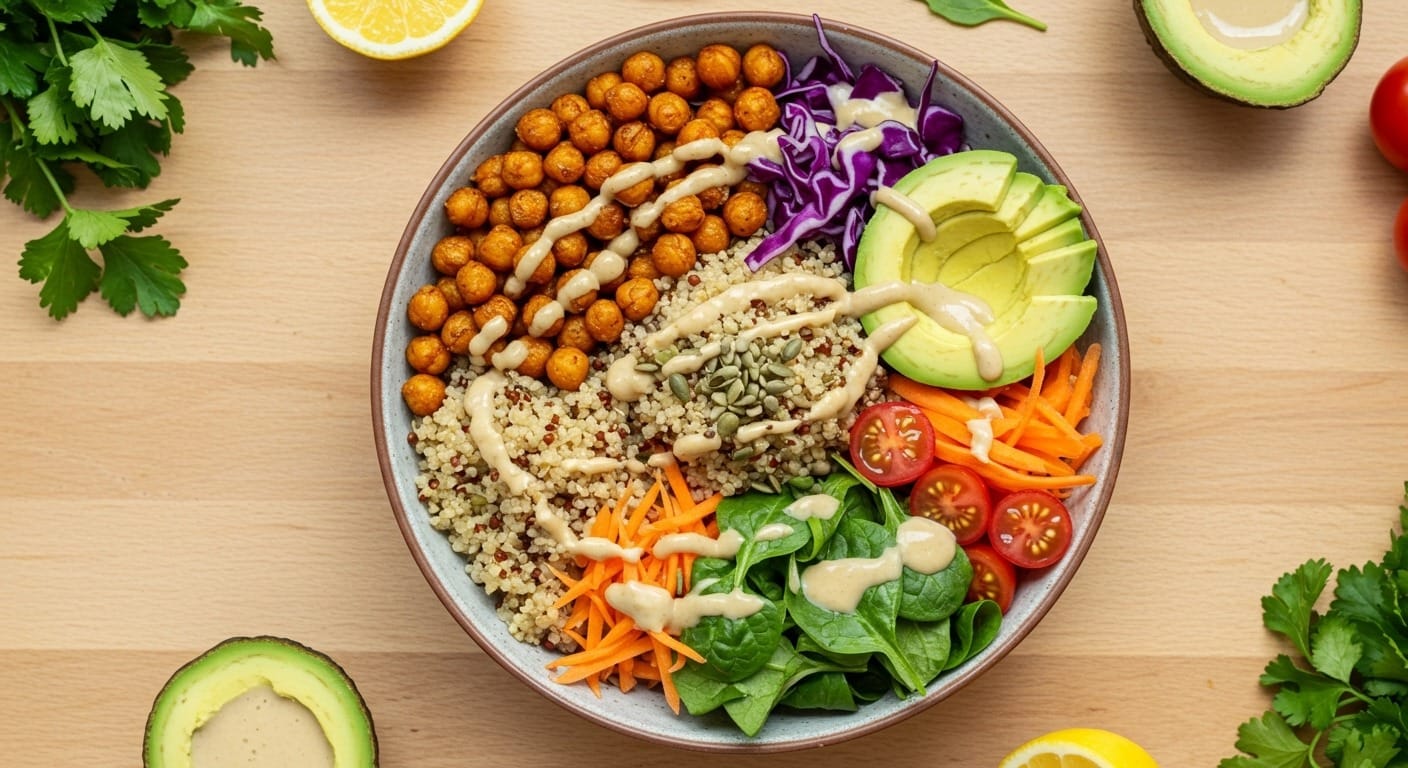
And here’s something I wish someone had told me earlier – make extra sauce. Seriously. This sauce is good on everything. I’ve tossed it with regular noodles, drizzled it over quinoa chickpea buddha bowls, even used it as a marinade for chicken. It keeps in the fridge for up to a week.
If you’re meal prepping, store the spaghetti squash and sauce separately. The squash releases water as it sits, which can make leftovers a bit soggy. When you’re ready to eat, just reheat the squash in a hot pan for a minute to evaporate any excess liquid before adding the sauce.
Making It Your Own
This spaghetti squash recipe is pretty flexible. I’ve added shrimp before (just toss them in after the garlic and cook until pink). Chicken works too – dice it small and cook it first, then set aside while you do the veggies. My vegetarian friends love adding cubed tofu, pressed and pan-fried until crispy.
For extra protein without meat, try edamame. A cup of shelled edamame stirred in at the end adds substance and keeps the whole thing plant-based if you’re using soy sauce instead of fish sauce.
Sometimes I swap the peanuts for cashews when that’s what I have around. Or I’ll throw in some Thai basil at the end if I can find it at the market. The fresh, slightly spicy flavor of Thai basil takes this from good to restaurant-quality.
Want it spicier? Add sliced Thai chilies with the garlic. Or keep a bottle of chili crisp on the table for anyone who wants to kick it up a notch. My dad dumps it on everything.
Why You’ll Keep Coming Back to This
I make this at least twice a month now. It’s become one of those recipes I don’t even need to look at anymore. The measurements are more like guidelines – a bit more sauce here, an extra handful of bean sprouts there. That’s how you know a recipe has really made it into your rotation.
What I love most is how it satisfies that takeout craving without the guilt or the expense. It’s lighter than traditional pad Thai but still feels indulgent. The different textures – crunchy peanuts, tender squash, crisp vegetables, soft eggs – keep every bite interesting.
And if you’re cooking for picky eaters (or people who claim they don’t like squash), they might not even realize what they’re eating. The sauce is bold enough that the spaghetti squash just blends right in. I’ve served this to friends who were shocked when I told them there were no noodles involved.
This low carb meal doesn’t feel restrictive. That’s rare. Usually when you swap out ingredients to make something healthier, you can tell. But this? This just tastes good. Period.
If you’re looking for more veggie-forward dishes that don’t skimp on flavor, you might also like our cauliflower rice taco bowls or sweet potato black bean skillet. Both pack in tons of flavor without relying on heavy carbs.
Give this spaghetti squash pad Thai a shot. Let me know if you make it your own with different proteins or vegetables. And definitely don’t skip the lime wedge at the end – that bright citrus note really ties everything together.
Still wondering what to cook tomorrow? Take the stress out of dinner with my simple 7-day meal plan.
Get the 7-Day Meal Plan for $2.99