
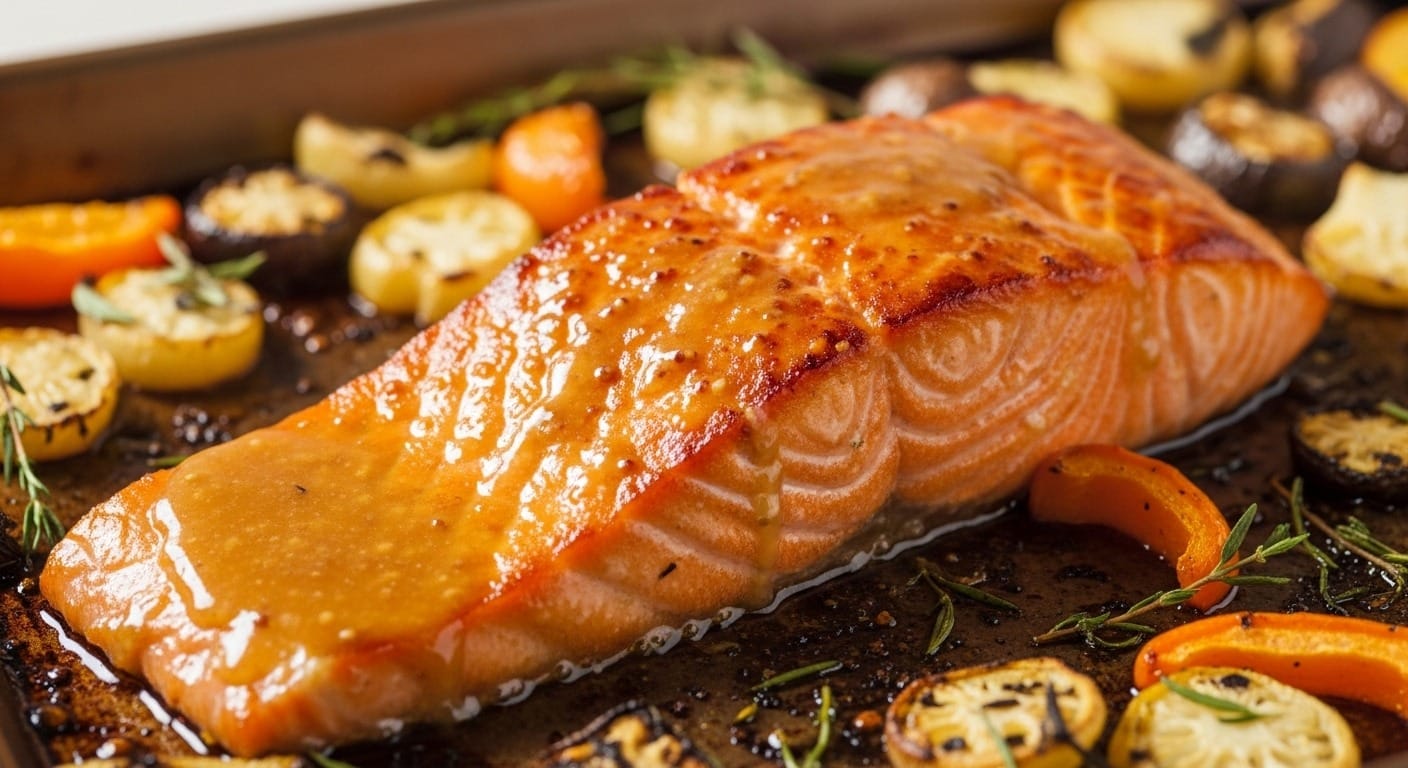
My husband once told me he didn’t like salmon. That was before I made this sheet pan honey mustard salmon. The combination of sweet honey and tangy mustard creates this incredible glaze that caramelizes perfectly in the oven. Now? He requests it weekly.
This honey mustard salmon recipe takes about 25 minutes from start to finish. It’s beginner-friendly, requires minimal cleanup, and delivers restaurant-quality results. The taste profile is perfectly balanced – sweet from the honey, tangy from the mustard, with a subtle kick if you add a touch of garlic.
Why This Honey Mustard Glazed Salmon Works
The magic happens when honey meets heat. It caramelizes on the salmon’s surface, creating this sticky, glossy coating that looks impressive but requires zero effort. The mustard adds depth and cuts through the sweetness perfectly.
Tired of Deciding What to Cook Every Night?
I’ve put together a simple 7-day dinner meal plan using my most-loved recipes — complete with a grocery list and flexible swaps.
Just $2.99 – Instant Download
Get the Meal PlanI love that you can throw vegetables on the same pan. One dish, complete meal. On nights when I’m exhausted from work, this saves me. Plus, salmon cooks so quickly that there’s barely any waiting around.
The glaze also keeps the fish incredibly moist. Even if you slightly overcook it (we’ve all been there), the honey mustard mixture prevents it from drying out completely.
Ingredients For Sheet Pan Honey Mustard Salmon
For the Salmon:
- 4 salmon fillets (6 oz or 170g each, skin-on or skinless)
- 2 tbsp olive oil
- Salt and black pepper to taste
For the Honey Mustard Glaze:
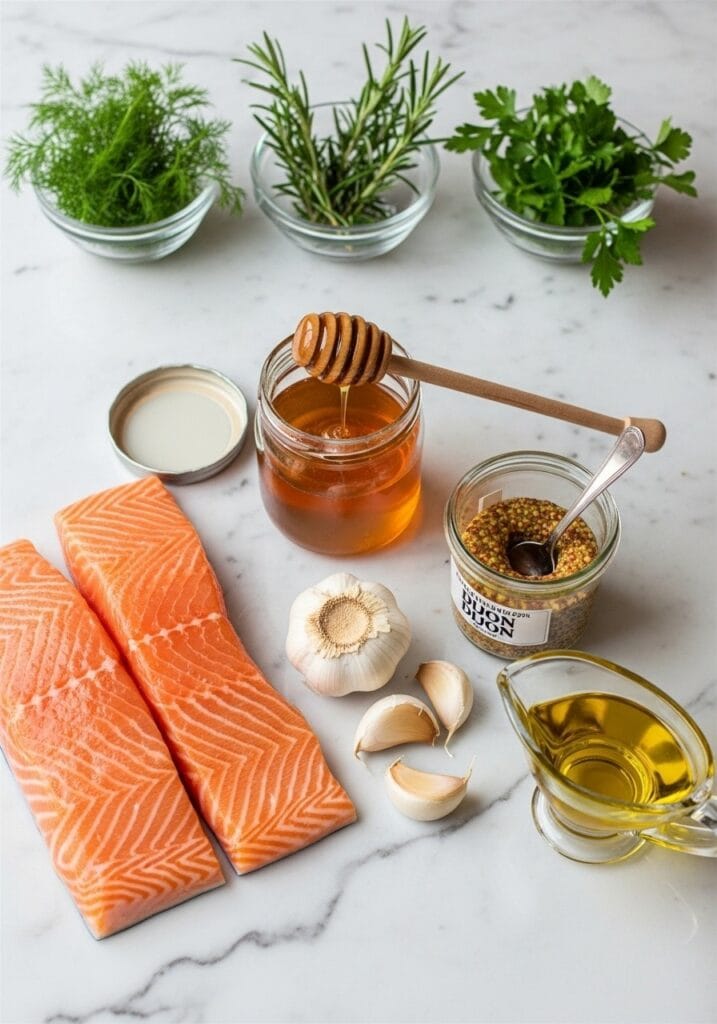
- 3 tbsp honey (45 ml)
- 2 tbsp Dijon mustard (30g)
- 1 tbsp whole grain mustard (15g) – substitute with more Dijon if unavailable
- 2 garlic cloves, minced
- 1 tbsp fresh lemon juice (15 ml)
- 1/2 tsp paprika
- 1/4 tsp red pepper flakes (optional, for heat)
For the Vegetables (Optional):
- 2 cups broccoli florets (200g)
- 1 cup baby carrots (150g)
- 1 red bell pepper, sliced
- 1 tbsp olive oil
- Salt and pepper to taste
Garnish:
- Fresh parsley, chopped
- Lemon wedges
How To Make Sheet Pan Honey Mustard Salmon
Step 1: Preheat your oven to 400°F (200°C). Line a large sheet pan with parchment paper or lightly grease it with cooking spray.
Step 2: Pat the salmon fillets dry with paper towels. This helps the glaze stick better and promotes even cooking.
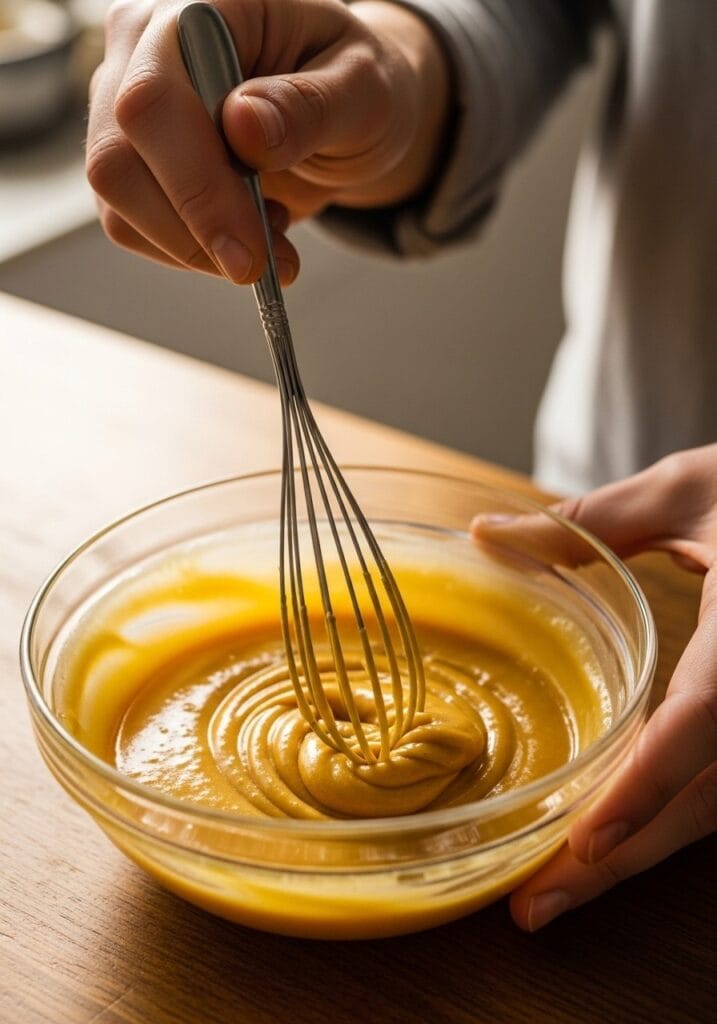
Step 3: In a small bowl, whisk together honey, Dijon mustard, whole grain mustard, minced garlic, lemon juice, paprika, and red pepper flakes (if using) until smooth and well combined. The mixture should look glossy.
Step 4: Arrange the salmon fillets on one side of the prepared sheet pan, leaving space for vegetables if using. Drizzle olive oil over the salmon and season with salt and black pepper.
Step 5: If adding vegetables, toss broccoli, carrots, and bell pepper with 1 tbsp olive oil, salt, and pepper in a bowl. Spread them on the other side of the sheet pan around the salmon.
Step 6: Brush the honey mustard glaze generously over each salmon fillet, coating the top and sides. Reserve about 2 tbsp of glaze for later.
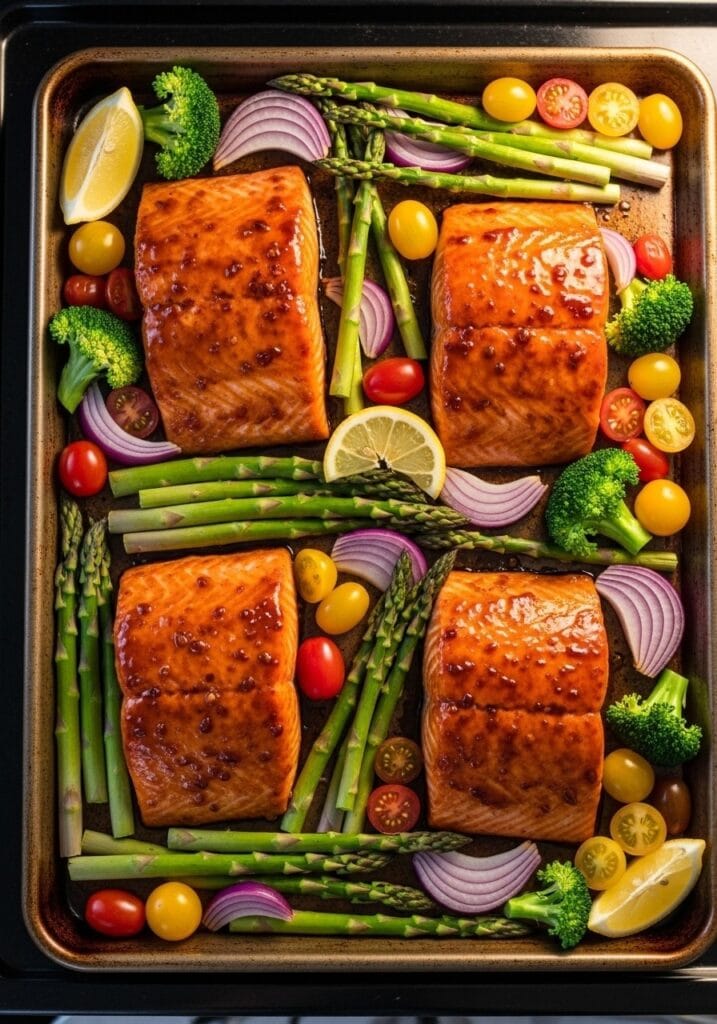
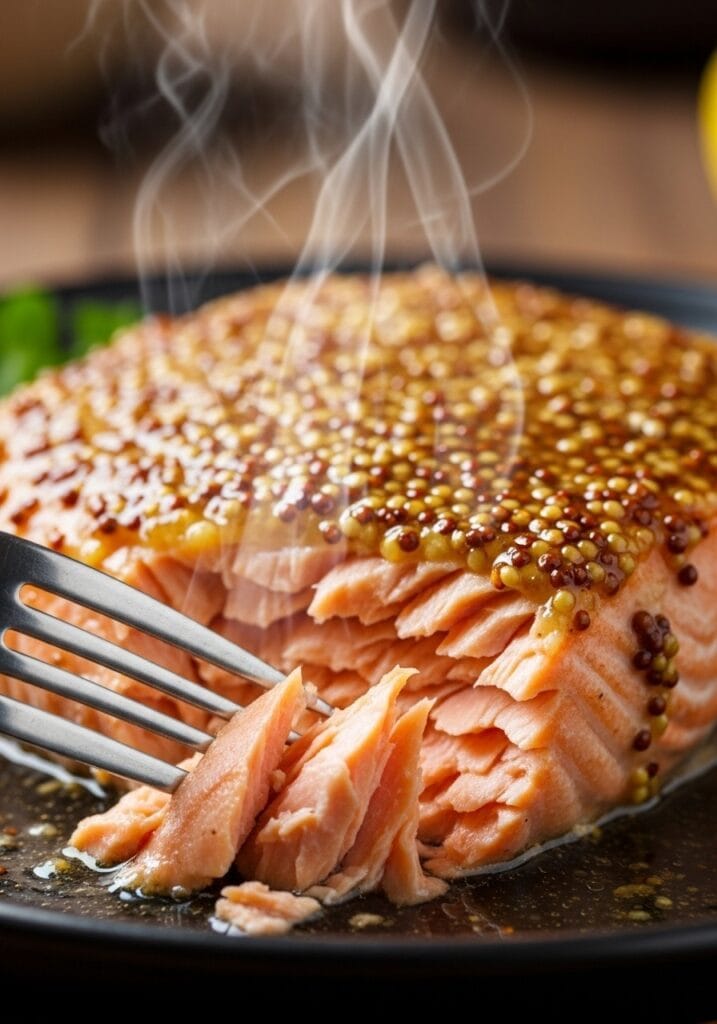
Step 7: Place the sheet pan in the preheated oven. Bake for 12-15 minutes, depending on the thickness of your fillets. The salmon is done when it flakes easily with a fork and reaches an internal temperature of 145°F (63°C).
Step 8: During the last 2 minutes of cooking, brush the reserved glaze over the salmon for an extra glossy finish.
Step 9: Remove from the oven and let rest for 2-3 minutes. The salmon will continue cooking slightly from residual heat.
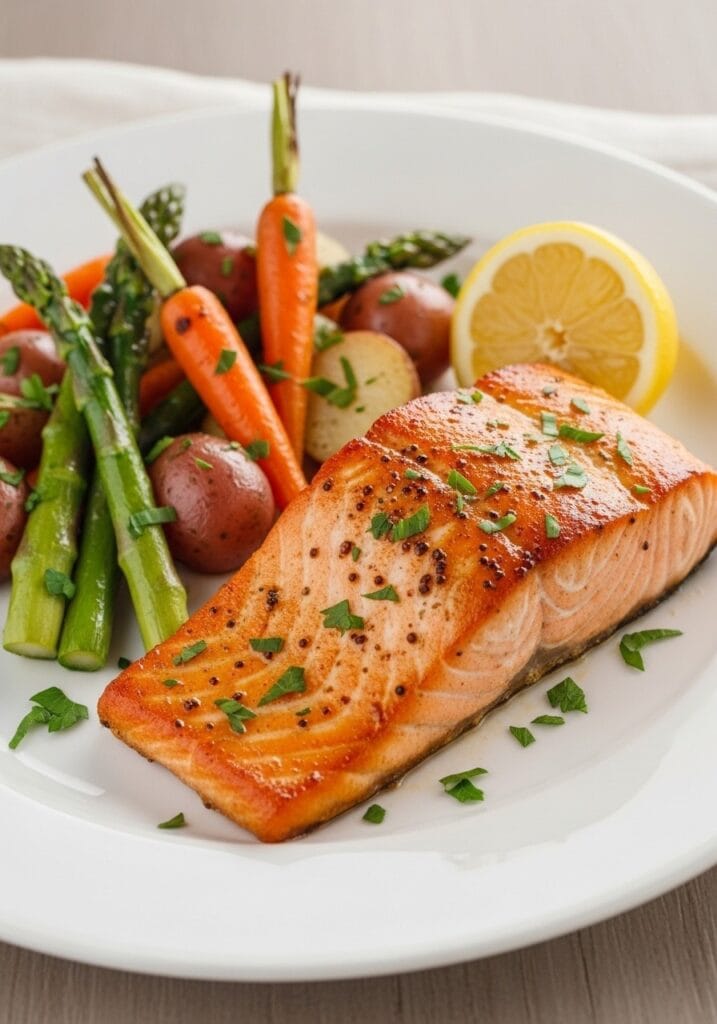
Step 10: Garnish with fresh chopped parsley and serve with lemon wedges on the side.
Recipe Details
Servings: 4 Prep Time: 10 minutes Cook Time: 15 minutes Total Time: 25 minutes Difficulty Level: Easy Equipment Needed: Sheet pan, parchment paper, small mixing bowl, whisk, basting brush, instant-read thermometer (optional)
Tips For Perfect Salmon Honey Mustard
Choose fillets of similar thickness so they cook evenly. I learned this the hard way when one piece was perfect and another was overdone.
Don’t skip patting the salmon dry. Moisture prevents the glaze from adhering properly and can make the fish steam instead of roast.
Watch the salmon closely after the 10-minute mark. Thickness varies, and overcooked salmon becomes dry and flaky in an unpleasant way. The fish should still look slightly translucent in the very center when you remove it from the oven.
For crispier vegetables, cut them into smaller, uniform pieces. They’ll roast faster and develop better caramelization.
If your honey is too thick to whisk, warm it for 10-15 seconds in the microwave. It’ll blend more easily with the mustard.
What To Serve With This Recipe
This pairs beautifully with simple sides that don’t compete with the sweet-tangy flavors. I usually make quinoa chickpea buddha bowls minus the protein, or just plain rice.
Garlic butter steak bites would be too heavy alongside salmon, but a light salad like the Mediterranean chickpea salad works wonderfully.
Sometimes I’ll make extra glaze and drizzle it over roasted potatoes or use it as a dipping sauce for crusty bread. The flavors are that good.
For a complete healthy meal, serve with steamed asparagus or sautéed green beans. Keep it simple so the salmon remains the star.
Storage And Meal Prep
Leftover salmon keeps in an airtight container in the refrigerator for up to 3 days. The texture changes slightly when reheated, but it’s still delicious.
I don’t recommend freezing cooked salmon with this glaze – the honey can crystallize and the fish becomes mushy when thawed.
For meal prep, you can prepare the glaze up to 3 days ahead and store it in the fridge. Give it a good stir before using since the ingredients may separate.
You can also prep the raw salmon fillets with the glaze in a covered dish up to 4 hours before cooking. Just keep them refrigerated and bring to room temperature for 10 minutes before baking.
Reheat gently in a 275°F (135°C) oven for about 8-10 minutes, or use the microwave on 50% power in 30-second intervals. Don’t overheat or the salmon will dry out.
Common Mistakes To Avoid
Overcooking is the biggest issue with salmon. It happens fast. Set a timer and check early rather than late.
Using low-quality mustard affects the final taste significantly. Cheap yellow mustard won’t give you the same depth of flavor as a good Dijon.
Crowding the pan prevents proper roasting. If your vegetables are piled too high, they’ll steam instead of caramelize. Use two sheet pans if needed.
Skipping the final glaze application means missing out on that gorgeous glossy finish that makes this dish look restaurant-worthy.
Not letting the salmon rest before serving causes the juices to run out, leaving the fish drier than necessary.
Variations To Try
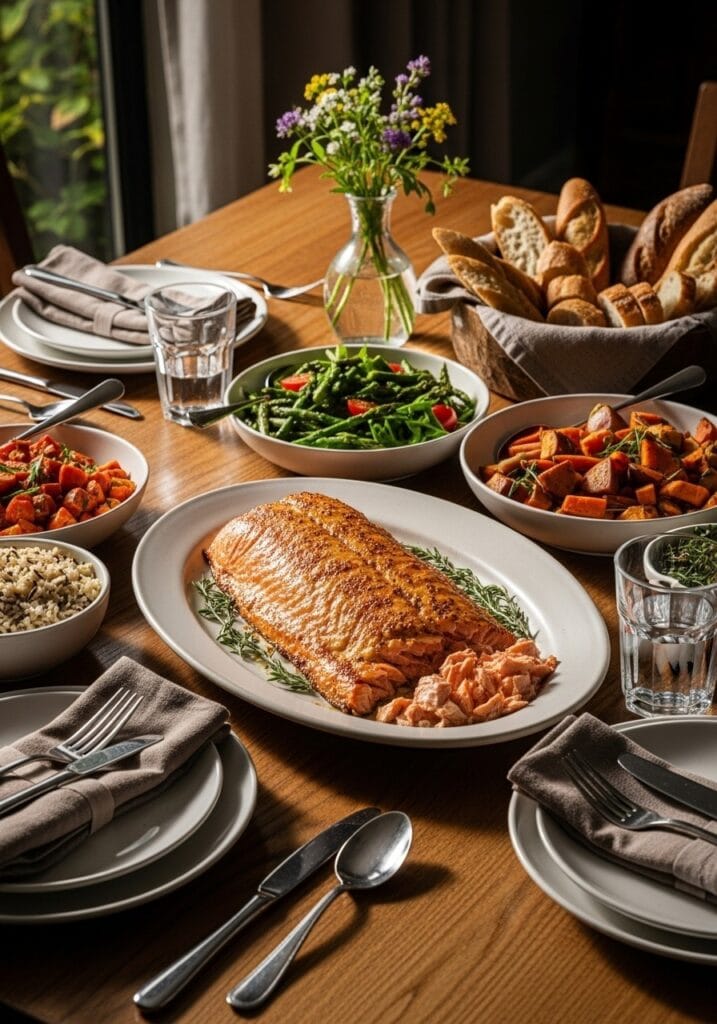
Spicy Version: Add 1 tsp sriracha or hot sauce to the glaze for a sweet-spicy kick.
Maple Mustard: Substitute honey with pure maple syrup for a deeper, more complex sweetness.
Asian-Inspired: Add 1 tbsp soy sauce and 1 tsp grated fresh ginger to the glaze, and skip the paprika.
Herb-Crusted: After the first glaze application, sprinkle the salmon with fresh thyme or rosemary before baking.
Citrus Twist: Replace lemon juice with lime or orange juice for a different flavor profile.
This salmon honey mustard works equally well on the grill. Place the glazed salmon on a piece of aluminum foil and grill over medium heat for about 8-10 minutes.
Why This Beats Other Salmon Recipes
I’ve tried countless salmon preparations – from baked honey garlic salmon to air fryer crispy salmon. This one consistently gets requested most often.
The honey mustard combination is more interesting than plain lemon butter but not as complicated as Asian-style glazes that require specialty ingredients.
Unlike my lemon dill salmon, this recipe appeals to kids too. The sweetness wins them over, and they don’t even realize they’re eating something healthy.
The sheet pan method means everything cooks together. Compare that to recipes requiring multiple pots and pans, and you’ll understand why this is my go-to on busy nights.
Plus, the glaze creates this beautiful caramelization that photographs incredibly well. If you’re someone who likes sharing food photos, this delivers every single time.
Making It Work For Different Diets
Keto/Low-Carb: Replace honey with a sugar-free sweetener like monk fruit or erythritol. You’ll lose some of the caramelization, but the flavor remains solid.
Paleo: This recipe is already paleo-friendly as written. Just verify your mustard doesn’t contain added sugars or preservatives.
Whole30: Swap honey for a Whole30-compliant sweetener like date paste. The texture will be slightly different but still tasty.
Gluten-Free: Most Dijon mustard is gluten-free, but always check labels if you have celiac disease or severe sensitivity.
Dairy-Free: Already dairy-free, which makes this perfect for lactose-intolerant folks or those avoiding dairy.
For a complete balanced meal that fits into quick easy meals, add a whole grain or starch alongside the protein and vegetables.
Frequently Asked Questions
Can I use frozen salmon? Yes, but thaw it completely first and pat it very dry. Excess moisture will prevent proper browning and make the glaze slide off.
What if I don’t have whole grain mustard? Just use all Dijon. The texture will be smoother, but the taste remains delicious.
My glaze is too thin. How do I fix it? Add another tablespoon of honey or reduce it in a small saucepan over medium heat until it thickens slightly.
Can I make this for a crowd? Absolutely. Use multiple sheet pans and rotate them halfway through cooking for even results.
How do I know when salmon is done? It should flake easily with a fork and look opaque throughout. The internal temperature should read 145°F (63°C).
Can I use salmon steaks instead of fillets? Yes, though cooking time may vary depending on thickness. Check for doneness a few minutes earlier.
Why This Recipe Matters
We all need reliable weeknight dinners that don’t require hours in the kitchen. This sheet pan honey mustard salmon delivers on every front – quick, healthy, delicious, and impressive enough for company.
The balanced sweet-tangy flavor appeals to diverse palates, making it perfect when feeding picky eaters or guests with different preferences.
Most importantly, it removes the intimidation factor from cooking fish. If you’ve been nervous about preparing salmon, this is your entry point. The glaze is forgiving, the timing is flexible, and the results are consistently excellent.
Whether you’re meal prepping for the week or need tonight’s dinner on the table fast, this recipe has your back. It’s become one of those dishes I make almost on autopilot now, and that’s exactly what a good weeknight recipe should be.
Still wondering what to cook tomorrow? Take the stress out of dinner with my simple 7-day meal plan.
Get the 7-Day Meal Plan for $2.99