
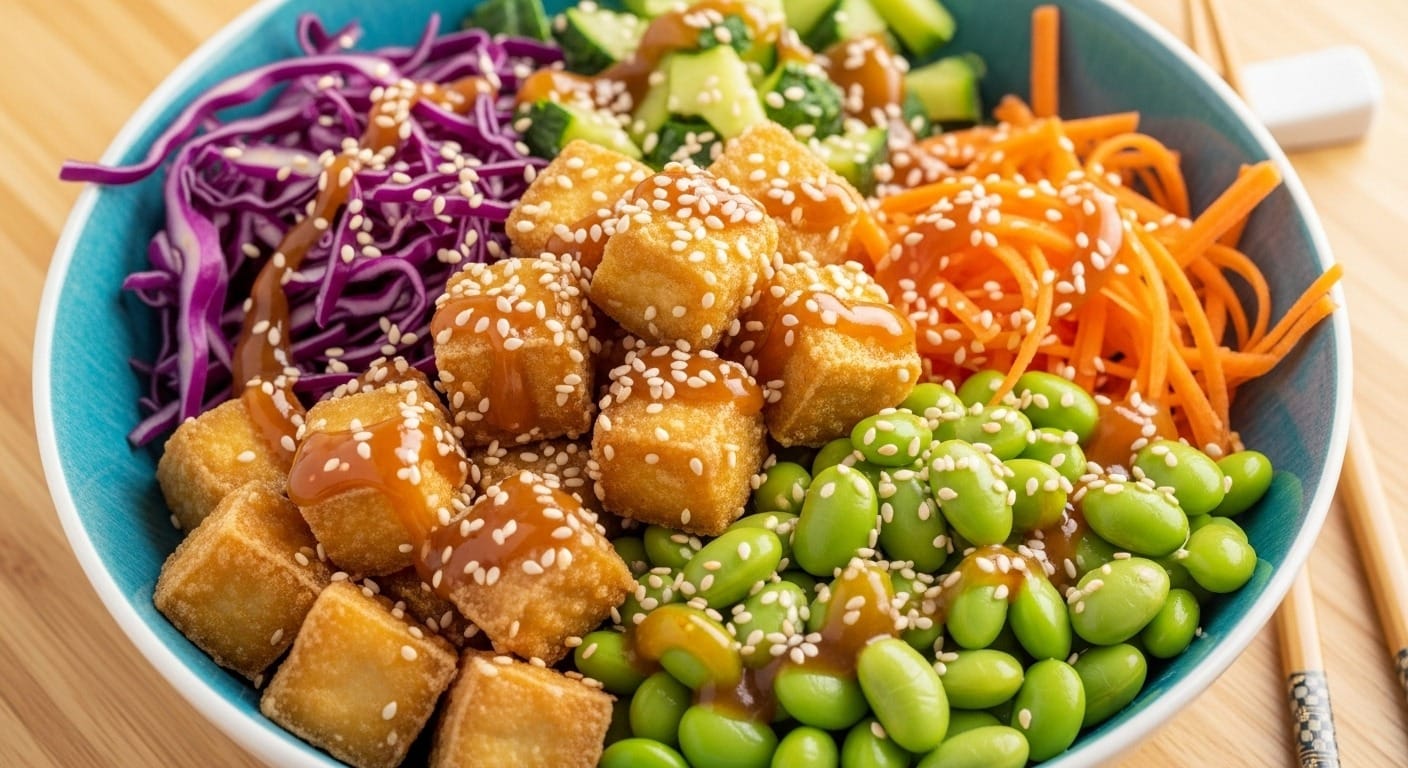
My neighbor handed me a container of tofu last summer, insisting I’d love it if I just tried it “her way.” I was skeptical – tofu and I had a complicated history involving rubbery textures and bland disappointments. But these sesame ginger tofu bowls changed everything. The tofu comes out golden and crispy on the outside, tender inside, coated in a tangy sauce that makes you forget you’re eating something healthy.
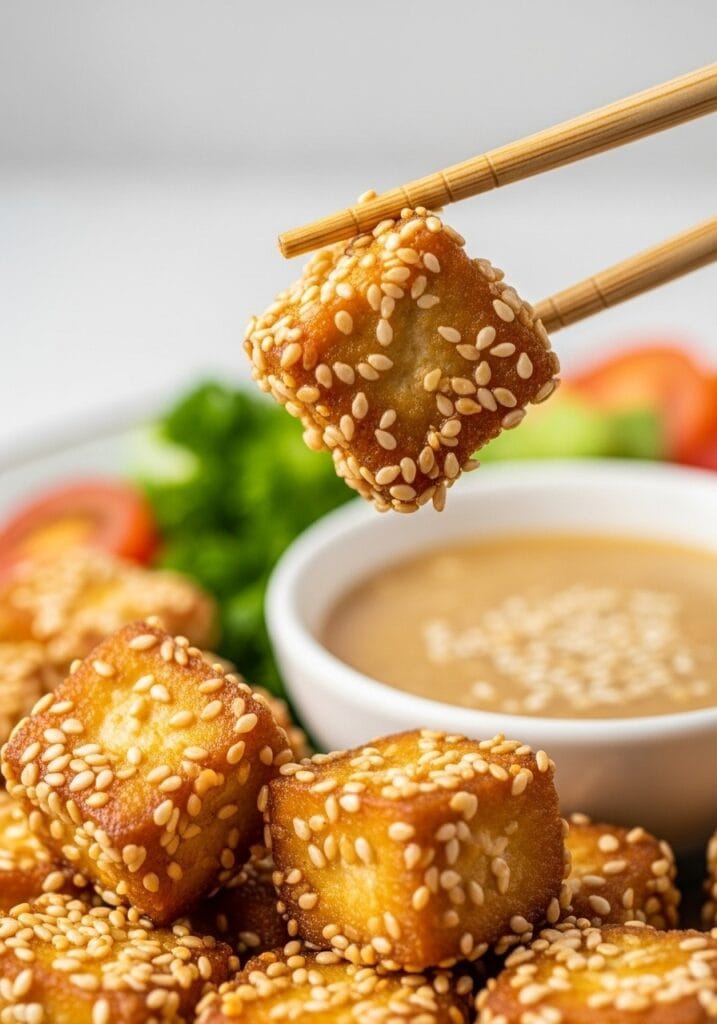
This recipe takes about 30 minutes from start to finish, requires basic cooking skills, and delivers a flavor profile that’s savory, slightly sweet, with a gentle ginger kick. It’s become my go-to when I want something light but satisfying, especially on those evenings when a healthy meal sounds perfect but I don’t want to spend hours in the kitchen.
Why These Bowls Work
Bowl meals have this magic ability to feel like a complete restaurant experience while being ridiculously practical. You get protein, vegetables, grains, and sauce all in one dish. No complicated plating required.
Tired of Deciding What to Cook Every Night?
I’ve put together a simple 7-day dinner meal plan using my most-loved recipes — complete with a grocery list and flexible swaps.
Just $2.99 – Instant Download
Get the Meal PlanThe tofu absorbs the sesame ginger dressing beautifully, especially when you press it properly first. That step matters more than most recipes let on. Extra-firm tofu still holds too much water, and water is the enemy of crispiness. Fifteen minutes of pressing makes the difference between soggy and crispy.
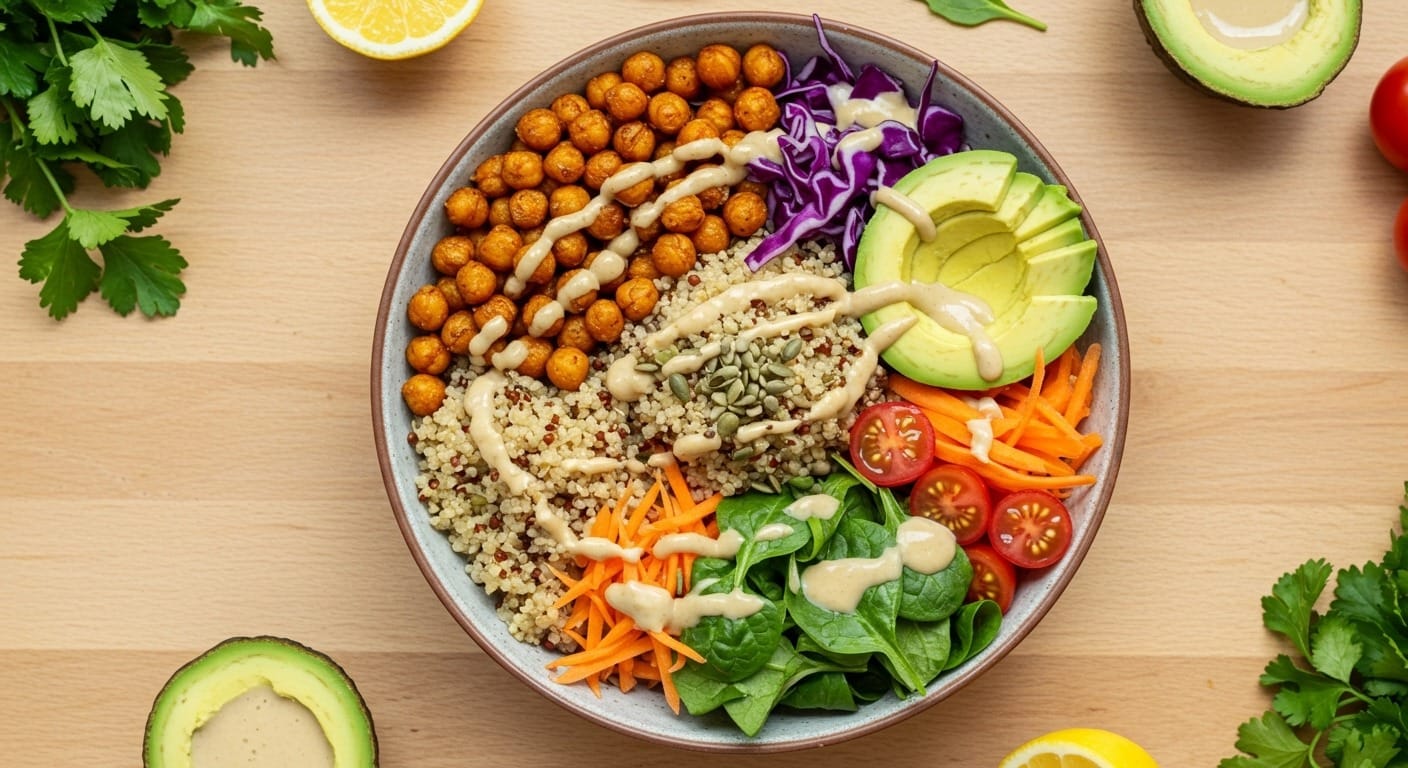
I love how customizable these bowls are too. Sometimes I add quinoa, other times brown rice or even cauliflower rice when I’m keeping carbs lower. The quinoa chickpea buddha bowls taught me that grain flexibility is your friend in bowl recipes.
About the Sesame Ginger Dressing
This dressing pulls double duty – it marinates the tofu and serves as the finishing sauce. The combination of rice vinegar, soy sauce, fresh ginger, and toasted sesame oil creates layers of flavor that make simple vegetables taste interesting.
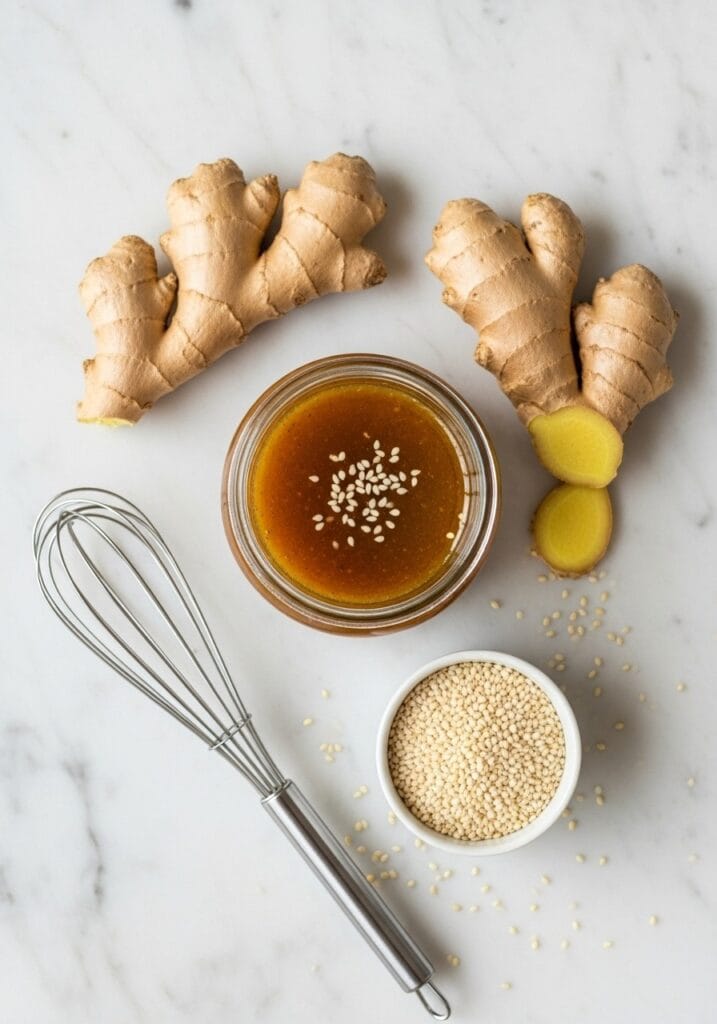
Fresh ginger matters here. The powdered stuff just doesn’t give you that bright, zingy quality. I keep a knob of ginger in my freezer and grate it directly into recipes while frozen. Easier than peeling, and it lasts for months.
The sesame oil should be toasted, not regular. Regular sesame oil is mild and fairly neutral. Toasted sesame oil is nutty, aromatic, and a little goes a long way. If you accidentally use too much, the dressing becomes overwhelming rather than balanced.
Getting the Tofu Right
Tofu skeptics usually had bad tofu. Properly prepared tofu is a completely different ingredient than the wobbly white block straight from the package.
Start with extra-firm tofu. Drain it, then wrap it in a clean kitchen towel or paper towels. Place something heavy on top – a cast iron pan, a few cookbooks, whatever works. Let it sit for 15-20 minutes. You’ll be surprised how much liquid comes out.
Cut the pressed tofu into 3/4-inch cubes. Too small and they dry out; too large and the centers stay bland. Toss them with a bit of cornstarch before cooking. This creates an extra-crispy exterior that holds the sauce perfectly.
Pan-frying works better than baking for this recipe. You get more control over the browning, and the tofu develops those golden, slightly caramelized edges that make it irresistible. Use medium-high heat and resist the urge to move the cubes around too much. Let them sit and develop that crust.
The Vegetables
I usually go with shredded purple cabbage, julienned carrots, cucumber slices, and edamame. The purple cabbage adds a gorgeous pop of color and stays crunchy even after the dressing hits it.
Edamame brings extra protein and a nice textural contrast. You can buy it frozen and shelled, which saves time. Just run it under warm water to thaw.
Sometimes I throw in snap peas or bell peppers, depending on what’s in the fridge. The beauty of these bowls is that they’re forgiving. As long as you have something crunchy, something colorful, and something green, you’re good.
For a different take on veggie-forward bowls, check out the Mediterranean chickpea salad – similar concept, different flavor profile.
Building the Bowl
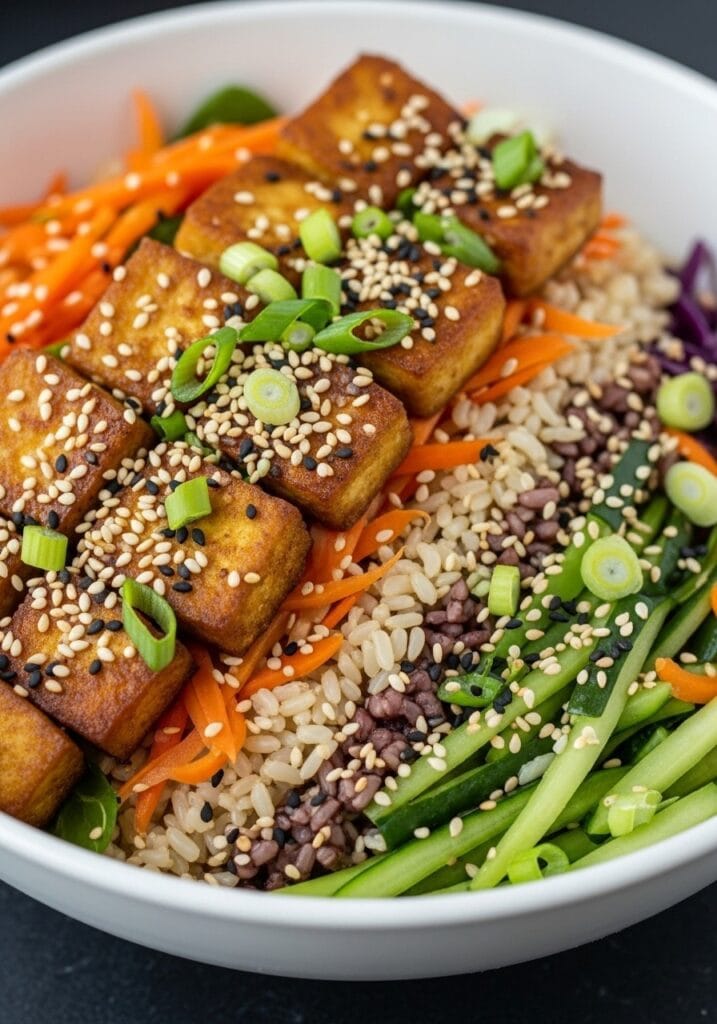
Start with your grain base. I typically use about 3/4 cup of cooked brown rice per bowl. White rice works too, or mix it up with the options I mentioned earlier.
Arrange the vegetables around the bowl rather than mixing everything together. It looks better, and people can adjust their bites based on what they want more of.
Place the crispy tofu on top, then drizzle with extra sesame ginger dressing. Sprinkle with sesame seeds and sliced green onions. A wedge of lime on the side is optional but recommended – that little squeeze of acid right before eating brightens everything up.
Make-Ahead Notes
These bowls are excellent for meal prep. Cook a big batch of tofu and rice on Sunday, prep your vegetables, and store everything separately. The tofu stays crispy for about three days in the fridge if you keep it separate from wet ingredients.
The dressing lasts a week, maybe more. I often double the recipe because it’s also fantastic on salads or drizzled over roasted vegetables.
When you’re ready to eat, reheat the tofu in a pan for a minute or two to refresh the crispiness. Cold tofu straight from the fridge isn’t bad, but warm is better.
This approach works well for weeknight dinners when you need something quick but don’t want to sacrifice quality.
Variations to Try
Spicy version: Add sriracha or gochujang to the dressing. Start with a teaspoon and taste as you go.
Protein swap: The sesame ginger dressing works beautifully with chicken too. If you’re making sesame ginger chicken, use the same marinade technique and cooking method.
Noodle base: Replace rice with soba noodles or rice noodles. Toss them in a little of the dressing before building the bowl.
Extra crunch: Add crushed peanuts, cashews, or crispy wonton strips on top.
Ingredients for Sesame Ginger Tofu Bowls
Serves: 4 bowls
Prep time: 20 minutes (plus 15 minutes pressing tofu)
Cook time: 15 minutes
Difficulty: Easy
Equipment needed: Heavy pan or weight for pressing, large skillet, mixing bowls
For the Sesame Ginger Dressing:
- 60 ml (1/4 cup) soy sauce (or tamari for gluten-free)
- 45 ml (3 tbsp) rice vinegar
- 30 ml (2 tbsp) toasted sesame oil
- 30 ml (2 tbsp) honey (or maple syrup)
- 1 tbsp fresh ginger, grated (about a 1-inch piece)
- 2 garlic cloves, minced
- 1 tsp sesame seeds
- Optional: 1/2 tsp red pepper flakes
For the Tofu:
- 400g (14 oz) extra-firm tofu, pressed and cubed
- 30g (1/4 cup) cornstarch
- 30 ml (2 tbsp) neutral oil (vegetable or avocado)
For the Bowls:
- 600g (3 cups) cooked brown rice (or grain of choice)
- 200g (2 cups) purple cabbage, thinly sliced
- 150g (1 cup) carrots, julienned
- 150g (1 cup) cucumber, sliced
- 150g (1 cup) shelled edamame, thawed
- 2 green onions, sliced
- 1 tbsp sesame seeds for garnish
- Lime wedges for serving
Substitutes: Use coconut aminos instead of soy sauce for soy-free. Swap honey with agave for vegan. Can’t find edamame? Use chickpeas or steamed broccoli.
Instructions
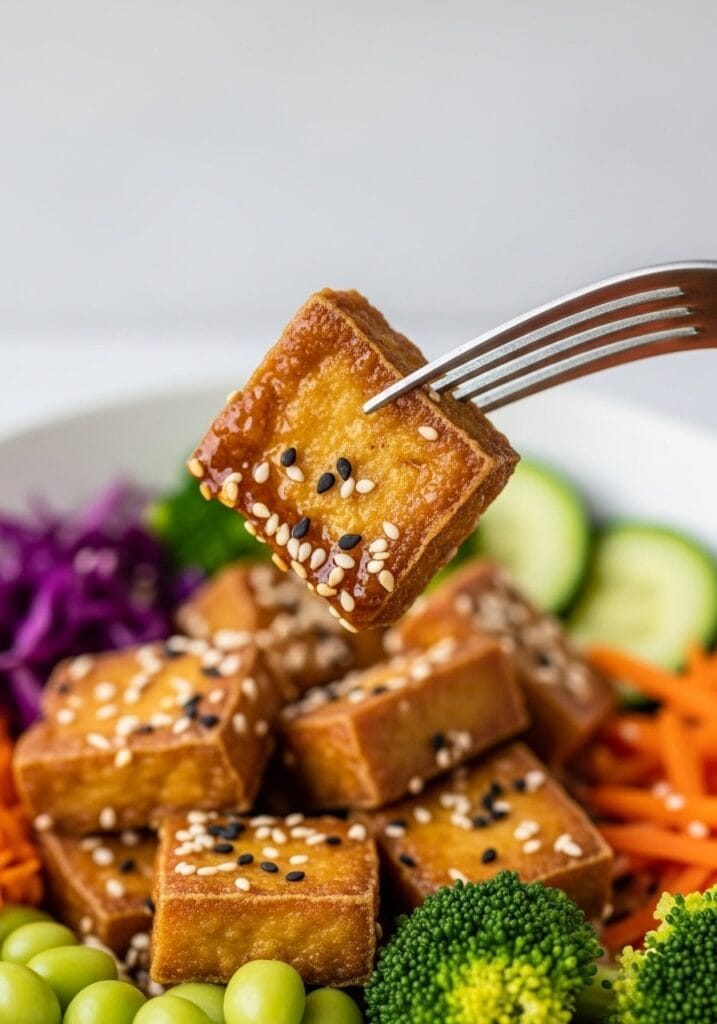
Step 1: Press the tofu by wrapping it in a clean kitchen towel and placing a heavy object on top. Let sit for 15 minutes. This removes excess moisture.
Step 2: While tofu presses, make the dressing. Whisk together soy sauce, rice vinegar, sesame oil, honey, grated ginger, minced garlic, and sesame seeds in a small bowl. Set aside half for later.
Step 3: Cut pressed tofu into 3/4-inch cubes. Place in a bowl and toss with cornstarch until evenly coated. This creates the crispy coating.
Step 4: Heat neutral oil in a large skillet over medium-high heat. Once oil shimmers (about 2 minutes), add tofu cubes in a single layer. Don’t overcrowd the pan.
Step 5: Cook tofu for 3-4 minutes per side without moving it. You want golden-brown, crispy edges. Use a spatula to gently flip each piece.
Step 6: When all sides are golden (about 12 minutes total), pour half the dressing over the tofu. Toss gently for 1 minute until tofu is coated and sauce slightly caramelizes.
Step 7: Remove from heat. Transfer tofu to a plate.
Step 8: Assemble bowls by dividing rice among four bowls (about 3/4 cup each). Arrange purple cabbage, carrots, cucumber, and edamame around each bowl.
Step 9: Top each bowl with crispy tofu. Drizzle remaining dressing over everything.
Step 10: Garnish with sliced green onions, extra sesame seeds, and a lime wedge. Serve immediately while tofu is warm and crispy.
What Makes This Recipe Special
The combination of textures is what keeps me coming back. Crispy tofu, crunchy vegetables, tender rice, all tied together with that glossy, flavorful dressing. Each bite is different depending on what you scoop up.
It’s also genuinely light without feeling like diet food. You finish the bowl feeling satisfied but not heavy. That’s rare in a meal that takes 30 minutes.
The recipe scales easily too. Making it for one? Cut everything in half. Feeding a crowd? Double it without any adjustments needed. The tofu might need to be cooked in two batches to avoid overcrowding, but that’s the only consideration.
Tips for Success
Don’t skip pressing the tofu. I know I already said this, but it bears repeating. This single step determines whether your tofu is crispy or sad.
Use medium-high heat for cooking tofu, not high. Too hot and the outside burns before the inside cooks. Too low and it steams instead of crisps.
Make extra dressing. You’ll want it for other things. I promise.
If your tofu isn’t getting crispy, your pan might not be hot enough, or there might be too much moisture left in the tofu. Make sure you see that shimmer in the oil before adding the tofu.
Fresh ginger makes a noticeable difference, but if you only have powdered, use 1/2 teaspoon instead of the tablespoon of fresh. The flavor won’t be as bright, but it’ll still work.
For more quick and satisfying dinner ideas, browse through our collection of quick easy meals for inspiration.
Storage and Reheating
Store components separately in airtight containers. Rice and tofu keep for 3-4 days. Cut vegetables stay fresh for about 3 days. The dressing lasts up to a week.
To reheat, warm tofu in a skillet for 1-2 minutes per side. Microwave the rice for 60-90 seconds. Assemble fresh bowls with the reheated components.
You can eat this cold too – it’s different but still good. The tofu loses its crispiness when cold, but the flavors are all there.
Final Thoughts
These sesame ginger tofu bowls hit that sweet spot between healthy and craveable. They’re colorful enough to photograph, simple enough for a Tuesday night, and flexible enough to make your own.
The first time you make them, follow the recipe. After that, adjust based on what you like. More ginger if you love that spicy kick. Extra sesame oil if you want it richer. Different vegetables based on the season.
That’s what good bowl recipes do – they give you a framework, then get out of the way so you can make it yours. This one’s been mine for a while now. Maybe it’ll become yours too.
Still wondering what to cook tomorrow? Take the stress out of dinner with my simple 7-day meal plan.
Get the 7-Day Meal Plan for $2.99