
My neighbor knocked on my door one Tuesday evening, exhausted from work and asking if I had a quick dinner idea. I handed her this recipe scribbled on a sticky note. She texted me thirty minutes later – “Why didn’t you tell me about this sooner?”
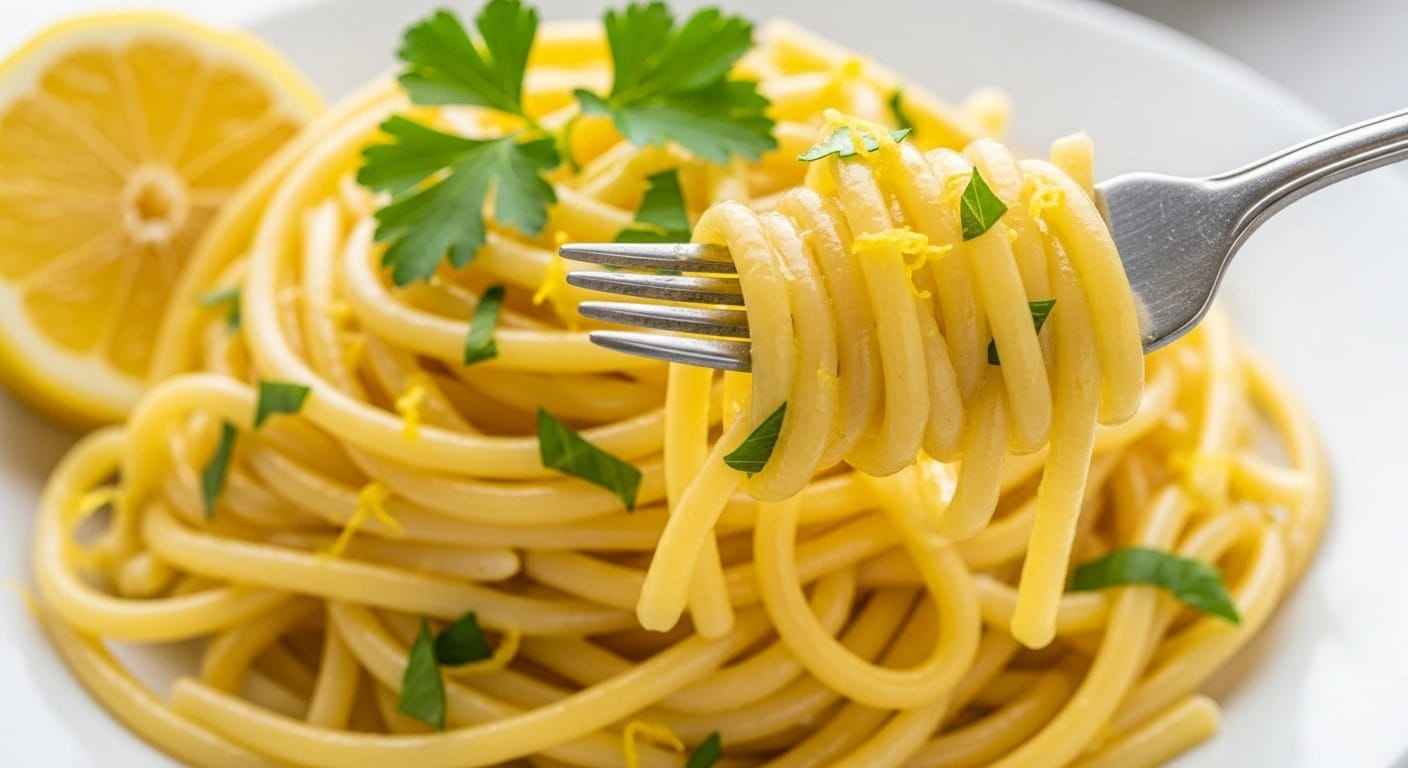
That’s the magic of lemon butter pasta. It’s ridiculously simple, uses ingredients you probably already have, and tastes like you spent an hour in the kitchen. The tangy lemon cuts through the richness of butter and cream, creating a sauce that clings to every strand of pasta. It’s comfort food that doesn’t weigh you down.
This dish takes about 20 minutes from start to finish, requires basic cooking skills, and delivers a bright, creamy, slightly tangy flavor profile. Whether you’re cooking for one or feeding a family, this lemon butter pasta adapts beautifully. You can keep it simple or add protein like chicken or shrimp to make it heartier.
Tired of Deciding What to Cook Every Night?
I’ve put together a simple 7-day dinner meal plan using my most-loved recipes — complete with a grocery list and flexible swaps.
Just $2.99 – Instant Download
Get the Meal PlanThe best part? You don’t need any specialty ingredients. Just pasta, butter, lemon, garlic, and a splash of cream. If you’re looking for more quick and easy meals that don’t compromise on flavor, this recipe belongs in your rotation.
Why This Recipe Works
The secret is in the technique, not fancy ingredients. When you reserve pasta water before draining, that starchy liquid becomes the foundation of your sauce. It helps emulsify the butter and cream, creating a glossy coating instead of a greasy puddle.
Lemon adds brightness without overpowering the dish. The zest gives you aromatic oils, while the juice provides acidity that balances the richness. Fresh garlic, quickly sautéed in butter, infuses the entire sauce with flavor.
This recipe is forgiving too. If your sauce looks too thick, add more pasta water. Too thin? Let it simmer for another minute. The pasta continues to absorb sauce as it sits, so I always make mine slightly looser than I want the final result.
Ingredients You’ll Need
For the pasta:
- 400g spaghetti or linguine (or any long pasta)
- 4 liters water
- 2 tablespoons salt
For the lemon butter sauce:
- 6 tablespoons unsalted butter (85g)
- 4 cloves garlic, minced finely
- Zest of 2 lemons
- 1/4 cup fresh lemon juice (about 2 lemons)
- 1/2 cup heavy cream (120ml)
- 1 cup reserved pasta water
- 1/2 teaspoon black pepper
- 1/2 teaspoon red pepper flakes (optional, for heat)
- Salt to taste
For garnish:
- 1/4 cup fresh parsley, chopped
- 1/4 cup grated Parmesan cheese
- Extra lemon zest
Substitutes: Can’t find heavy cream? Use half-and-half or whole milk, though the sauce will be slightly thinner. No fresh lemons? Bottled lemon juice works in a pinch, but reduce the amount by half as it’s more concentrated. For a dairy-free version, use olive oil instead of butter and skip the cream – it becomes more of a lemon garlic pasta, which is equally delicious.
Step-by-Step Instructions
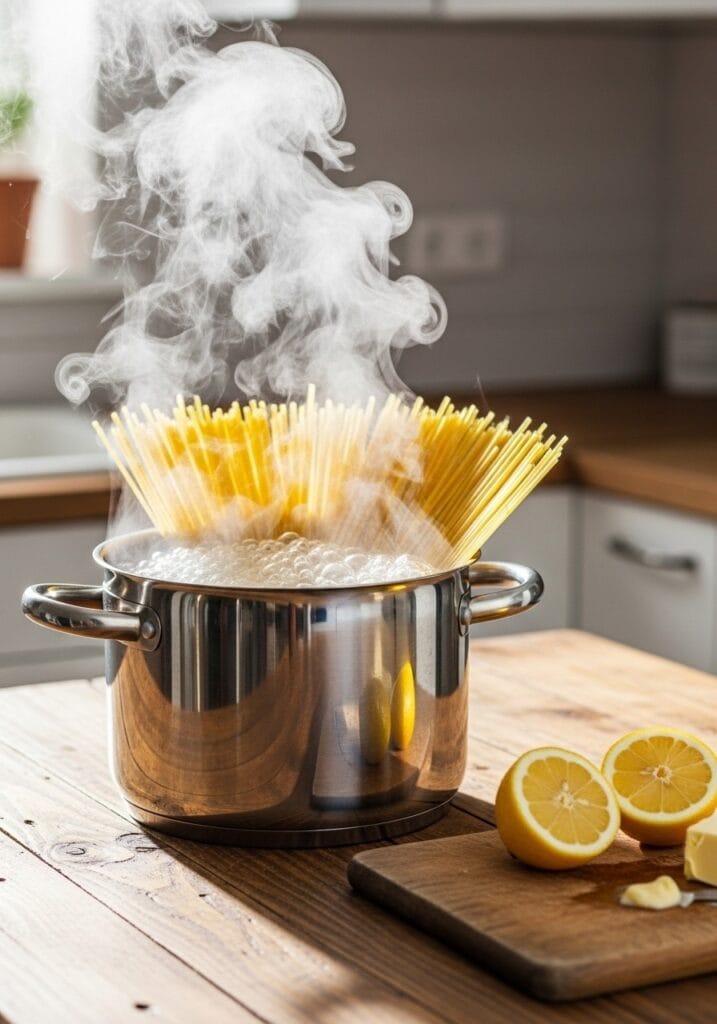
Step 1: Bring 4 liters of water to a rolling boil in a large pot over high heat. Add 2 tablespoons of salt. The water should taste like the sea – this is your only chance to season the pasta itself.
Step 2: Add the pasta to the boiling water. Stir immediately to prevent sticking. Cook according to package directions minus 1 minute. You want it al dente since it’ll continue cooking in the sauce.
Step 3: While the pasta cooks, zest both lemons using a microplane or fine grater. Avoid the white pith underneath – it’s bitter. Juice the lemons into a small bowl and set aside.
Step 4: Mince the garlic cloves finely. If you have a garlic press, even better. The smaller the pieces, the more flavor they’ll release.
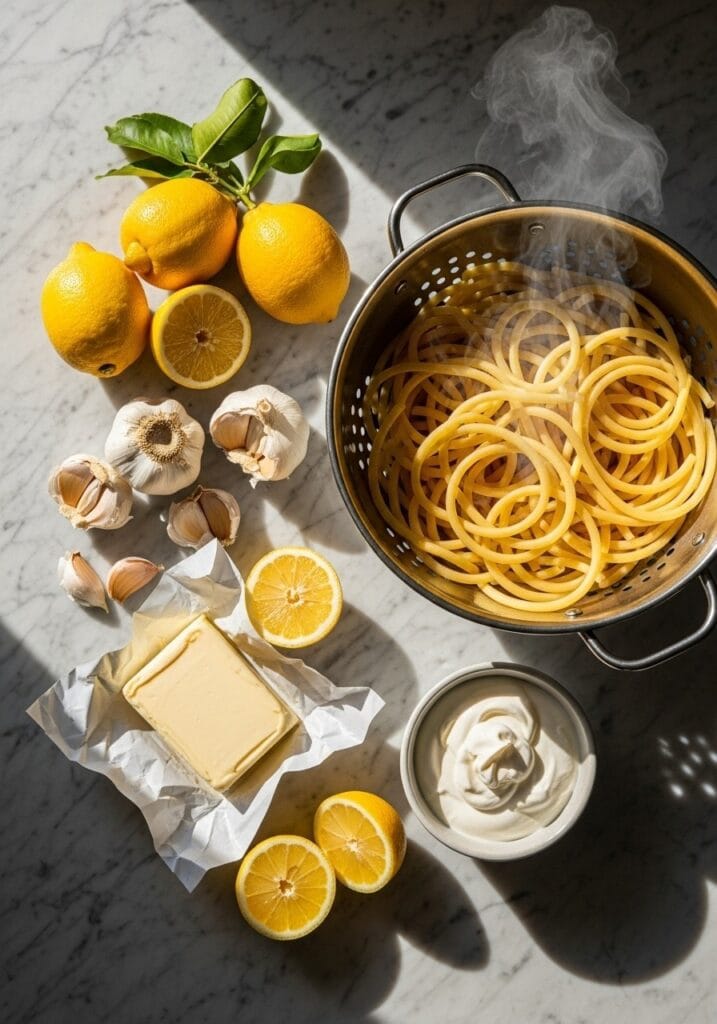
Step 5: Before draining the pasta, scoop out 1.5 cups of pasta water using a measuring cup or ladle. This starchy water is liquid gold for your sauce.
Step 6: Drain the pasta in a colander but don’t rinse it. That surface starch helps the sauce cling better.
Step 7: In the same pot you cooked the pasta in (no need to wash it), melt the butter over medium heat. This takes about 1 minute.
Step 8: Add the minced garlic to the melted butter. Sauté for 30-45 seconds, stirring constantly. You want it fragrant but not brown. If it starts to brown, your heat is too high.
Step 9: Add the lemon zest to the garlic butter. Stir for 10 seconds to release the oils. Your kitchen should smell incredible right now.
Step 10: Pour in the lemon juice and heavy cream. Stir to combine. The mixture might look separated – that’s normal.
Step 11: Add 1 cup of the reserved pasta water. Increase heat to medium-high and let it simmer for 2-3 minutes. The sauce will start to thicken and become glossy as the butter emulsifies with the liquid.
Step 12: Add the black pepper and red pepper flakes if using. Taste and add salt if needed. Remember, the pasta water is already salted and you’ll add Parmesan later, so go easy.
Step 13: Add the drained pasta to the sauce. Using tongs, toss the pasta continuously for 1-2 minutes. The pasta will absorb the sauce and finish cooking. If it looks dry, add more pasta water, 1/4 cup at a time.
Step 14: Remove from heat. The sauce should coat the pasta like a glossy glaze, not pool at the bottom of the pot. It should look slightly loose – it’ll thicken as it cools.
Step 15: Add half the chopped parsley and half the Parmesan. Toss one more time to incorporate.
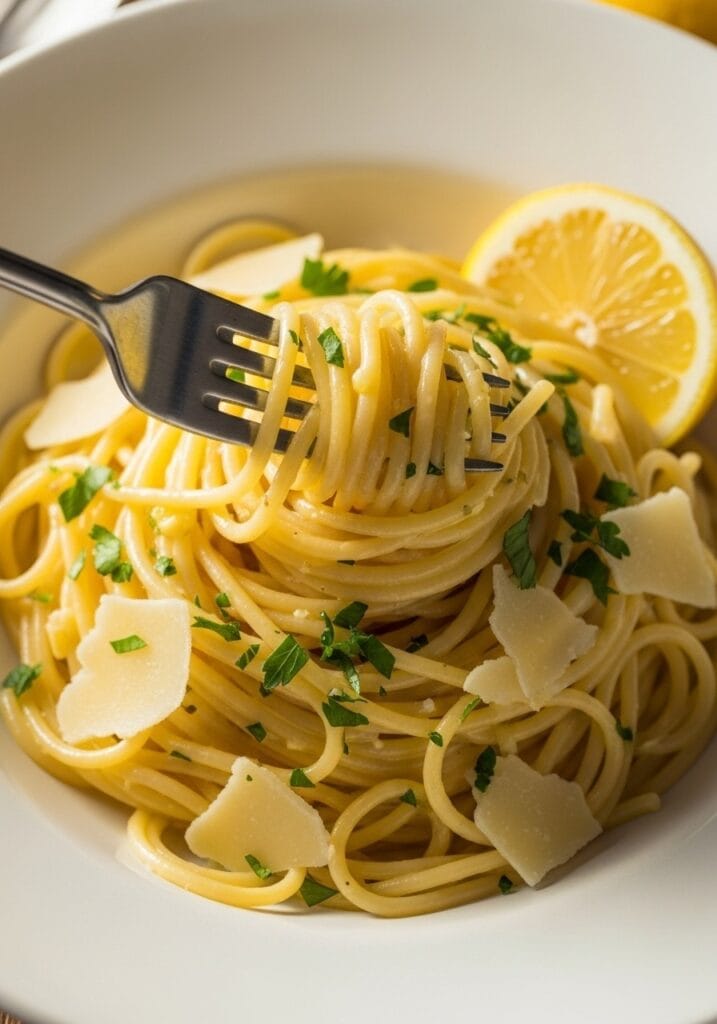
Step 16: Serve immediately in bowls. Top with remaining parsley, Parmesan, and extra lemon zest for a pop of color and fresh citrus aroma.
Variations to Try
Once you’ve mastered the basic lemon butter sauce pasta, the possibilities multiply. Sometimes I crave something heartier, so I add protein.
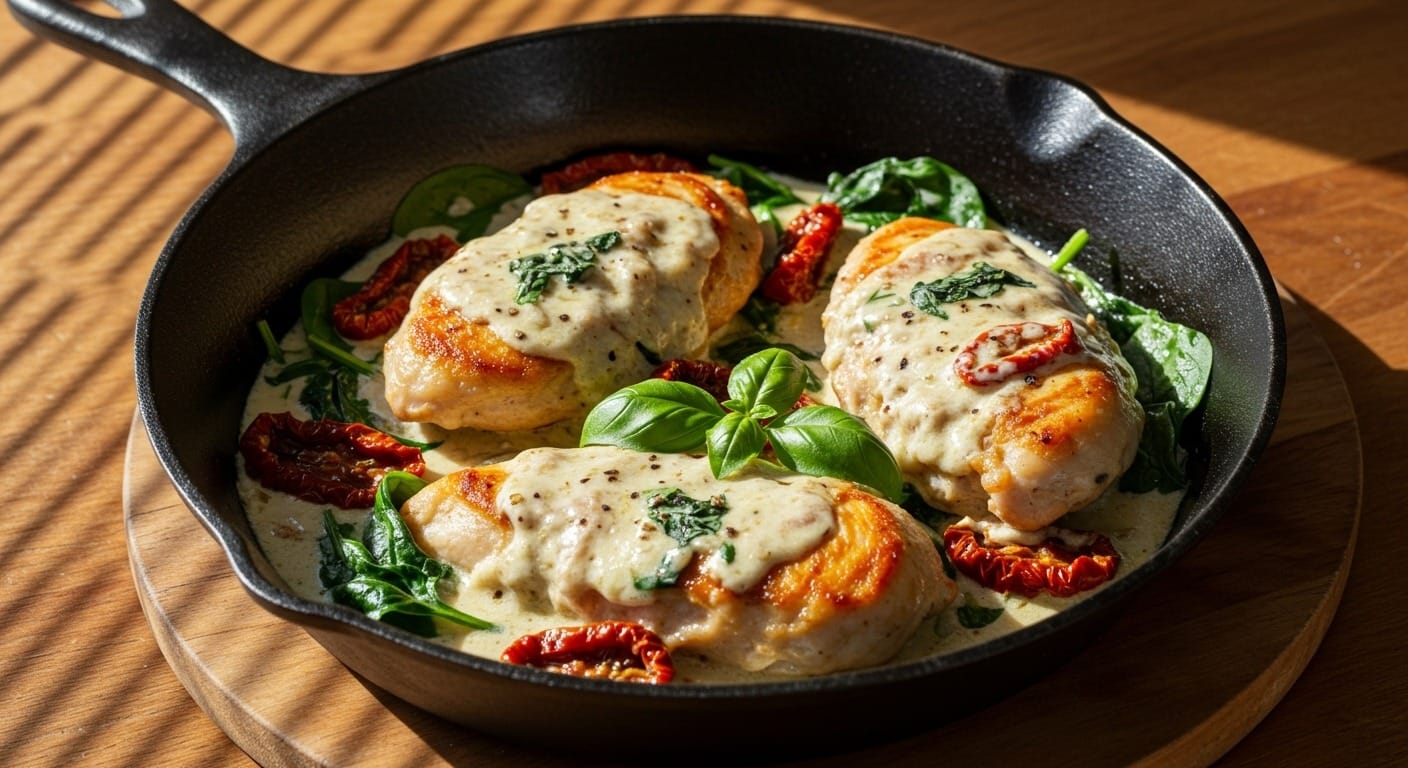
For lemon butter chicken pasta, season 2 chicken breasts with salt and pepper. Pan-sear them in a separate skillet with a bit of olive oil until golden and cooked through, about 6-7 minutes per side. Let them rest for 5 minutes, then slice thinly. Toss the sliced chicken with the finished pasta or arrange it on top. The chicken absorbs the lemon butter sauce beautifully.
If you prefer seafood, lemon butter garlic pasta with shrimp is stunning. Add 400g of peeled, deveined shrimp to the garlic butter in step 8. Cook for 2-3 minutes until pink and opaque, then remove them before adding the lemon and cream. Return the shrimp to the pot at the end. Similar to how I make garlic butter shrimp, but with that bright lemon twist.
Want more vegetables? Add 2 cups of baby spinach in the last minute of tossing. It wilts perfectly and adds color. Cherry tomatoes, halved and added with the lemon juice, provide bursts of sweetness. Asparagus, blanched and chopped, works wonderfully in spring.
For a richer sauce, some people add an egg yolk at the end (off heat) like a carbonara. Whisk it with a bit of pasta water first, then stir it into the pasta. The residual heat cooks the yolk gently, creating an even silkier texture.
Tips for Perfect Results
The timing of adding pasta water matters more than you’d think. Add it gradually, not all at once. Too much liquid creates soup, not sauce. I usually start with 3/4 cup and add more only if needed.
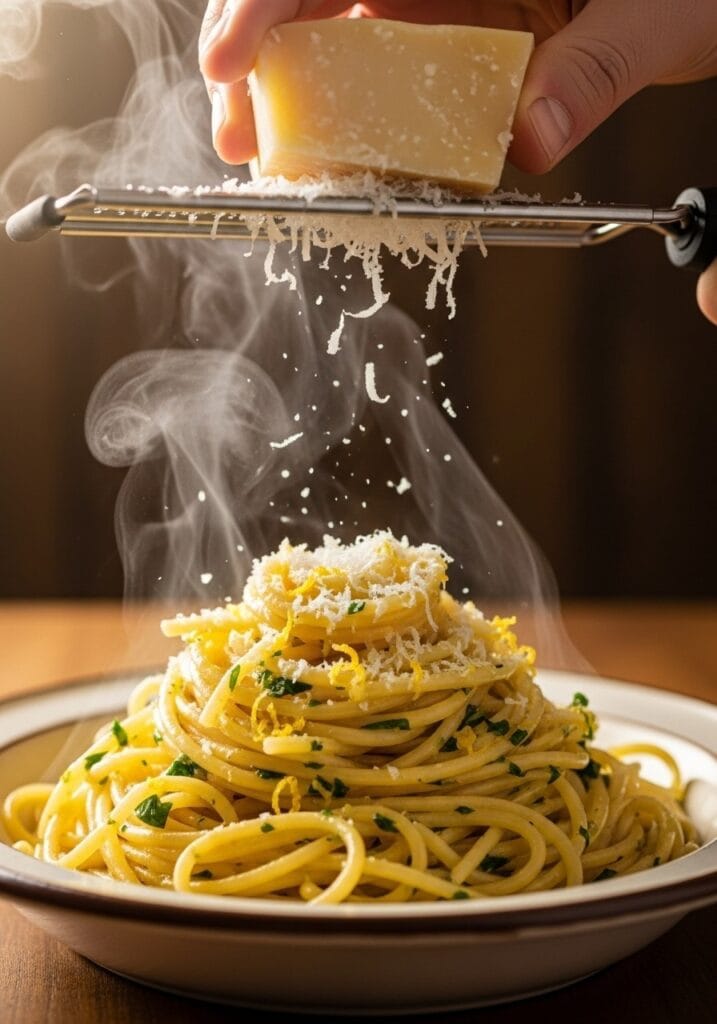
Use freshly grated Parmesan, not the pre-grated kind in a container. Fresh Parmesan melts into the sauce and adds a nutty, salty depth. The pre-grated stuff has anti-caking agents that make the sauce grainy.
Don’t overcook the garlic. Burnt garlic tastes bitter and ruins the entire dish. If you accidentally burn it, dump it out, wipe the pot, and start the butter step over. I’ve learned this the hard way.
For the brightest lemon flavor, zest before juicing. Once you cut a lemon, it’s much harder to zest. Also, roll the lemons on the counter with your palm before cutting – it breaks down the membranes inside and you’ll get more juice.
If you’re meal prepping, this pasta is best eaten fresh. The sauce gets absorbed and the pasta dries out after a day in the fridge. However, you can refresh leftovers by adding a splash of cream or pasta water and reheating gently on the stovetop. The microwave makes it gummy.
Serving Suggestions
This lemon butter pasta works as a main dish or a side. As a main, I serve it with a simple arugula salad dressed with olive oil and lemon juice. The peppery greens complement the creamy pasta perfectly.
Garlic bread is a classic pairing, though honestly, you’re already getting garlic in the pasta. I prefer crusty Italian bread to soak up any extra sauce on the plate.
For weeknight dinners, this pairs nicely with roasted vegetables. Broccoli, green beans, or zucchini roasted with olive oil and salt add color and nutrition without much effort.
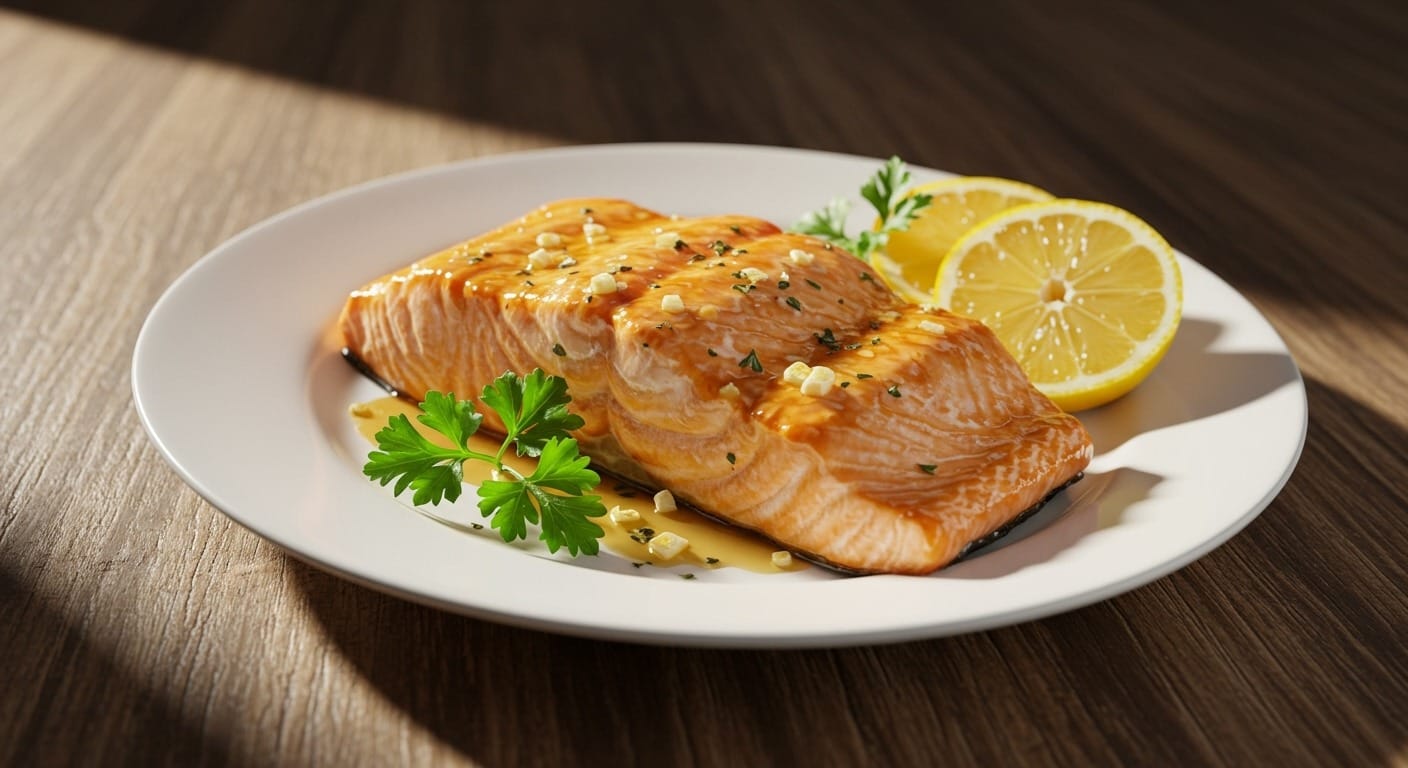
If you’re serving this for guests, consider adding a protein and calling it lemon butter chicken pasta or serving it alongside baked honey garlic salmon for an elegant meal that looks far more complicated than it actually is.
A crisp white wine – Pinot Grigio or Sauvignon Blanc – cuts through the richness beautifully. The citrus notes in the wine echo the lemon in the pasta.
Storage and Reheating
Store leftovers in an airtight container in the refrigerator for up to 2 days. The pasta will absorb most of the sauce, and the texture won’t be quite the same as when it’s fresh.
To reheat, add the pasta to a skillet with 2-3 tablespoons of water or cream per serving. Heat over medium-low, stirring frequently, until warmed through. This rehydrates the pasta and loosens the sauce. The microwave works too but tends to make the pasta rubbery – if you use it, add liquid and stir halfway through.
I don’t recommend freezing this dish. Cream-based sauces separate when frozen and thawed, and the pasta texture suffers. It’s so quick to make that it’s better to just prepare it fresh.
Common Mistakes to Avoid
The biggest mistake people make is not reserving pasta water before draining. I’ve forgotten this more times than I care to admit, and you end up with a sauce that’s too thick and won’t coat the pasta properly. Set a reminder on your phone if you need to – that starchy water is essential.
Another issue is cooking the pasta completely in the boiling water. Remember, it continues cooking in the sauce. If you cook it fully, then toss it in the hot sauce, you’ll end up with mushy pasta that breaks apart.
Don’t let the sauce sit on high heat for too long after adding the cream. High heat can cause the cream to break and look curdled. Medium heat is your friend here.
Using too much lemon juice makes the dish sour instead of bright. Start with the amount in the recipe and taste before adding more. You can always add, but you can’t take away.
Finally, serve immediately. This isn’t a dish that sits well. The pasta continues to absorb sauce as it waits, and within 10 minutes it goes from perfectly saucy to dry. If you’re not ready to eat, keep the sauce and pasta separate until serving time, then toss them together.
Why You’ll Make This Again
This recipe saved me on countless nights when I thought I had nothing to make for dinner. It uses pantry staples and comes together faster than ordering takeout.
The flavor is sophisticated enough to serve to guests but easy enough for a Tuesday night. Kids like it because it’s creamy and not too lemony. Adults appreciate the brightness and how it doesn’t leave you feeling heavy.
It’s also incredibly adaptable. Once you understand the basic technique, you can adjust it to your taste or what you have on hand. More garlic? Go for it. Want it lighter? Skip the cream and add more pasta water. Prefer short pasta? Penne and rigatoni work great too.
For more inspiration on simple pasta dishes that deliver big flavor with minimal effort, check out our collection of quick and easy meals – you’ll find plenty of ideas for those nights when you need dinner on the table fast.
Recipe Information:
- Servings: 4 people
- Prep Time: 5 minutes
- Cook Time: 15 minutes
- Total Time: 20 minutes
- Difficulty Level: Easy
- Equipment Needed: Large pot, colander, measuring cups, wooden spoon or tongs, microplane or zester
This lemon butter pasta has become one of my most-requested recipes. Friends text me asking for “that lemon pasta thing” whenever they’re stuck in a dinner rut. My sister makes it at least twice a month. It’s proof that you don’t need complicated recipes or expensive ingredients to make something truly delicious. Sometimes the simplest dishes, made well, are the ones that stick with you.
Still wondering what to cook tomorrow? Take the stress out of dinner with my simple 7-day meal plan.
Get the 7-Day Meal Plan for $2.99