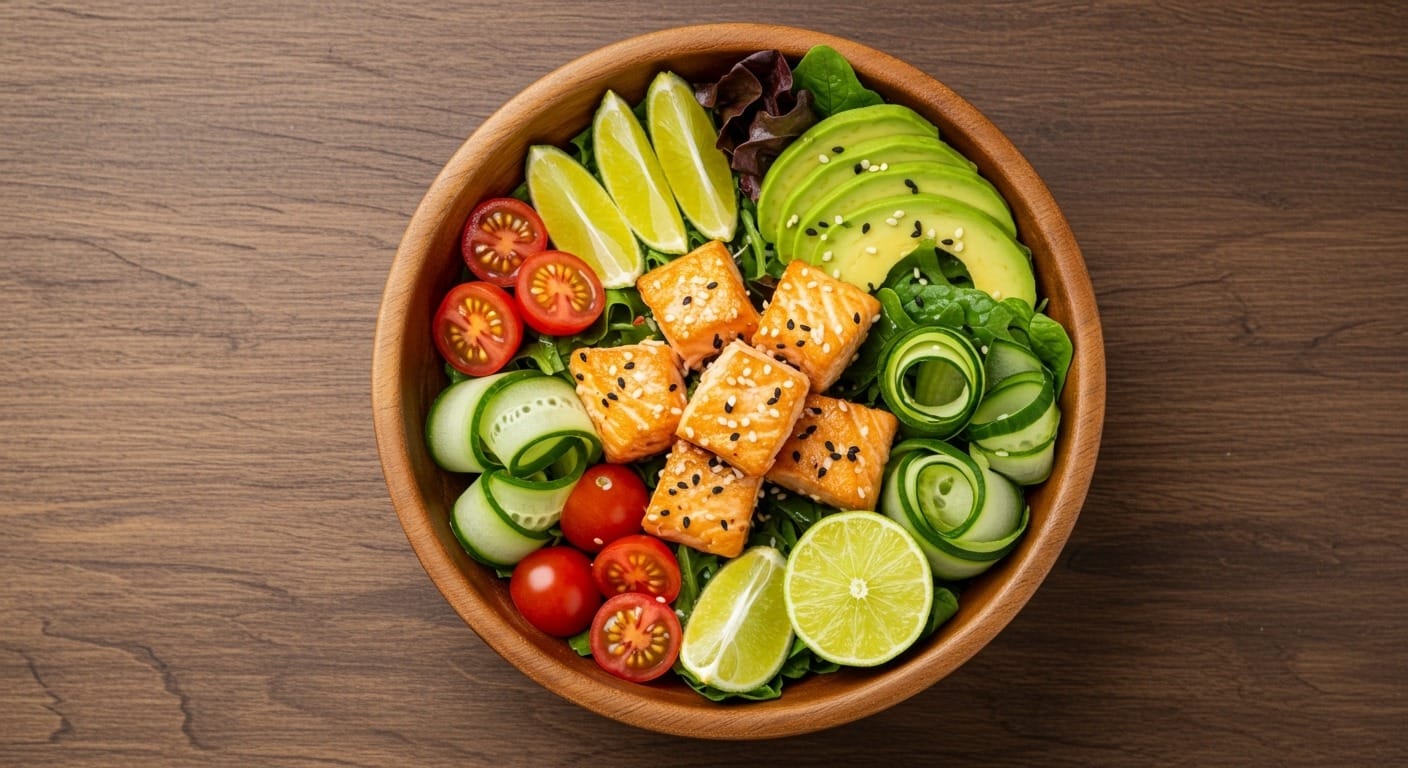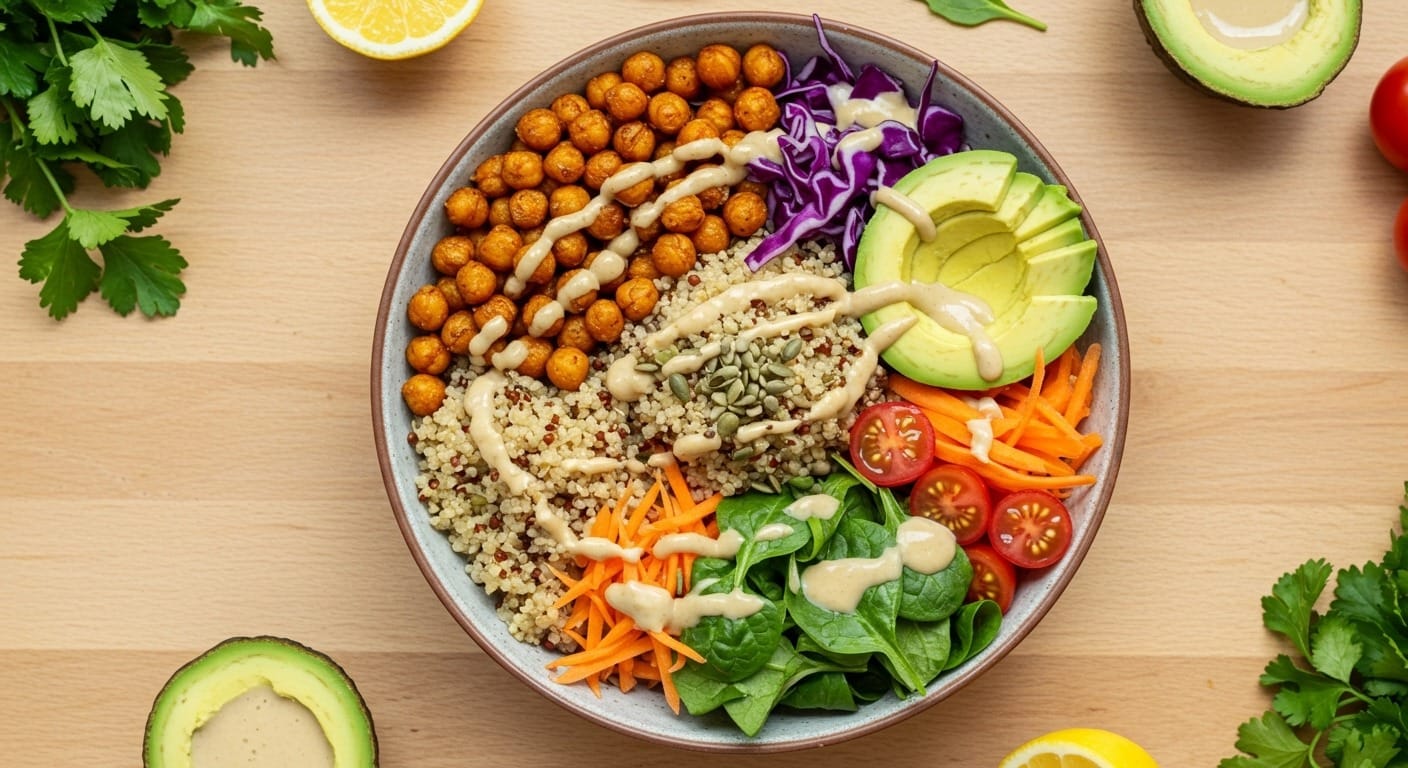

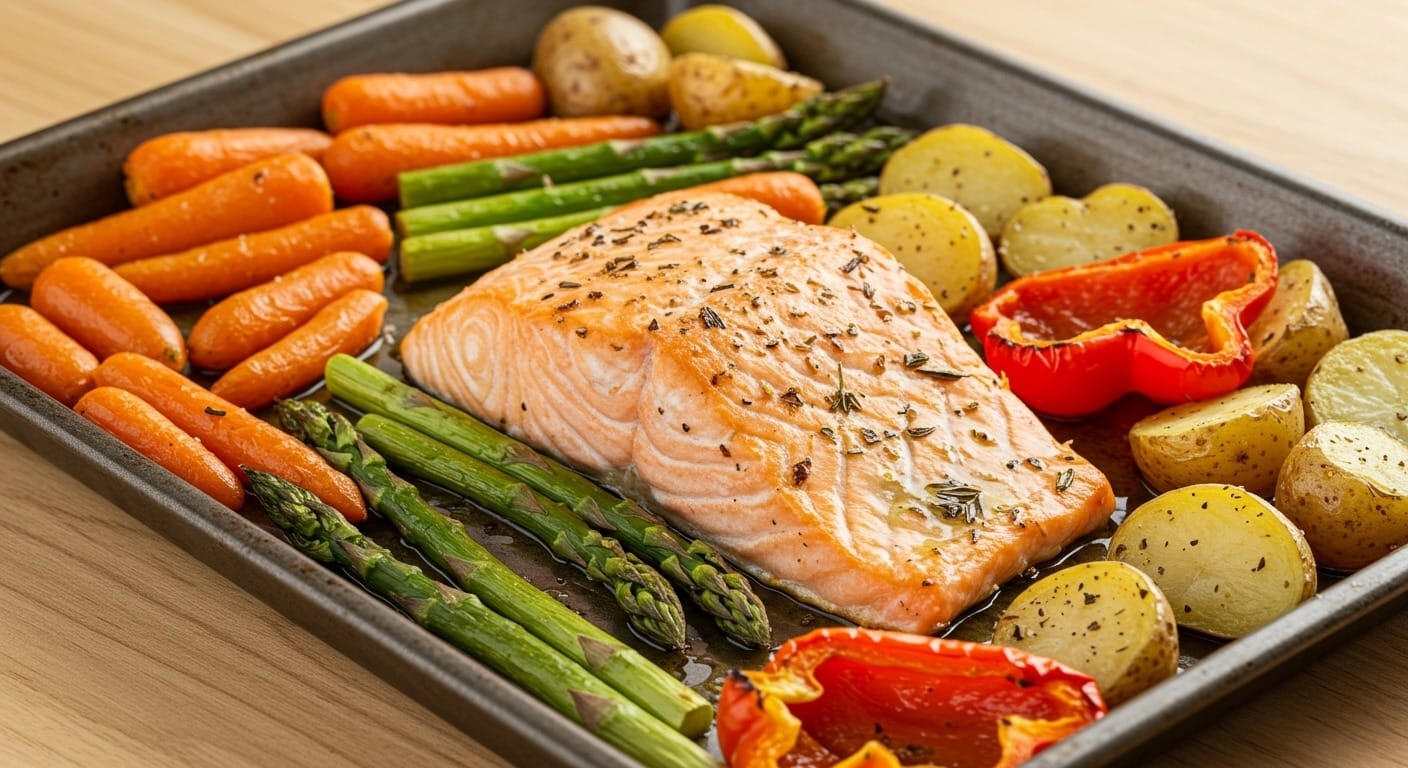
There’s something oddly satisfying about cooking an entire meal on one pan. Maybe it’s the minimal cleanup, or the way everything roasts together, creating those caramelized edges I secretly love more than the main dish itself. This sheet pan salmon and veggies recipe has become my Thursday night savior – the day when my energy is low but my hunger is very real.
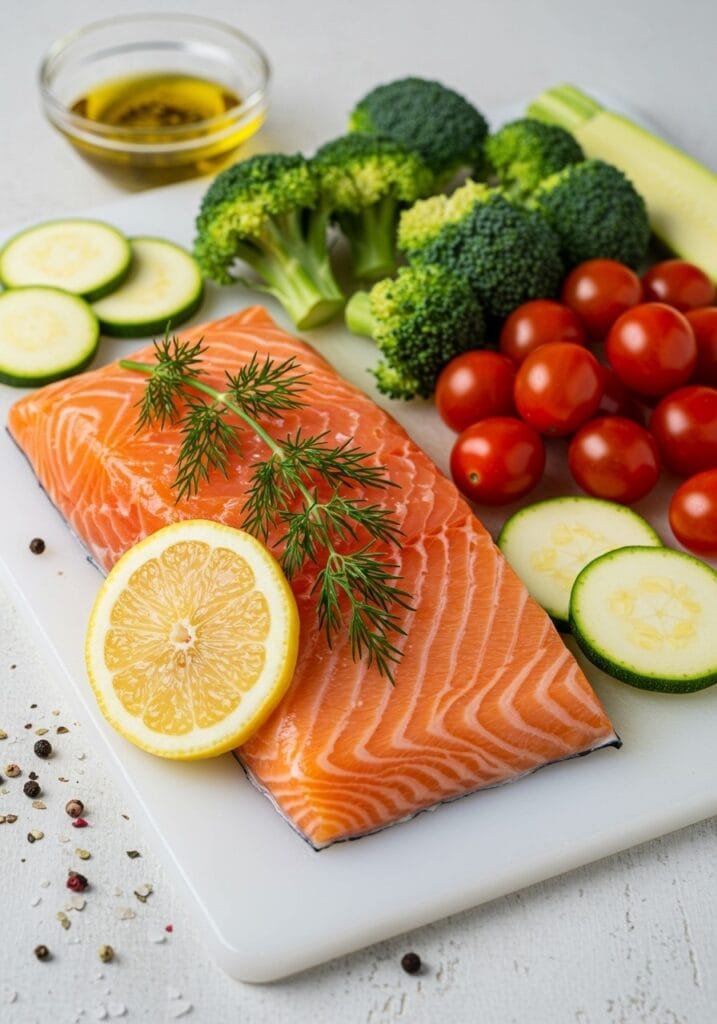
The beauty of sheet pan meals is that they don’t require much skill or attention. You arrange everything, season it, and let the oven do its thing. In about 30 minutes, you’ve got flaky salmon, tender-crisp vegetables, and zero guilt about ordering takeout again. It’s healthy without feeling like a compromise, and honestly? It tastes way better than it has any right to for how little effort it requires.
Why This Recipe Works
I’ve tried countless salmon with vegetables combinations, and this one consistently delivers. The vegetables get a head start in the oven since they take longer to roast, then the salmon joins them for the final stretch. This timing trick means everything finishes together – no overcooked fish or crunchy carrots.
Tired of Deciding What to Cook Every Night?
I’ve put together a simple 7-day dinner meal plan using my most-loved recipes — complete with a grocery list and flexible swaps.
Just $2.99 – Instant Download
Get the Meal PlanThe seasoning is intentionally simple. Garlic powder, paprika, a squeeze of lemon. Nothing fancy, but these flavors complement rather than compete. I’ve found that salmon already has such a rich, buttery taste that it doesn’t need much help. The vegetables, though, they soak up every bit of seasoning and olive oil, turning into these slightly charred, caramelized bites that I sometimes sneak before dinner even makes it to the table.
This is also incredibly forgiving. Running late? The veggies can hang out in the oven for an extra 5 minutes. Forgot to defrost the salmon? It works from frozen too, just add a few minutes to the cooking time.
Ingredients You’ll Need
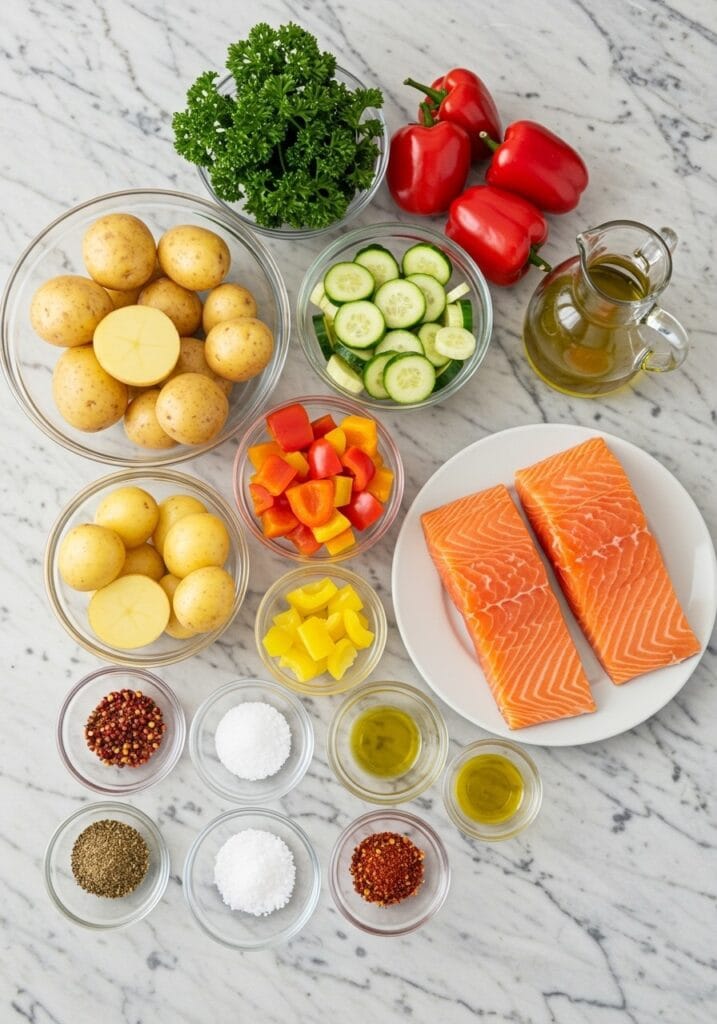
For the Vegetables:
- 300g baby potatoes, halved
- 2 medium carrots, sliced into rounds (about 150g)
- 1 red bell pepper, cut into chunks
- 1 medium zucchini, sliced (about 200g)
- 200g asparagus spears, trimmed
- 3 tbsp olive oil
- 1 tsp garlic powder
- 1/2 tsp paprika
- Salt and black pepper to taste
For the Salmon:
- 4 salmon fillets (about 150g each)
- 2 tbsp olive oil
- 1 tsp garlic powder
- 1/2 tsp dried dill or Italian herbs
- 1/2 tsp paprika
- Salt and black pepper to taste
- 1 lemon, sliced
- Fresh parsley for garnish (optional)
Substitutions: Don’t have asparagus? Broccoli florets work great. No fresh dill? Dried oregano or thyme are solid alternatives. If salmon feels too pricey, this method works beautifully with cod or even chicken breasts.
Step-by-Step Instructions
Servings: 4
Prep Time: 10 minutes
Cook Time: 25-30 minutes
Difficulty: Easy
Equipment: Large baking sheet, parchment paper or aluminum foil, mixing bowl
Preparing the Vegetables
- Preheat your oven to 200°C (400°F).
- Line a large baking sheet with parchment paper for easy cleanup.
- Add the halved potatoes, carrot rounds, bell pepper chunks, and zucchini slices to a large mixing bowl.
- Drizzle 3 tbsp olive oil over the vegetables.
- Sprinkle 1 tsp garlic powder, 1/2 tsp paprika, salt, and black pepper over everything.
- Toss everything together with your hands until the vegetables are evenly coated – this takes about 30 seconds.
- Spread the vegetables in a single layer on the prepared baking sheet, making sure they’re not crowded.
- Leave space in the center or on one side for the salmon fillets.
- Place the baking sheet in the oven and roast for 12 minutes on medium-high heat.
Tip: The vegetables should have some space between them. Crowding causes steaming instead of roasting, and you’ll miss out on those crispy, caramelized edges.
Preparing the Salmon
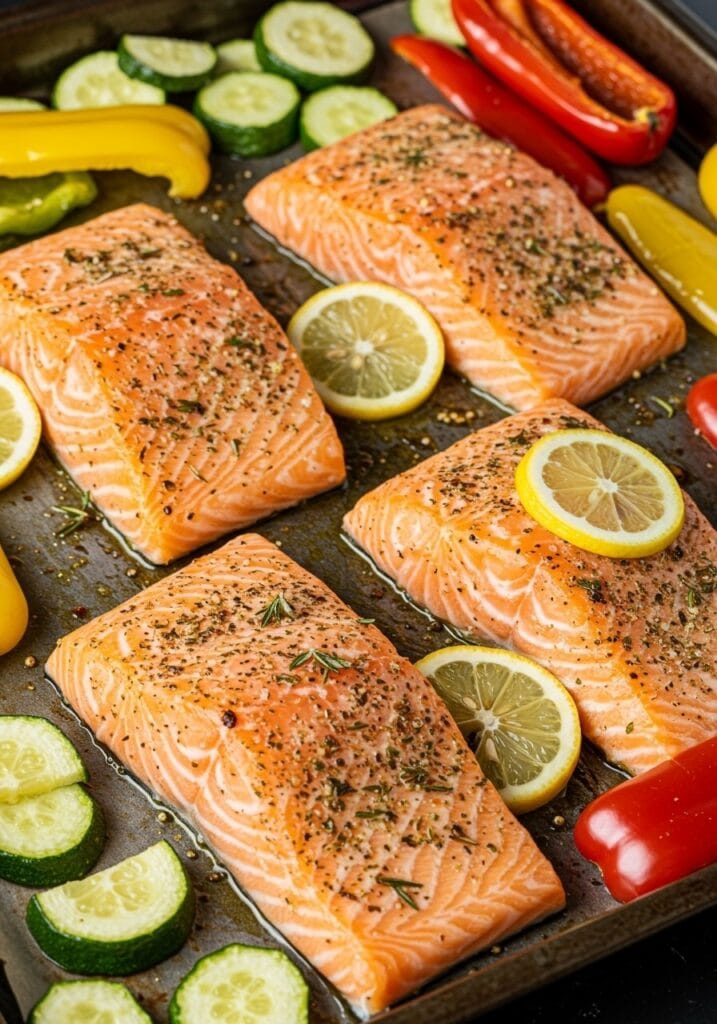
- While the vegetables are roasting, pat the salmon fillets dry with paper towels – this helps them get a better sear.
- Brush both sides of each fillet with olive oil.
- Mix together 1 tsp garlic powder, 1/2 tsp dried dill, 1/2 tsp paprika, salt, and pepper in a small bowl.
- Sprinkle this seasoning mixture evenly over the top of each salmon fillet.
- Let the salmon sit at room temperature while the vegetables finish their first roasting phase.
Bringing It All Together
- After 12 minutes, carefully remove the baking sheet from the oven.
- Give the vegetables a quick stir or shake to redistribute them.
- Nestle the seasoned salmon fillets into the spaces you left between the vegetables.
- Tuck the asparagus spears around the salmon – they cook faster, so adding them now prevents them from getting mushy.
- Place a lemon slice on top of each salmon fillet.
- Return the baking sheet to the oven and roast for another 12-15 minutes on medium-high heat.
- The salmon is done when it flakes easily with a fork and reaches an internal temperature of 63°C (145°F).
- The vegetables should be tender with golden-brown edges.
Visual cue: The salmon will change from translucent pink to opaque, and the top should have a slightly darker, almost caramelized appearance. If you see white albumin (that white protein) oozing out, you’ve slightly overcooked it, but it’s still perfectly safe and tasty.
Serving
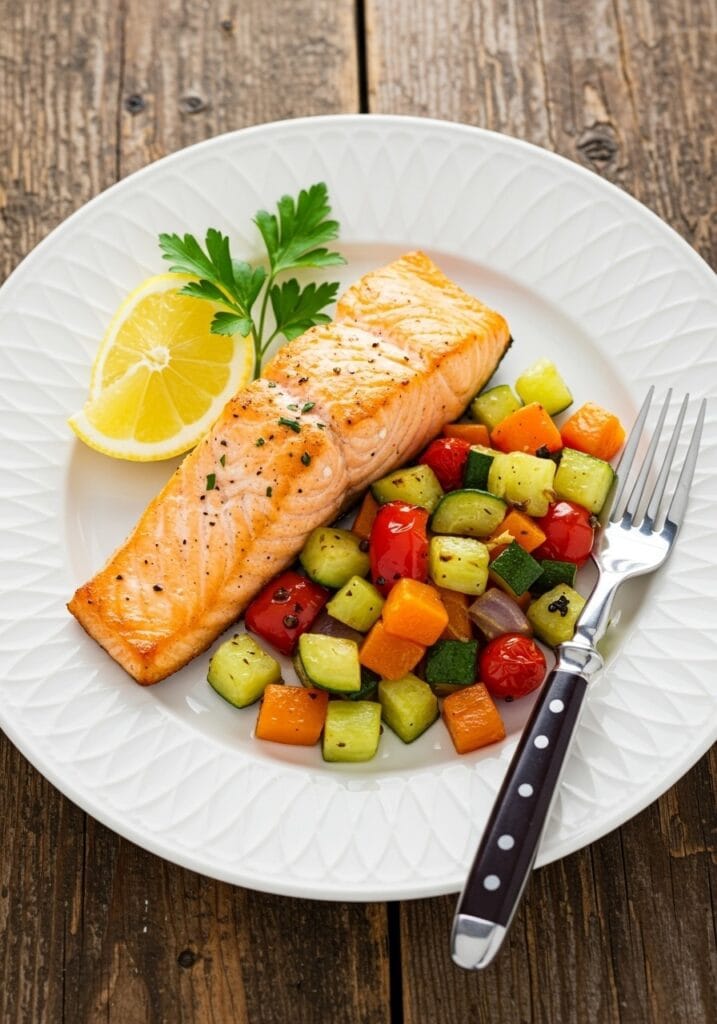
- Remove the baking sheet from the oven and let it rest for 2-3 minutes.
- Transfer the salmon fillets to serving plates using a spatula.
- Divide the roasted vegetables among the plates.
- Squeeze fresh lemon juice over everything.
- Garnish with chopped fresh parsley if you have it.
- Serve immediately while everything is hot and the salmon is at its flakiest.
What Makes This an Easy Healthy Recipe
The nutritional profile here is genuinely impressive without trying too hard. Salmon brings omega-3 fatty acids, high-quality protein, and vitamin D. The vegetables add fiber, vitamins, and minerals. A serving delivers roughly 450 calories with about 30g of protein – enough to keep you satisfied without that heavy, overstuffed feeling.
I appreciate that this fits into most eating styles. It’s naturally gluten-free, dairy-free, and works for paleo or keto diets if you reduce the potatoes. For a complete healthy meal, I sometimes add a side of quinoa or a simple green salad, but honestly? It’s filling enough on its own.
The cleanup is what really sells this as a weeknight dinner champion. One pan, some parchment paper, maybe a mixing bowl – that’s it. On particularly exhausted evenings, I’ve been known to eat directly from the baking sheet while standing at the counter. No judgment here.
Tips for the Best Sheet Pan Salmon
Timing is everything. Check your salmon at the 12-minute mark. Thinner fillets might need only 10 minutes, while thicker cuts could go 15. I’ve learned this the hard way – overcooked salmon is dry and disappointing.
Don’t skip the parchment paper. It prevents sticking and makes cleanup genuinely effortless. Aluminum foil works too, but I find parchment gives slightly better roasting results.
Cut vegetables uniformly. This ensures even cooking. If your carrot rounds are twice the size of your zucchini slices, something will be either undercooked or burnt. Aim for similar sizes across all vegetables.
Use room-temperature salmon if possible. Cold fillets from the fridge need longer cooking time and may result in unevenly cooked fish. Let them sit out for 15-20 minutes before seasoning.
Consider your vegetables carefully. Harder vegetables like potatoes and carrots need that head start. Quick-cooking options like cherry tomatoes or spinach can be added in the final 5 minutes. This is similar to what I do with my shrimp fajitas sheet pan recipe.
Variations to Try
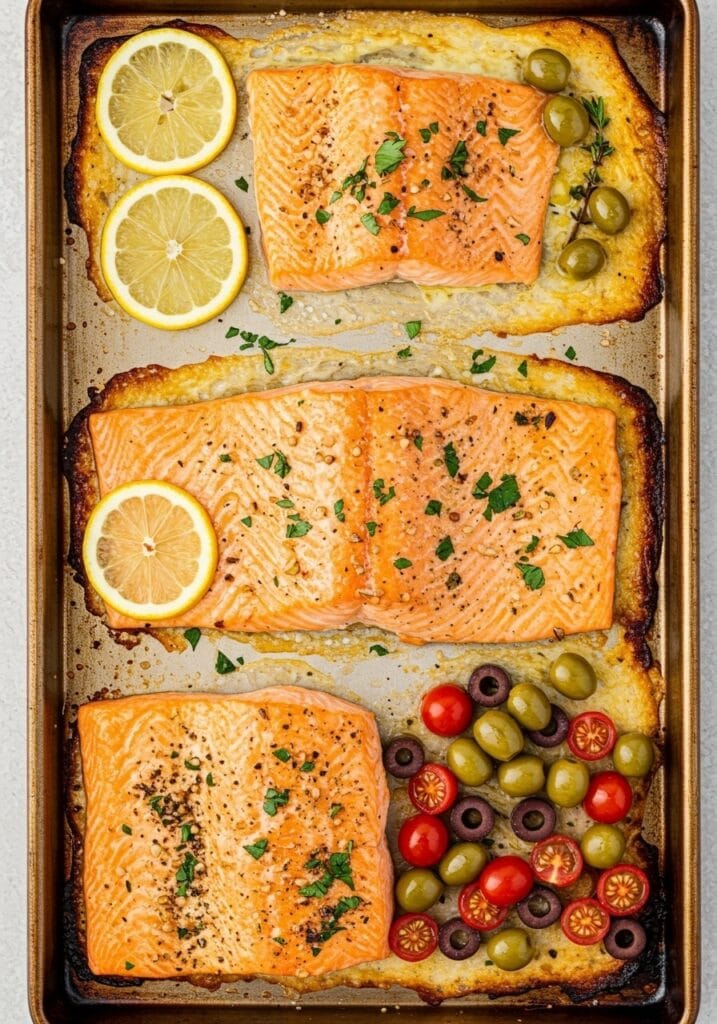
Sometimes I swap the lemon-herb seasoning for a honey-garlic glaze, similar to my baked honey garlic salmon. Just mix 2 tbsp honey with 2 minced garlic cloves and 1 tbsp soy sauce, then brush it over the salmon halfway through cooking. The vegetables get a touch of sweetness too, which works surprisingly well with the caramelization.
For a Mediterranean twist, use cherry tomatoes, red onion, and Kalamata olives with the vegetables. Season everything with oregano and finish with crumbled feta cheese after roasting. It transforms the entire dish.
If you’re following a lower-carb plan like I sometimes do with my keto salmon avocado bowls, skip the potatoes entirely and double up on the zucchini and bell peppers. Add some broccoli florets too.
Storing and Reheating Leftovers
This reheats better than most salmon dishes, probably because the vegetables help retain moisture. Store everything in an airtight container in the fridge for up to 3 days. I separate the salmon from the vegetables to prevent the fish from getting too soft.
For reheating, I prefer the oven at 160°C (325°F) for about 10 minutes. The microwave works in a pinch – just use 50% power and heat in 30-second intervals to avoid drying out the salmon. Sometimes I flake the leftover salmon and toss it with the vegetables into a quick lunch bowl with some greens and a drizzle of tahini.
The vegetables actually improve overnight as they absorb all those seasonings. I’ve eaten them cold straight from the fridge more times than I’d like to admit.
Pairing Suggestions
This meal is pretty complete on its own, but if you want to stretch it further or add variety, consider a simple grain. Quinoa, brown rice, or even a slice of crusty bread work well. For a lighter approach, try it over mixed greens as a warm salad.
Wine-wise (for those evenings when you’re feeling fancy), a crisp Sauvignon Blanc or a light Pinot Grigio complements the salmon beautifully without overpowering it. If you prefer something non-alcoholic, sparkling water with a squeeze of lemon matches the fresh, clean flavors.
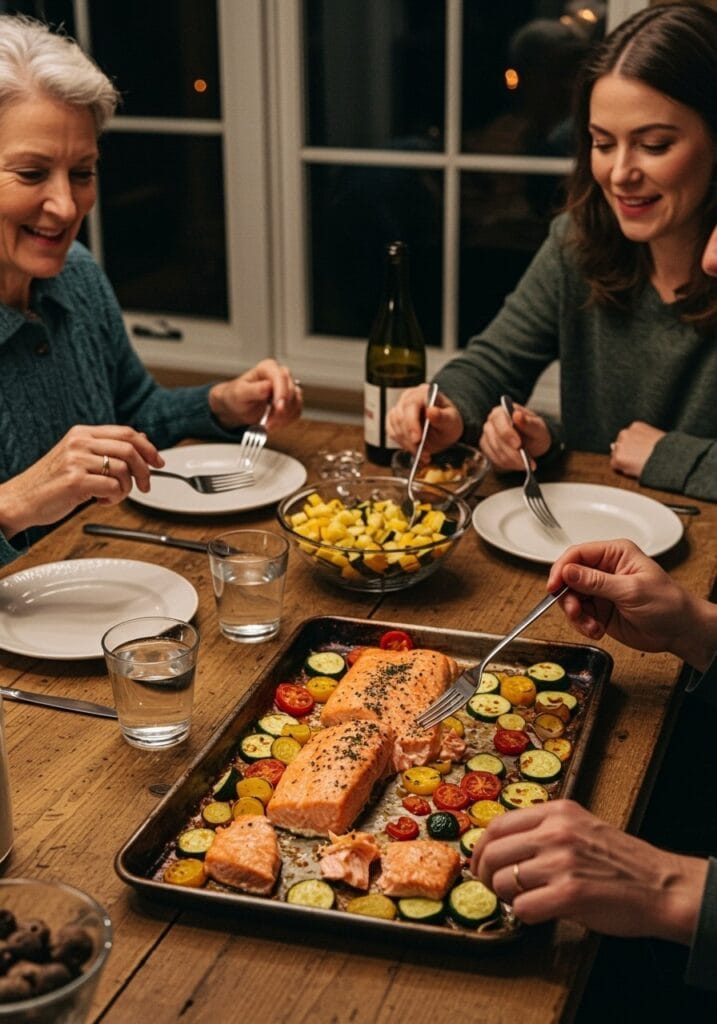
I sometimes serve this family-style, letting everyone help themselves directly from the baking sheet. It’s casual and somehow makes the meal feel more relaxed, which is exactly what quick easy meals should be about.
Why You’ll Make This Again
The first time I made sheet pan salmon and veggies, I was skeptical. Could something this simple really be satisfying? Turns out, yes. The combination of textures – flaky salmon, crispy-edged vegetables, tender insides – creates this complete eating experience that doesn’t feel like you compromised on anything.
It’s become one of those recipes I recommend to friends who claim they can’t cook. If you can arrange things on a pan and set a timer, you can make this. There’s no complicated technique, no fancy equipment, no mysterious ingredients that require a trip to a specialty store.
The versatility keeps it from getting boring. One week it’s lemon-herb, the next it’s spicy with cayenne and cumin, then maybe Asian-inspired with ginger and sesame oil. The formula stays the same, but the flavors shift enough that it never feels repetitive.
Plus, there’s something undeniably appealing about cooking a complete, nutritious meal that doesn’t generate a sink full of dishes. On those evenings when the kitchen feels like too much effort, this recipe meets you where you are and still delivers something worth sitting down for.
If you’re looking for more inspiration in the healthy meal category, this technique works with so many proteins and vegetable combinations. It’s less a recipe and more a method you’ll find yourself adapting constantly.
Whether you’re cooking for yourself, your family, or meal-prepping for the week ahead, sheet pan salmon and veggies delivers on the promise of effortless, healthy dinners. No drama, no complexity – just good food that happens to be good for you too. And really, isn’t that what weeknight cooking should be?
Still wondering what to cook tomorrow? Take the stress out of dinner with my simple 7-day meal plan.
Get the 7-Day Meal Plan for $2.99