
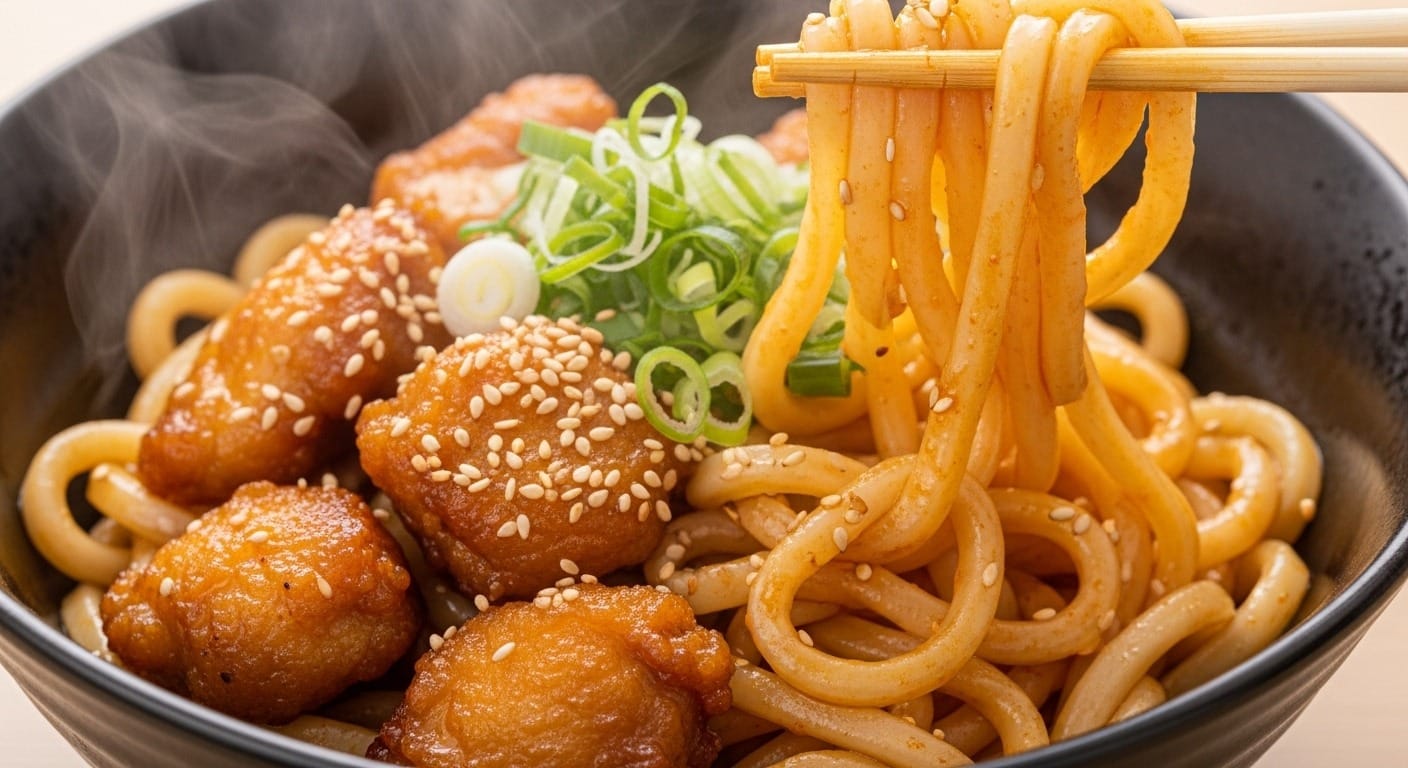
My neighbor came back from a trip to Japan last year and wouldn’t stop talking about the udon noodles she had at a tiny street-side shop in Osaka. She said they were thick, chewy, and coated in the most addictive spicy sauce she’d ever tasted. That conversation stuck with me, and I became a little obsessed with recreating that experience at home. After trying different variations, I finally landed on this recipe – and honestly, it’s become my go-to weeknight dinner when I want something satisfying but don’t have hours to spend in the kitchen.
This spicy chicken udon noodle dish takes about 25 minutes from start to finish, which makes it perfect for those evenings when you’re exhausted but still want real food. The beauty of udon noodles chicken recipes is that the thick noodles soak up all that spicy, garlicky sauce while the chicken stays tender and juicy. You get layers of flavor – heat from the chili, umami from the soy sauce, and a subtle sweetness that balances everything out. It’s not just spicy for the sake of being spicy; there’s depth to it.
If you’re someone who thinks quick and easy meals have to be boring, this recipe will change your mind. The cooking process is straightforward, but the results taste like you spent way more effort than you actually did. Plus, you can adjust the heat level based on your preference, so even if you’re cooking for people with different spice tolerances, this works.
Tired of Deciding What to Cook Every Night?
I’ve put together a simple 7-day dinner meal plan using my most-loved recipes — complete with a grocery list and flexible swaps.
Just $2.99 – Instant Download
Get the Meal PlanWhy This Recipe Works
The key to great chicken and udon noodles is getting the texture right. Udon noodles are naturally thick and chewy, and when you cook them properly, they have this satisfying bite that thinner noodles just can’t match. The chicken needs to be seared quickly over high heat so it develops a golden crust while staying moist inside. Then everything gets tossed together in a sauce that clings to every surface.
I’ve tried making this with different types of noodles, and trust me, fresh or frozen udon noodles are worth seeking out. They’re usually available in the refrigerated or frozen section of Asian grocery stores, and some regular supermarkets carry them too. If you absolutely can’t find them, thick rice noodles can work in a pinch, but the texture won’t be quite the same.
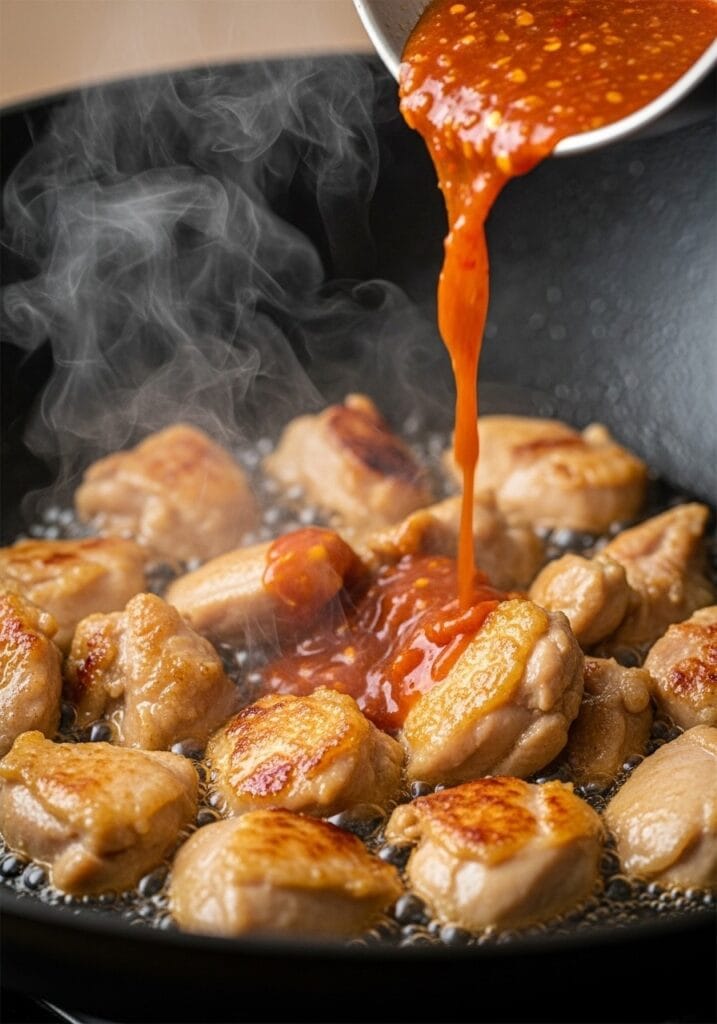
The sauce is where the magic happens. It’s a combination of soy sauce, chili paste, garlic, ginger, and a touch of honey to balance the heat. You could use gochujang if you want a Korean-style kick, or sambal oelek for a Southeast Asian vibe. Both work beautifully, and I’ve included substitutions below so you can use what you have on hand.
What You’ll Need
Skill Level: Beginner-friendly
Prep Time: 10 minutes
Cook Time: 15 minutes
Total Time: 25 minutes
Servings: 4 servings
Equipment: Large pot for noodles, wok or large skillet, mixing bowls, knife and cutting board
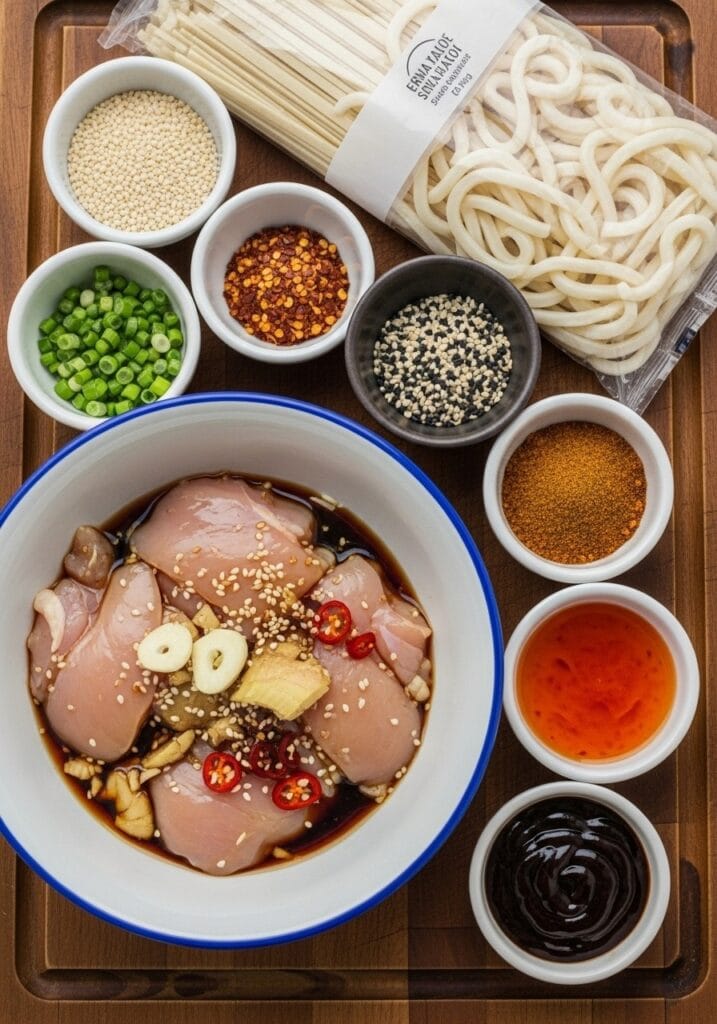
For the Chicken Marination
- 500g boneless, skinless chicken thighs or breasts, cut into bite-sized pieces
- 2 tbsp soy sauce
- 1 tbsp rice vinegar
- 1 tsp sesame oil
- 2 cloves garlic, minced
- 1 tsp fresh ginger, grated
For the Noodles
- 400g fresh or frozen udon noodles
- 2 tbsp vegetable oil (for stir-frying)
- 1 tsp sesame oil (for finishing)
For the Spicy Sauce
- 3 tbsp soy sauce
- 2 tbsp chili paste (gochujang or sambal oelek)
- 1 tbsp honey or brown sugar
- 2 cloves garlic, minced
- 1 tsp fresh ginger, grated
- 1 tbsp rice vinegar
- 1 tsp cornstarch mixed with 2 tbsp water (for thickening)
- 60ml chicken broth or water
For Garnish
- 2 green onions, sliced
- 1 tbsp sesame seeds (white or black)
- Fresh cilantro (optional)
- Red chili flakes (optional, for extra heat)
Substitutions:
If you can’t find udon noodles, use thick rice noodles or even spaghetti in a pinch. Chicken thighs are juicier, but breasts work too – just don’t overcook them. For a milder version, reduce the chili paste to 1 tablespoon or use sriracha instead. No rice vinegar? Regular white vinegar with a tiny pinch of sugar works fine.
How to Make Spicy Chicken Udon Noodles
Step 1: Marinate the Chicken
Cut the chicken into bite-sized pieces, about 2-3 cm each. Place them in a bowl and add soy sauce, rice vinegar, sesame oil, minced garlic, and grated ginger. Mix everything together with your hands or a spoon, making sure each piece is coated. Let it sit for at least 10 minutes while you prep the rest. If you have more time, 30 minutes is even better, but not necessary.
Step 2: Prepare the Sauce
In a small bowl, whisk together soy sauce, chili paste, honey, minced garlic, grated ginger, rice vinegar, and chicken broth. Mix the cornstarch with water separately and keep it nearby. This sauce comes together quickly, so having everything measured out beforehand makes the cooking process much smoother.
Step 3: Cook the Udon Noodles
Bring a large pot of water to a rolling boil. Add the udon noodles and cook according to package instructions – usually 2-3 minutes for fresh noodles, 5-6 minutes for frozen. You want them tender but still chewy, not mushy. Drain the noodles in a colander and rinse them briefly under cold water to stop the cooking. Toss them with a tiny bit of oil to prevent sticking and set aside.
Step 4: Cook the Chicken
Heat a wok or large skillet over high heat. Add 2 tablespoons of vegetable oil and swirl it around. When the oil is shimmering and almost smoking, add the marinated chicken in a single layer. Let it cook without moving it for 2 minutes so it develops a golden crust. Then stir and continue cooking for another 3-4 minutes until the chicken is cooked through and has some nice caramelized edges. The internal temperature should reach 75°C. Remove the chicken from the pan and set it aside on a plate.
Step 5: Build the Sauce
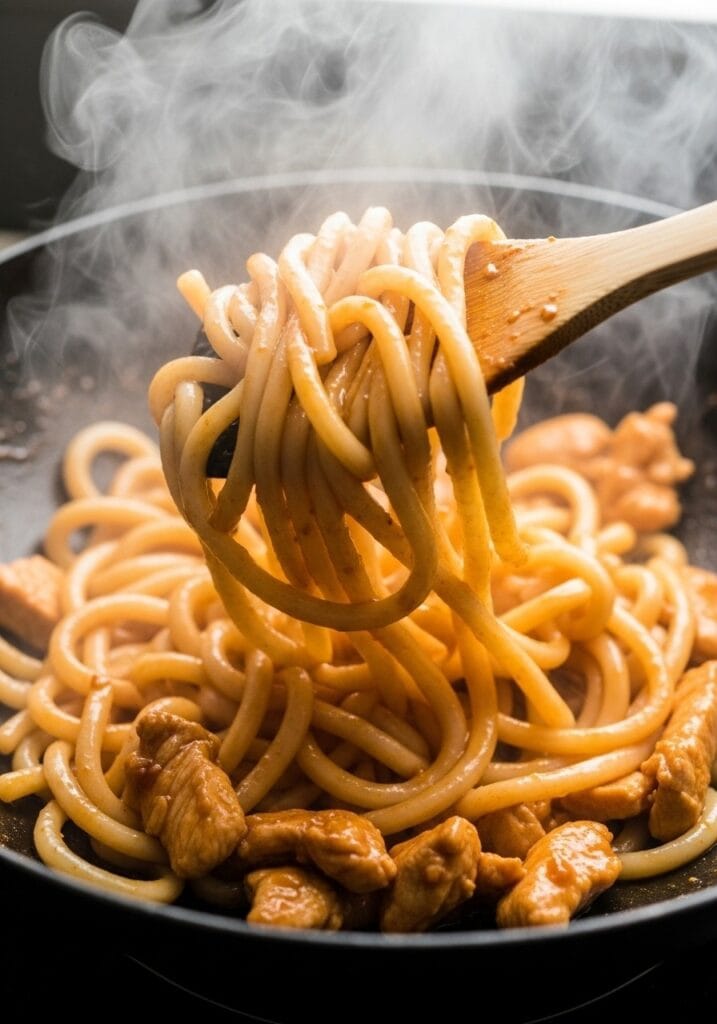
In the same pan (don’t clean it – all that browned bits add flavor), lower the heat to medium. Pour in the sauce mixture and let it bubble for about 30 seconds. Add the cornstarch slurry and stir constantly for another minute until the sauce thickens and becomes glossy. It should coat the back of a spoon.
Step 6: Combine Everything
Add the cooked udon noodles to the pan with the sauce. Toss them around using tongs or two spatulas until every noodle is coated. This takes about 1-2 minutes. Add the cooked chicken back in and toss again to combine. Drizzle with sesame oil and give it one final toss.
Step 7: Serve and Garnish
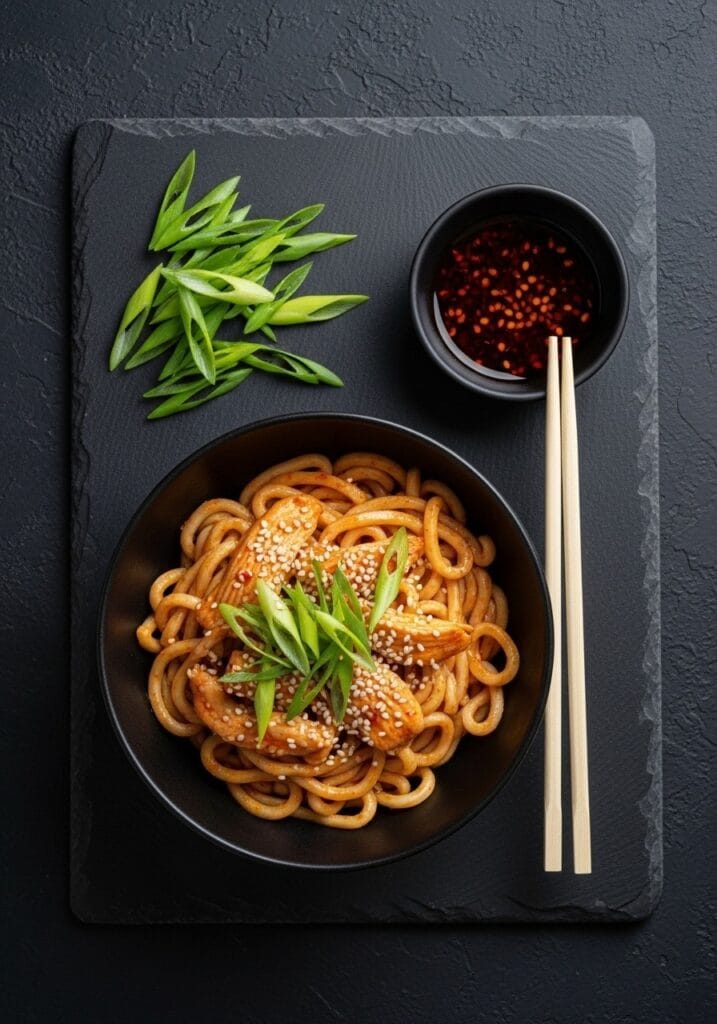
Transfer the chicken udon noodle to serving bowls. Sprinkle with sliced green onions, sesame seeds, and fresh cilantro if you like. For those who want extra heat, add a pinch of red chili flakes on top. Serve immediately while it’s hot.
Tips for the Best Results
The biggest mistake people make with chicken and udon noodles is overcooking the noodles. They should be tender with a slight chew – what the Japanese call “koshi.” If they’re too soft, they’ll turn into a mushy mess when you toss them with the sauce.
Cook your chicken in batches if your pan isn’t big enough. Overcrowding the pan will steam the chicken instead of searing it, and you’ll miss out on that caramelized exterior that adds so much flavor. High heat is your friend here, but make sure your kitchen is well-ventilated because things might get a little smoky.
For the sauce, taste as you go. Spice levels vary widely between brands of chili paste, so start with less and add more if needed. You can always make it spicier, but you can’t undo it once it’s too hot. If you accidentally overdo it, a spoonful of peanut butter or a splash of coconut milk can help mellow things out.
If you’re meal prepping, you can cook the components separately and store them in the fridge for up to 3 days. Just don’t combine everything until you’re ready to eat, or the noodles will absorb too much sauce and become soggy. Reheat everything in a hot pan with a splash of water or broth to loosen the sauce.
Making It Your Own
This recipe is pretty flexible. If you want to add vegetables, bell peppers, snap peas, or bok choy work really well. Toss them in after cooking the chicken and stir-fry for 2-3 minutes before adding the sauce. Some people like adding a soft-boiled egg on top, which is never a bad idea.
For a different protein, shrimp cooks even faster than chicken – just 2-3 minutes total. Tofu is great too if you’re looking for a vegetarian option. Press it well, cube it, and pan-fry until crispy before adding it to the noodles. You could also check out our teriyaki chicken rice bowls if you want to try a similar flavor profile with rice instead of noodles.
The sauce works with other types of noodles too. I’ve made this with ramen noodles (minus the seasoning packet) and it was delicious. You could even try it with spaghetti if that’s what you have – it won’t be authentic, but it’ll still taste good.
Why This Beats Takeout
Making udon noodles chicken at home means you control the ingredients. Restaurant versions often have way more sodium and oil than you need. Plus, you can adjust the spice level to your exact preference, which is impossible when ordering out.
It’s also faster than waiting for delivery. By the time you browse the menu, place an order, and wait for it to arrive, you could’ve already made this and cleaned up your kitchen. And honestly? Homemade tastes fresher. Those noodles are hot and perfectly chewy, the chicken is tender, and the sauce hasn’t been sitting around getting weird.
If you’re into quick and easy meals that don’t sacrifice flavor, this is exactly the kind of recipe you need in your regular rotation. It’s the type of dish that makes people think you’re a better cook than you actually are, which is always a nice bonus.
I’ve served this to friends who don’t usually like spicy food, and they’ve gone back for seconds after adjusting the heat level. It’s one of those rare recipes that works for a crowd with different tastes. Just put the chili flakes on the side and let people customize their own bowls.
Pairing Suggestions
This dish is pretty filling on its own, but if you want sides, keep them light and fresh. A simple cucumber salad with rice vinegar and sesame oil cuts through the richness. Steamed edamame with sea salt is another easy option that adds some protein without competing with the main dish.
For drinks, iced green tea or a light beer works well. Something crisp and refreshing helps balance the spice. If you’re not into alcohol, sparkling water with a squeeze of lime is perfect.
And if you’re looking for dessert, something light and fruity makes sense after a rich, spicy meal. Our no-bake strawberry cheesecake cups are a crowd-pleaser and don’t require turning on the oven.
Storing and Reheating
Leftovers keep well in an airtight container in the fridge for up to 3 days. The noodles will absorb some of the sauce as they sit, so add a splash of water or broth when reheating. A hot skillet works better than the microwave because it helps restore that slightly crispy texture on the chicken.
You can also freeze this for up to a month, though the noodle texture might change slightly when thawed. If you’re planning to freeze it, slightly undercook the noodles so they don’t get mushy when reheated.
To reheat, thaw overnight in the fridge if frozen, then warm it up in a pan over medium heat with a bit of liquid. Stir frequently until everything is heated through. Add fresh garnishes after reheating to keep things looking and tasting fresh.
This spicy chicken udon noodles recipe has become one of those dishes I make almost on autopilot now. It’s comforting without being heavy, flavorful without being complicated, and quick enough for a Tuesday night but impressive enough for company. The thick, chewy noodles are satisfying in a way that thin noodles just aren’t, and that spicy-sweet sauce is genuinely addictive.
If you’ve been intimidated by cooking Asian-style noodle dishes at home, this is a great place to start. The techniques are simple, the ingredients are mostly pantry staples, and the results are consistently good. Once you get the hang of it, you can start experimenting with different vegetables, proteins, and spice levels to make it your own.
Give it a try next time you’re craving something bold and satisfying. And if you end up making it, I’d love to hear how it turns out – especially if you come up with your own variations. Sometimes the best recipes are the ones that inspire you to get creative in the kitchen.
Still wondering what to cook tomorrow? Take the stress out of dinner with my simple 7-day meal plan.
Get the 7-Day Meal Plan for $2.99