
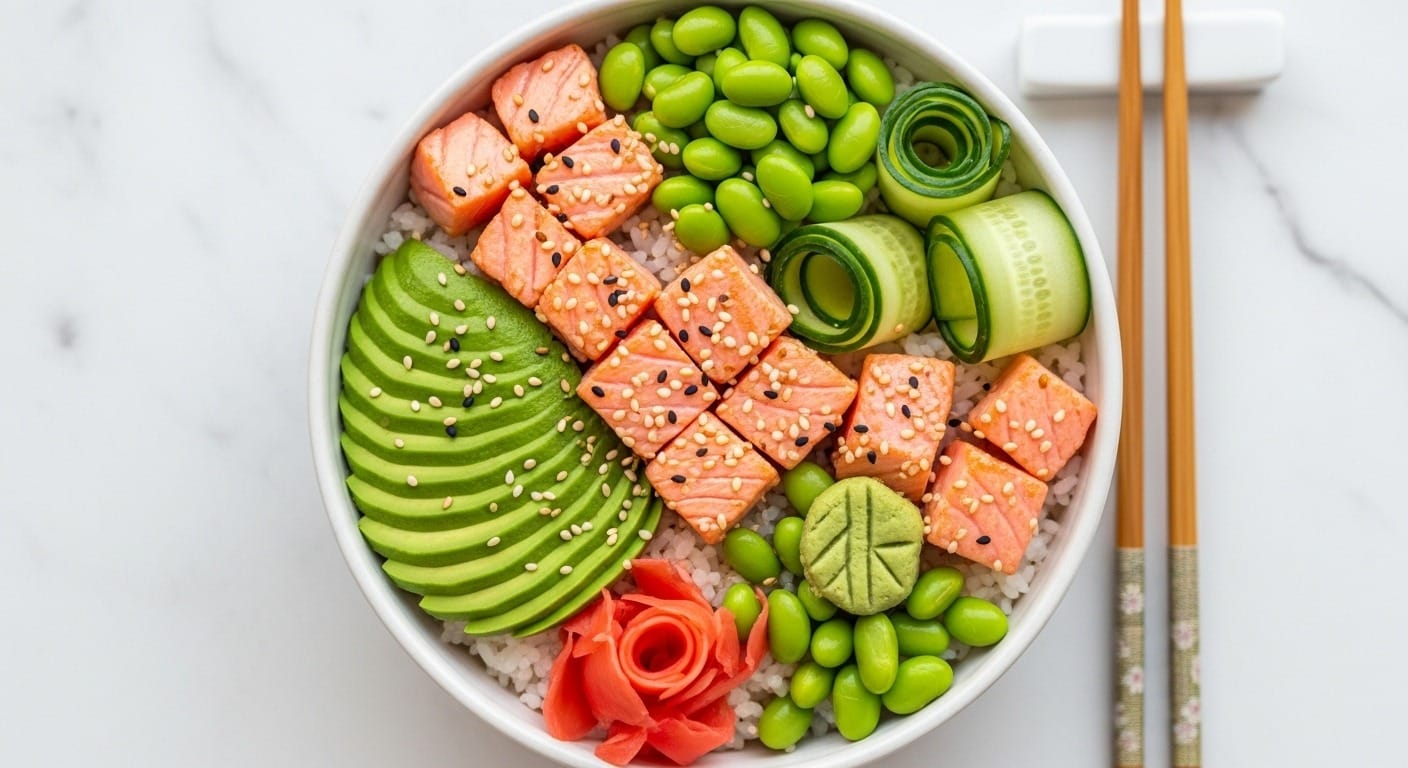
The last time I made this salmon avocado sushi bowl, my roommate walked into the kitchen and asked if I’d ordered takeout. Nope – just 25 minutes of cooking and a bowl that tastes like it came straight from your favorite sushi spot.
Here’s what makes this bowl special: it’s ready faster than delivery would arrive, requires zero sushi-rolling skills, and gives you that fresh, light feeling you get after good sushi platter with salmon. The salmon gets a quick sear for those crispy edges, the avocado adds that creamy texture, and the tangy rice pulls everything together. Whether you’re new to cooking or just want something quick and healthy, this bowl works.
Cooking time sits around 25 minutes total. Skill level? Beginner-friendly. Taste profile? Fresh, slightly tangy, with rich salmon flavor and a hint of sesame.
Tired of Deciding What to Cook Every Night?
I’ve put together a simple 7-day dinner meal plan using my most-loved recipes — complete with a grocery list and flexible swaps.
Just $2.99 – Instant Download
Get the Meal PlanWhy This Salmon Avocado Sushi Bowl Works
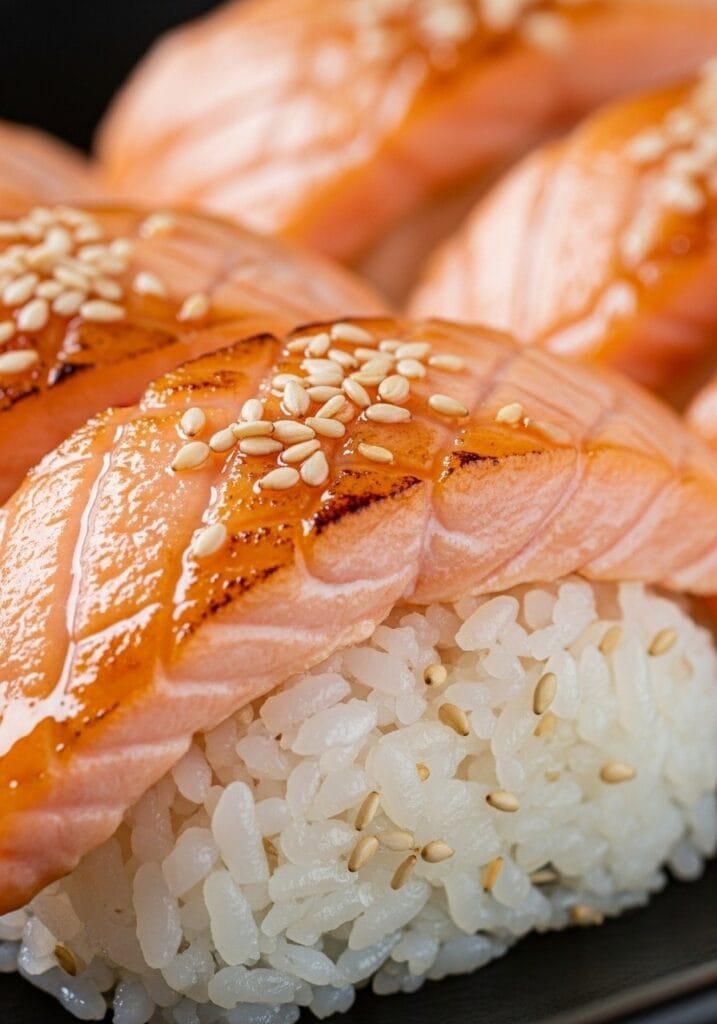
Most sushi recipes intimidate people. The rolling, the bamboo mat, getting that perfect tight cylinder – it’s a whole thing. This bowl skips all that drama.
You get the same flavors and textures but in a format that’s actually easier to customize. Want extra avocado? Add it. Prefer more cucumber? Go ahead. The healthy meal aspect comes naturally – salmon brings omega-3s, avocado offers healthy fats, and the vegetables add fiber and vitamins.
I started making these bowls on weeknights when I wanted something lighter than pasta but more substantial than salad. They hit that sweet spot.
Ingredients You’ll Need
For the Sushi Rice:
- 1½ cups (300g) sushi rice or short-grain white rice
- 2 cups (480ml) water
- 3 tablespoons rice vinegar
- 1½ tablespoons sugar
- 1 teaspoon salt
For the Salmon:
- 12 oz (340g) fresh salmon fillet, skin removed
- 2 tablespoons soy sauce
- 1 tablespoon mirin (substitute: 1 tablespoon water + ½ teaspoon sugar)
- 1 teaspoon sesame oil
- 1 teaspoon grated fresh ginger
- 1 tablespoon neutral oil for cooking
For the Bowl:
- 1 large ripe avocado, sliced
- 1 medium cucumber, thinly sliced or cut into half-moons
- ½ cup (75g) shelled edamame, cooked
- 2 sheets nori seaweed, cut into thin strips
- 2 tablespoons pickled ginger
- 1 tablespoon sesame seeds (white or mixed)
- 2 green onions, thinly sliced
For Serving:
- Soy sauce or tamari
- Sriracha mayo (optional: mix 2 tablespoons mayo with 1 teaspoon sriracha)
- Wasabi paste (optional)
Can’t find mirin? The water-sugar substitute works fine. No fresh ginger? Use ¼ teaspoon ground ginger instead. If edamame isn’t available, substitute with blanched snap peas.
Step-by-Step Instructions
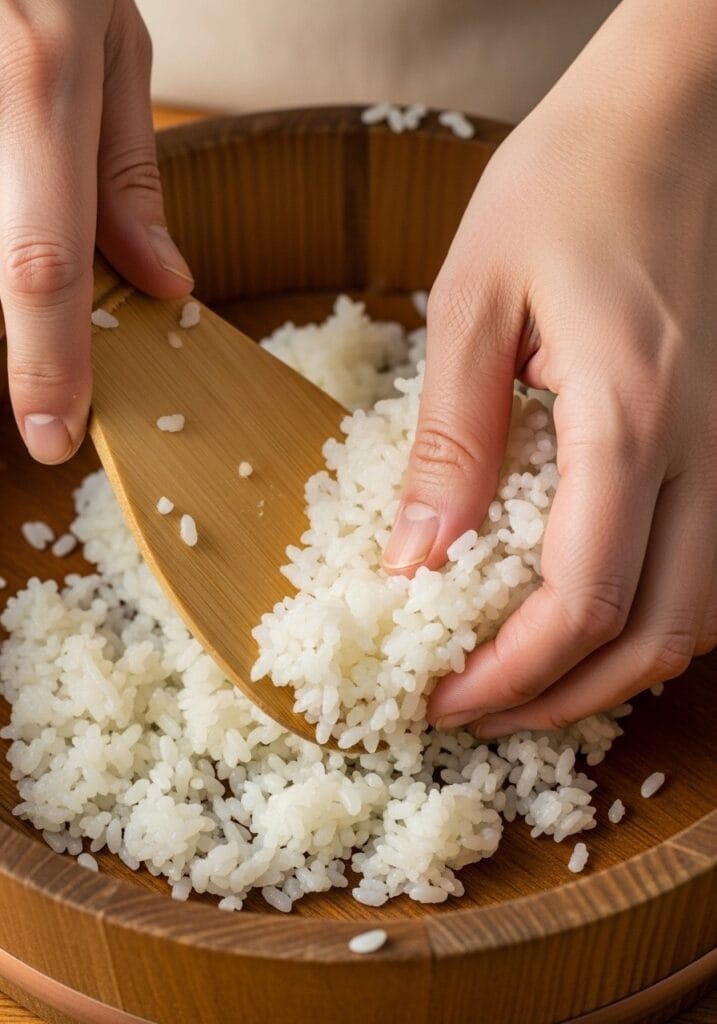
Prepare the Sushi Rice
- Rinse 1½ cups sushi rice in a fine-mesh strainer under cold water for 2 minutes until water runs mostly clear.
- Combine rinsed rice and 2 cups water in a medium pot.
- Bring to a boil over high heat without a lid (about 5 minutes).
- Reduce heat to low, cover tightly, and simmer for 15 minutes without lifting the lid.
- Remove from heat and let stand covered for 10 minutes.
- Mix 3 tablespoons rice vinegar, 1½ tablespoons sugar, and 1 teaspoon salt in a small bowl until sugar dissolves.
- Transfer cooked rice to a large shallow bowl or baking sheet.
- Drizzle vinegar mixture over rice while gently folding with a spatula – don’t stir aggressively or rice becomes mushy.
- Fan the rice while folding to cool it slightly and create that signature glossy look (about 3 minutes).
- Cover with a damp towel and set aside.
Marinate and Cook the Salmon
- Pat 12 oz salmon fillet dry with paper towels.
- Cut salmon into 1-inch cubes.
- Mix 2 tablespoons soy sauce, 1 tablespoon mirin, 1 teaspoon sesame oil, and 1 teaspoon grated ginger in a bowl.
- Add salmon cubes and toss gently to coat.
- Let marinate for 10 minutes at room temperature.
- Heat 1 tablespoon neutral oil in a non-stick skillet over medium-high heat until shimmering (about 2 minutes).
- Add salmon cubes in a single layer, shaking off excess marinade first.
- Sear for 2 minutes without moving the pieces.
- Flip each cube and cook for another 1-2 minutes until edges are caramelized but center remains slightly pink.
- Remove from heat immediately – salmon continues cooking from residual heat.
The key here is not overcooking. You want the salmon and avocado combo to stay tender and buttery, similar to what you’d find in quality salmon avocado sushi.
Prep the Vegetables and Toppings
- Slice 1 large avocado in half, remove pit, and cut into thin slices while still in the skin.
- Scoop out avocado slices with a spoon.
- Cut 1 medium cucumber into thin rounds or half-moons (about ⅛ inch thick).
- If using frozen edamame, cook according to package directions (usually 3-5 minutes in boiling water), then drain.
- Stack 2 nori sheets and cut into thin strips with kitchen scissors.
- Slice 2 green onions thinly on a diagonal.
- Measure out 2 tablespoons pickled ginger and 1 tablespoon sesame seeds.
Assemble Your Bowl
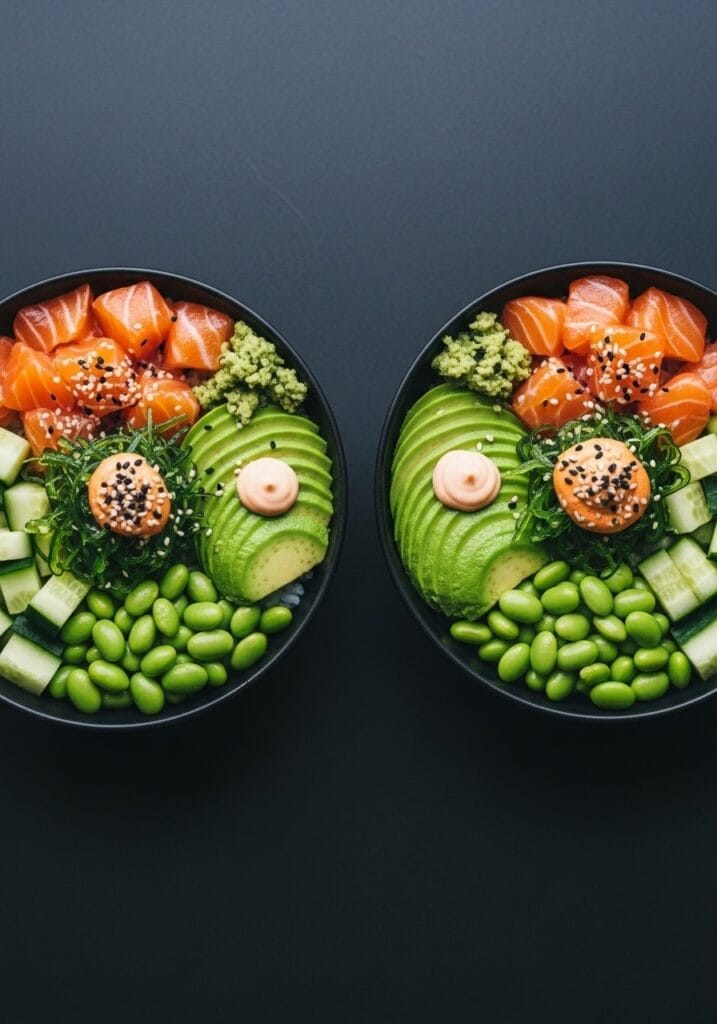
- Divide seasoned sushi rice between 2 wide bowls (about 1½ cups per bowl).
- Arrange salmon pieces on one section of the rice.
- Fan out avocado slices on another section.
- Add cucumber slices to a third section.
- Place edamame in another section.
- Scatter nori strips, pickled ginger, and green onions over the top.
- Sprinkle sesame seeds across the entire bowl.
- Serve immediately with soy sauce, sriracha mayo, and wasabi on the side.
Serving Suggestions and Variations
This bowl works great as-is, but sometimes you want to mix things up.
Try adding:
- Thinly sliced radishes for crunch and a peppery bite
- Shredded carrots for sweetness and color
- Mango cubes for a tropical twist (sounds weird, tastes amazing)
- Spicy mayo drizzled on top instead of on the side
- Crispy fried onions for extra texture
For a different protein, swap salmon with:
- Seared tuna (cook for 30 seconds per side for rare)
- Cooked shrimp (use pre-cooked for even faster prep)
- Crispy tofu cubes (similar to our sesame ginger tofu bowls)
The vegetable combinations are endless. My friend uses snap peas instead of edamame and adds shredded red cabbage for color.
If you’re meal-prepping, keep components separate. Rice stays good for 3 days refrigerated (reheat gently), cooked salmon lasts 2 days, and vegetables should be cut fresh each day for best texture.
Recipe Information:
- Serves: 2 people
- Prep Time: 10 minutes
- Cook Time: 15 minutes
- Total Time: 25 minutes
- Difficulty Level: Easy
- Equipment Needed: Medium pot with lid, non-stick skillet, rice paddle or spatula, sharp knife, cutting board
Storage and Meal Prep Tips
Leftover bowls need special handling since some components hold better than others.
Rice: Store in an airtight container for up to 3 days in the fridge. Reheat portions in the microwave with a damp paper towel on top (1 minute on high). The vinegar seasoning actually helps preserve it.
Cooked salmon: Keep in a sealed container for 2 days maximum. Eat cold or at room temperature – reheating makes it dry. Some people prefer the salmon cold anyway, kind of like lemon dill salmon leftovers.
Vegetables: Cut cucumber and slice avocado fresh each time you assemble a bowl. Avocado browns quickly even with lemon juice. Edamame keeps for 4 days cooked and refrigerated.
Meal prep strategy: Make a big batch of sushi rice on Sunday. Cook salmon the night you want to eat it (only takes 5 minutes). Keep toppings in separate small containers so you can grab and assemble quickly.
For packed lunches, use a bento-style container with compartments. This keeps everything separate until you’re ready to eat.
Common Mistakes to Avoid
Using long-grain rice: Regular rice doesn’t have enough starch to get that sticky, cohesive texture. Short-grain or sushi rice is necessary.
Overseasoning the rice: Too much vinegar mixture makes it soggy and overpowering. Stick to the measurements – you can always add more at the table.
Overcooking the salmon: Dry salmon ruins the whole bowl. Pull it off heat when the center still looks slightly translucent. Carryover cooking finishes it perfectly.
Cutting avocado too early: It oxidizes and turns brown. Slice it right before assembling your bowl.
Skipping the rice rinsing step: Unwashed rice creates gummy, clumpy results. Those 2 minutes of rinsing matter.
Using warm rice for assembly: Hot rice wilts the vegetables and makes avocado mushy. Let it cool to room temperature first.
I’ve made all these mistakes. The salmon one hurt the most – there’s no fixing overcooked fish.
Why This Recipe Beats Takeout
Cost-wise, making salmon avocado sushi bowl at home saves significant money. A similar bowl from a restaurant runs $15-18. This recipe costs about $8-10 per serving depending on salmon prices.
You control the ingredients completely. Want less rice and more vegetables? Done. Prefer your salmon more cooked? Your choice. Need to avoid gluten? Use tamari instead of soy sauce.
The freshness factor matters too. Restaurant bowls sometimes sit assembled for a while. Yours goes from pan to bowl to table in minutes. That makes a difference in texture and temperature.
Plus there’s something satisfying about making what looks like restaurant food in your own kitchen. My sister refuses to order these bowls out anymore because she says mine taste better. (I think she’s biased, but I’ll take it.)
If you enjoy this type of fresh, easy dinner, check out our collection of quick easy meals for more ideas that come together fast without sacrificing flavor.
Pairing Suggestions
This bowl is pretty complete on its own, but sometimes you want a little something extra.
Soups: A small cup of miso soup makes a classic pairing. Simple to make – just dissolve miso paste in hot water with some wakame seaweed and tofu cubes.
Sides: Seaweed salad (available pre-made at most Asian markets) adds more ocean flavor. Steamed gyoza works too if you want something warm alongside the cool bowl.
Drinks: Green tea (hot or iced) is traditional. Sparkling water with lime cuts through the richness of the salmon. A light Japanese beer works for dinner parties.
Dessert: Keep it light. Fresh fruit like sliced mango or lychees feels right. Or go with something from our desserts and sweet treats section if you want something more substantial.
The goal is not to overwhelm the fresh, clean flavors of the bowl itself.
Nutrition Highlights
This salmon avocado sushi bowl packs serious nutritional value without feeling heavy.
Each serving delivers roughly:
- 28-32g protein from the salmon
- Healthy omega-3 fatty acids for heart and brain health
- Monounsaturated fats from avocado
- Fiber from vegetables and rice
- Various vitamins including B vitamins, vitamin E, and vitamin K
The combination of protein, healthy fats, and complex carbs keeps you satisfied for hours. It’s the kind of meal that fuels an afternoon without the post-lunch crash.
Compared to fried takeout options, this sits around 550-600 calories per serving depending on your rice portions. That’s substantial enough for a main meal but won’t leave you uncomfortably full.
For an even lighter version, try our cauliflower rice taco bowls approach – swap half the sushi rice for cauliflower rice to reduce carbs and calories.
Final Thoughts
The salmon avocado sushi bowl solves that weeknight dinner puzzle where you want something healthy, tasty, and ready fast. No special equipment needed beyond basic pots and pans. No complicated techniques to master.
What I love most is how customizable it becomes once you’ve made it a few times. You start understanding which vegetables you prefer, how you like your salmon cooked, whether you’re a spicy mayo person or a straight soy sauce person.
It’s also one of those recipes that looks impressive when you have people over. Arrange everything nicely in the bowl, add those finishing touches, and suddenly you look like you know what you’re doing in the kitchen.
Give this a try next time you’re craving sushi but don’t feel like ordering out or wrestling with a bamboo rolling mat. Your kitchen will smell amazing, and you’ll have dinner ready before the delivery driver would even arrive.
The best part? Once you nail the basic formula, you can adapt it endlessly. That’s what makes it a recipe you’ll actually come back to instead of making once and forgetting about.
Still wondering what to cook tomorrow? Take the stress out of dinner with my simple 7-day meal plan.
Get the 7-Day Meal Plan for $2.99