
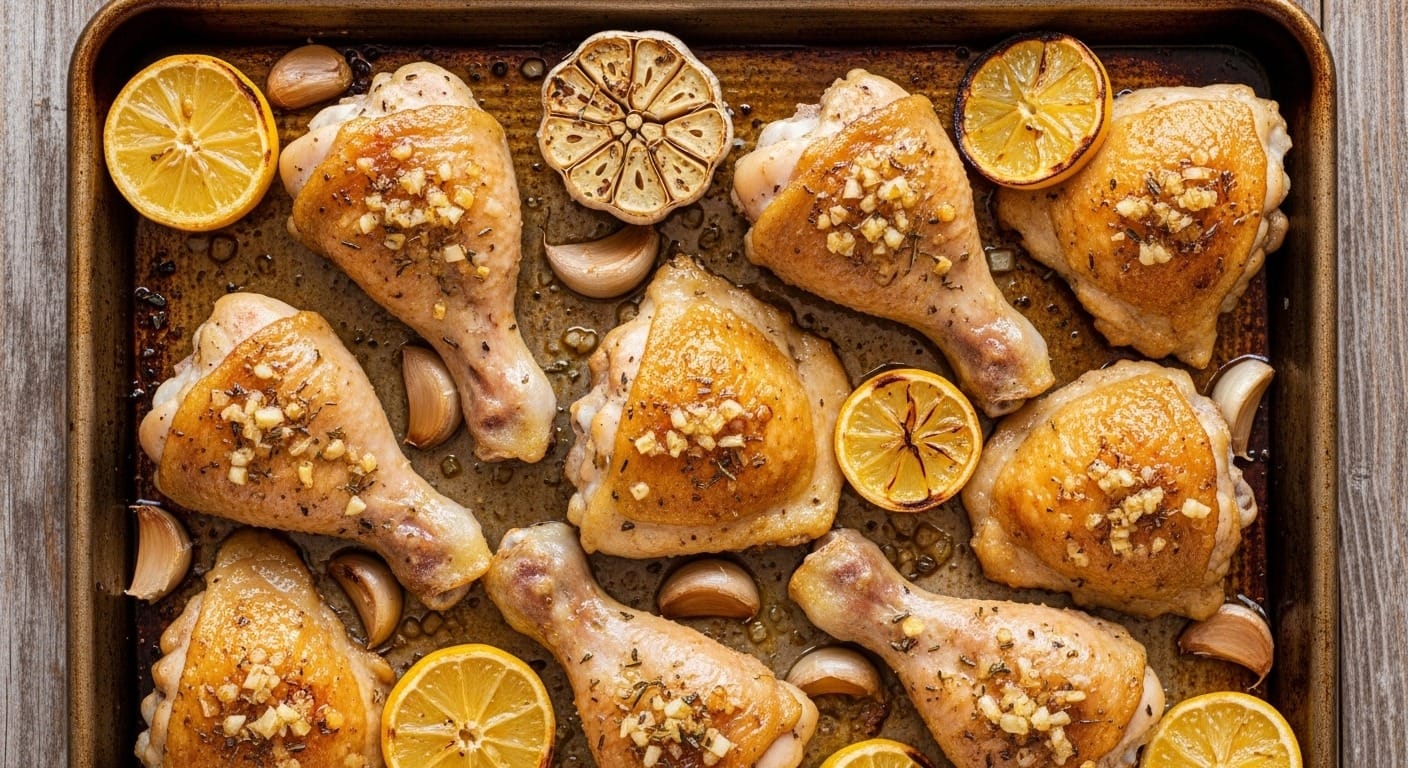
My neighbor knocked on my door last Tuesday around 5 PM, looking exhausted. “What’s that smell?” she asked. I had just pulled my sheet pan lemon garlic chicken from the oven – golden, sizzling, and filling the whole hallway with garlic and citrus. She couldn’t believe it took me only 30 minutes.
This recipe is what I make when I want something that looks and tastes impressive but doesn’t require much effort. The chicken stays incredibly juicy because we’re using bone-in pieces with skin, and the high heat creates those crispy, caramelized edges everyone fights over. It’s lemony without being sour, garlicky without being overpowering, and comes together on a single pan.
Perfect for busy weeknights, this dish works for beginners and takes about 10 minutes of actual hands-on work. The oven does the rest while you change out of your work clothes or help kids with homework.
Tired of Deciding What to Cook Every Night?
I’ve put together a simple 7-day dinner meal plan using my most-loved recipes — complete with a grocery list and flexible swaps.
Just $2.99 – Instant Download
Get the Meal PlanWhy This Recipe Works
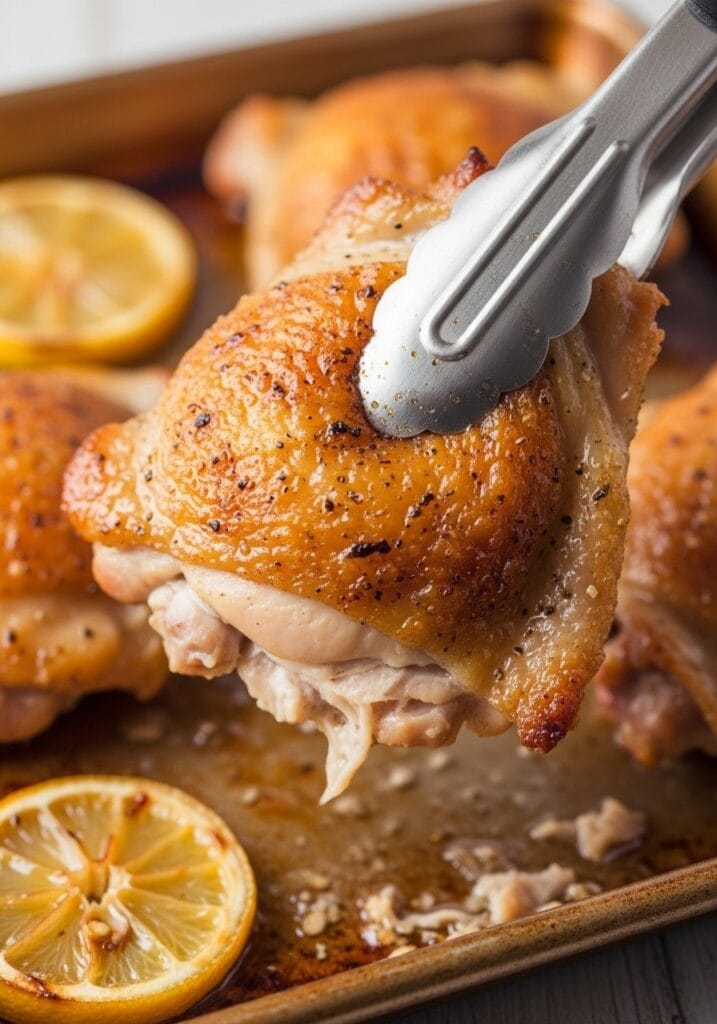
The magic happens when you combine high heat with a simple lemon garlic marinade. Unlike plain roasted chicken, this method creates a flavorful crust while keeping the inside moist. The lemon slices roast alongside the chicken, turning sweet and jammy instead of bitter.
I learned this technique after making dry, boring chicken for years. The difference? Don’t skimp on the olive oil, and use bone-in, skin-on pieces. Boneless chicken breasts turn rubbery and sad in comparison.
The garlic cloves roast until soft and spreadable – my favorite part. I squeeze them out of their skins and spread them on crusty bread while the chicken rests.
What Makes It Different From Other Lemon Chicken Recipes
Most lemon chicken recipes either use too much lemon (which makes everything taste like furniture polish) or not enough garlic. This version balances both. The marinade penetrates the chicken in just 15 minutes, though you can prep it the night before if that’s easier.
If you’re looking for other quick and easy meals that deliver big flavor, this belongs in your regular rotation alongside pan-fried lemon chicken thighs.
The sheet pan method means minimal cleanup – something I deeply appreciate after a long day. No splattering oil on the stovetop, no multiple pans to scrub.
Ingredients You’ll Need
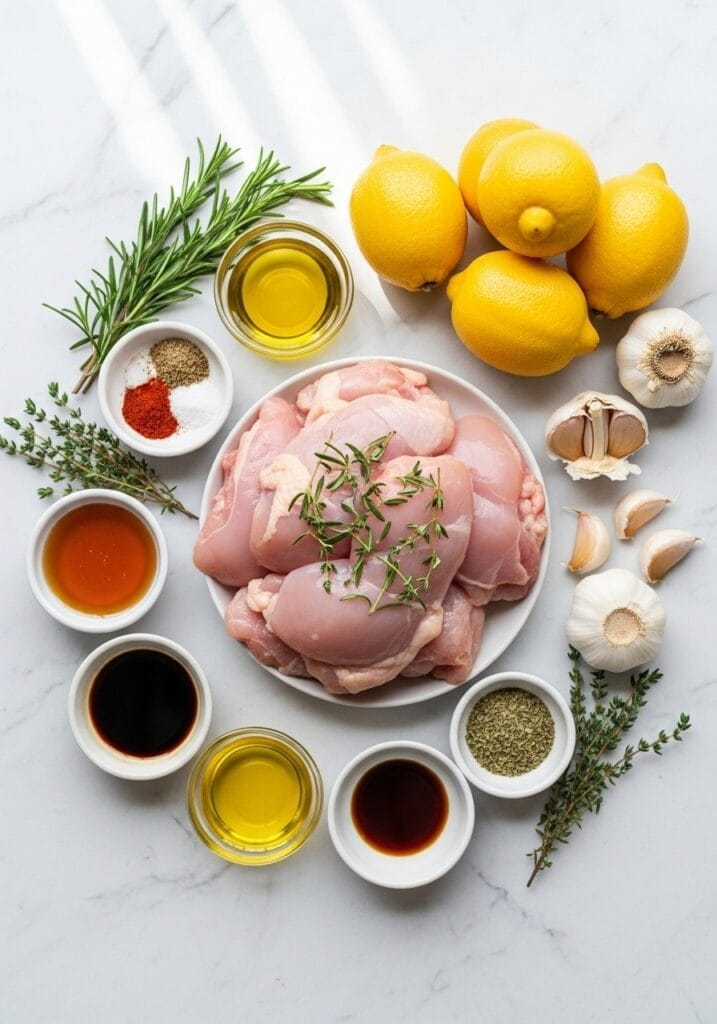
For the Chicken and Marinade
- 1.5 kg (3.3 lbs) bone-in, skin-on chicken pieces (thighs and drumsticks work best)
- 80 ml (1/3 cup) extra virgin olive oil
- 60 ml (1/4 cup) fresh lemon juice (about 2 lemons)
- 6 garlic cloves, minced
- 2 tsp dried oregano
- 1 tsp sea salt
- 1/2 tsp black pepper
- 1/2 tsp paprika (regular or smoked)
- 1/4 tsp red pepper flakes (optional, for a tiny kick)
For Roasting
- 2 lemons, sliced into 1/4-inch rounds
- 10-12 whole garlic cloves, unpeeled
- 30 ml (2 tbsp) olive oil
- Fresh parsley for garnish (optional but pretty)
Substitutions: No fresh lemons? Bottled lemon juice works in the marinade, though fresh is better for roasting. Chicken breasts can replace thighs, but reduce cooking time by 5-7 minutes and watch closely to prevent drying. Chicken thighs are more forgiving and stay juicier. If you’re avoiding dairy, this recipe is naturally dairy-free.
Equipment Needed
- Large rimmed baking sheet (half-sheet pan works perfectly)
- Parchment paper or aluminum foil for easy cleanup
- Large mixing bowl or resealable bag for marinating
- Meat thermometer (optional but helpful for beginners)
- Tongs for flipping
You don’t need anything fancy. The baking sheet should have raised edges to catch all the delicious juices, which you’ll drizzle over the chicken before serving.
Step-by-Step Instructions
Prepare the Marinade
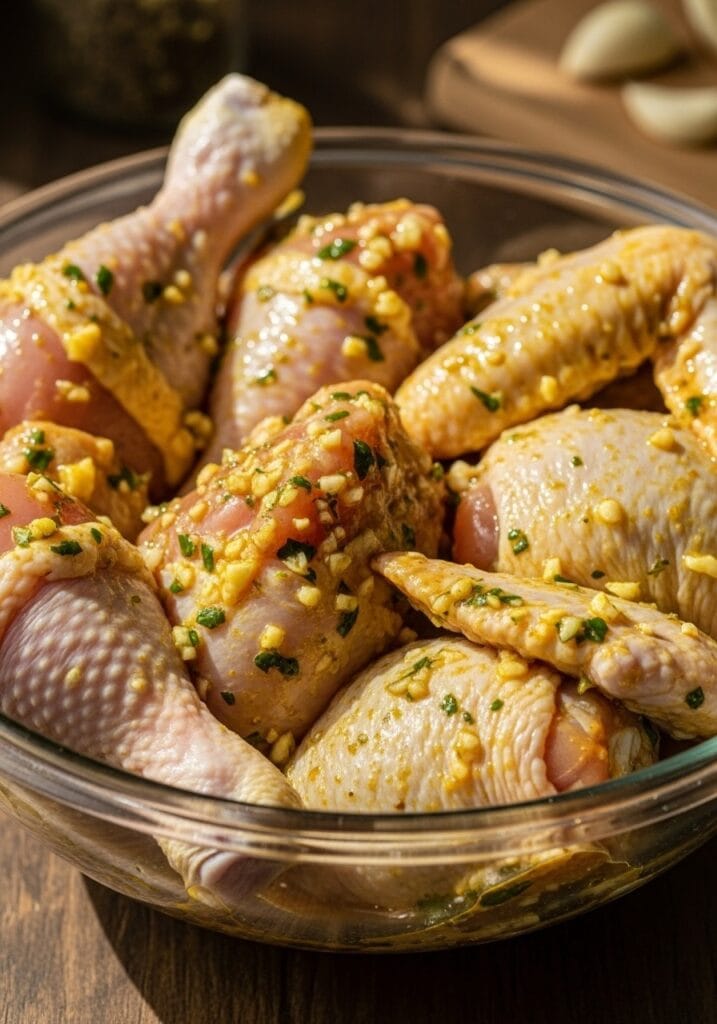
- Combine olive oil, lemon juice, minced garlic, oregano, salt, pepper, paprika, and red pepper flakes in a large bowl.
- Whisk everything together until the mixture looks slightly creamy and the salt dissolves.
- The marinade should smell bright and garlicky – that’s how you know it’s right.
Marinate the Chicken
- Pat the chicken pieces completely dry with paper towels (this helps the skin crisp up later).
- Add chicken to the bowl with marinade and toss until every piece is well coated.
- Cover the bowl with plastic wrap or transfer everything to a large resealable bag.
- Let it sit at room temperature for 15-20 minutes, or refrigerate for up to 4 hours if prepping ahead.
- If you marinate longer than 30 minutes, bring the chicken to room temperature 15 minutes before roasting.
I usually marinate mine while I preheat the oven and prep vegetables for a side dish. For a weeknight dinner solution, prep the marinade in the morning before work.
Prepare the Baking Sheet
- Line your baking sheet with parchment paper or lightly greased aluminum foil.
- Arrange lemon slices in a single layer across the pan – they’ll sit under and around the chicken.
- Scatter the unpeeled garlic cloves around the pan.
- Drizzle the 2 tbsp of olive oil over the lemons and garlic.
The lemons will caramelize and turn slightly jammy, losing most of their bitterness. I like to place them under the chicken pieces so they soak up all those drippings.
Roast the Chicken
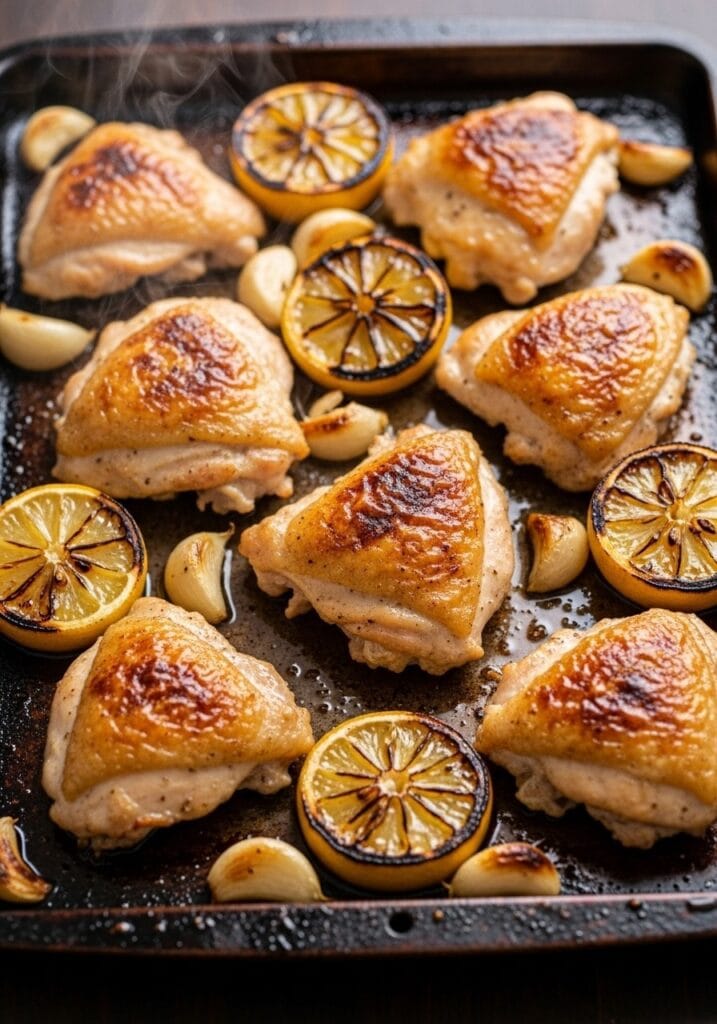
- Preheat your oven to 425°F (220°C) while the chicken marinates.
- Place chicken pieces on the prepared sheet pan, skin-side up, spacing them at least an inch apart.
- Pour any remaining marinade from the bowl over the chicken.
- Roast on the middle rack for 35-40 minutes until the skin turns deep golden brown and crispy.
- The internal temperature should reach 165°F (74°C) when you insert a thermometer into the thickest part without touching bone.
- For extra crispy skin, turn the broiler on high for the last 2-3 minutes (watch closely so it doesn’t burn).
My oven runs a bit cool, so I usually need 40 minutes. Yours might be faster. Check around the 30-minute mark if you’re using smaller pieces.
The chicken releases liquid initially, then that liquid evaporates and the skin crisps up. Don’t open the oven door too often – you’ll let out heat and extend cooking time.
Rest and Serve
- Remove the pan from the oven and let the chicken rest for 5 minutes.
- This lets the juices redistribute so each bite stays moist.
- Transfer chicken to a serving platter using tongs.
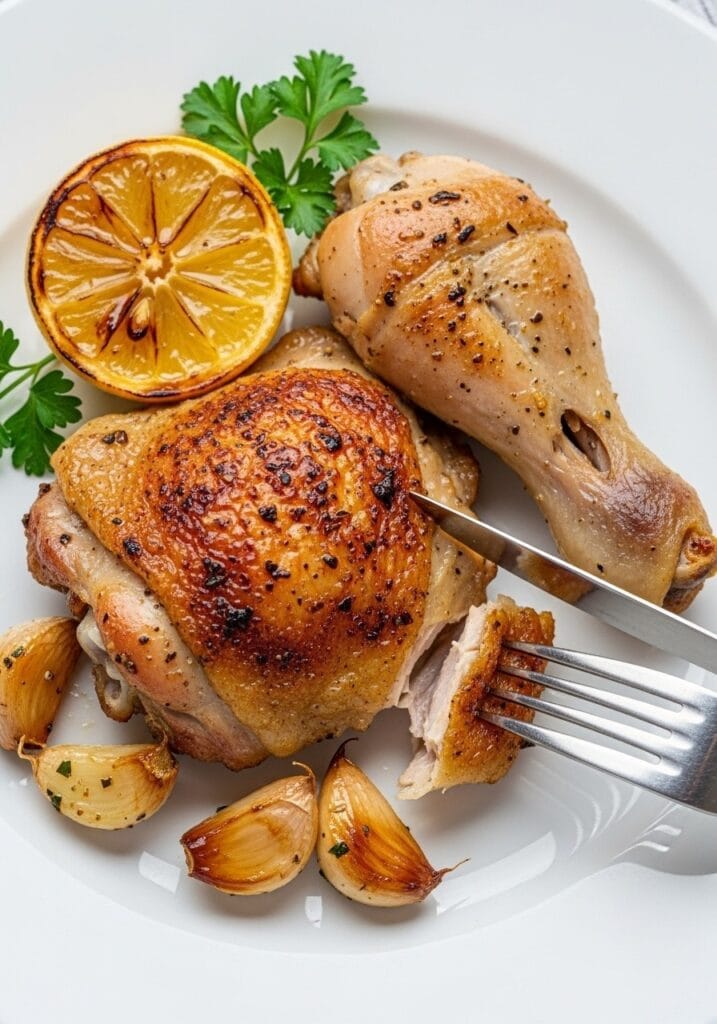
- Squeeze the roasted garlic cloves out of their skins onto the chicken or serve them whole on the side.
- Spoon the pan juices over everything – don’t waste those flavorful drippings.
- Garnish with chopped fresh parsley if you have it.
The roasted lemons are edible and delicious, though some people find them too intense. I always eat at least one slice.
Recipe Variations to Try
Lemon Garlic Chicken Pasta
Toss the shredded chicken with cooked pasta, reserved pan juices, and a splash of pasta water. Add fresh spinach or sun-dried tomatoes. This makes fantastic leftovers and stretches the recipe to feed more people. The lemon butter tilapia fillets uses a similar flavor profile if you want to try it with fish.
Lemon Garlic Parmesan Chicken
Before roasting, sprinkle 1/2 cup of grated Parmesan cheese over the chicken pieces. The cheese creates an extra crispy, salty crust. You’ll want to add less salt to the marinade if you do this – maybe 1/2 tsp instead of 1 tsp.
Greek-Style Variation
Add 1 tbsp of dried dill to the marinade and serve with tzatziki sauce. Throw in some cherry tomatoes and red onion wedges during the last 15 minutes of roasting. Check out the Greek chicken rice bowl for more Mediterranean inspiration.
Spicy Version
Double the red pepper flakes and add 1 tsp of cayenne pepper to the marinade. Serve with cooling yogurt sauce to balance the heat.
What to Serve With This Chicken
This pairs well with almost anything. I usually make:
Simple Sides: Roasted potatoes (throw them on the pan for the last 25 minutes), rice pilaf, couscous, or crusty bread to soak up the juices. The quinoa chickpea buddha bowls work nicely as a lighter option.
Vegetables: Roasted broccoli, green beans, or a simple salad. You can add vegetables directly to the sheet pan if you time it right – hearty vegetables like carrots or Brussels sprouts can go in from the start, while tender ones like asparagus should be added during the last 15 minutes.
Starches: Mashed potatoes, roasted sweet potatoes, or even polenta. The pan drippings work as a natural sauce for everything.
I sometimes make this as part of healthy meal prep for the week. The chicken stays juicy in the fridge for up to 4 days.
Storage and Reheating Tips
Store leftover chicken in an airtight container in the refrigerator for up to 4 days. Keep the pan juices separate if possible and drizzle them over the chicken when reheating to prevent it from drying out.
Reheating: The oven works best. Place chicken on a baking sheet, cover loosely with foil, and warm at 350°F (175°C) for 10-15 minutes. For quicker reheating, use the microwave on 50% power in 30-second intervals, though the skin won’t stay as crispy.
Freezing: This chicken freezes reasonably well for up to 3 months. Let it cool completely, then freeze in portions with some of the pan juices. Thaw overnight in the fridge before reheating.
The roasted garlic cloves freeze beautifully and can be added to sauces, soups, or spread on bread later.
Common Mistakes and How to Avoid Them
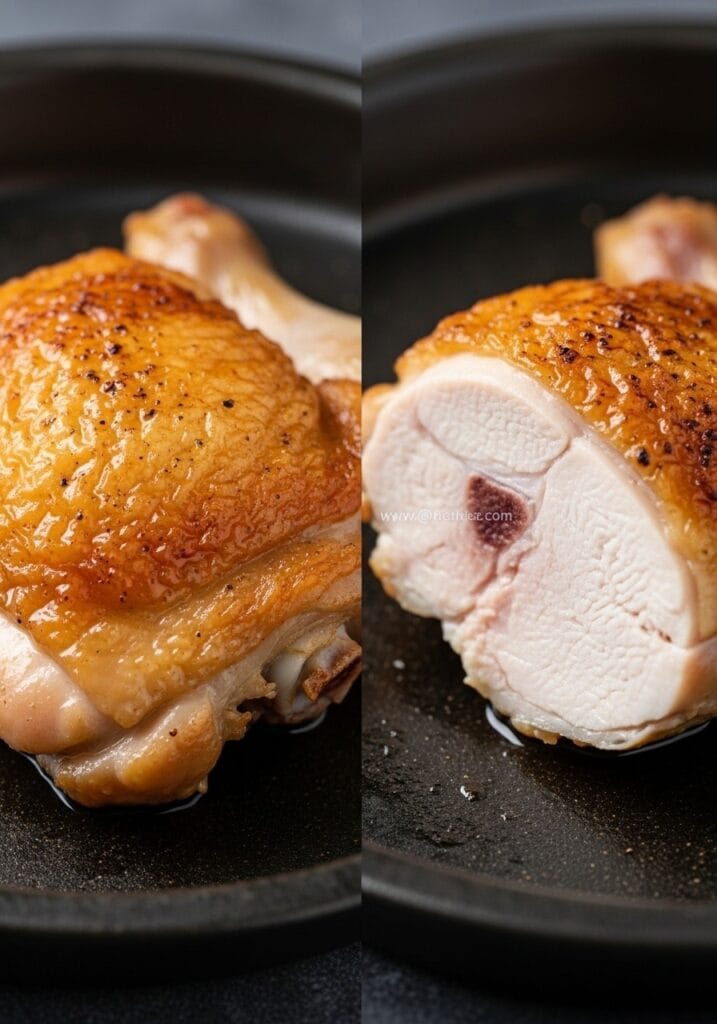
Dry chicken: Usually happens with boneless, skinless breasts or overcooking. Use a meat thermometer and remove the chicken right when it hits 165°F. Carryover cooking will bring it up a few more degrees as it rests.
Soggy skin: This happens when you crowd the pan or don’t dry the chicken before marinating. Leave space between pieces so air can circulate. If your chicken releases a lot of liquid, pour some off halfway through cooking.
Burnt garlic: Minced garlic in the marinade can burn. That’s why we use whole, unpeeled cloves for roasting – they stay sweet and creamy instead of bitter. Some recipes call for adding minced garlic only in the last 10 minutes.
Too much lemon flavor: If your chicken tastes overly acidic, you might have used too much lemon juice or marinated it too long. Stick to the measurements and don’t marinate longer than 4 hours. The acid can start breaking down the meat texture if left too long.
Frequently Asked Questions
Can I use chicken breasts instead? Yes, but they cook faster and dry out more easily. Use boneless, skin-on breasts if you can find them, and check for doneness around 25 minutes. I prefer thighs and drumsticks for this recipe because they’re nearly impossible to overcook. Similar to how 5-ingredient chicken tenders stays juicy with the right technique.
Do I need to flip the chicken? No, keeping the skin-side up the entire time helps it crisp properly. Flipping creates steam and prevents browning.
Can I add vegetables to the same pan? Absolutely. Add heartier vegetables like carrots, potatoes, or Brussels sprouts at the beginning. Add quicker-cooking ones like zucchini or bell peppers during the last 15 minutes. Just make sure everything has enough space to roast rather than steam.
What if I don’t have fresh lemons? You can use bottled lemon juice for the marinade (though fresh tastes better). Skip the roasted lemon slices or substitute with orange slices, which caramelize beautifully and add a sweeter note.
Can I make this ahead? You can marinate the chicken up to 4 hours ahead, but I don’t recommend roasting it in advance. Reheated chicken is never quite as good as fresh. If you’re meal prepping, check out 20-minute chicken rice bowls which hold up better.
Why This Recipe Is Worth Making
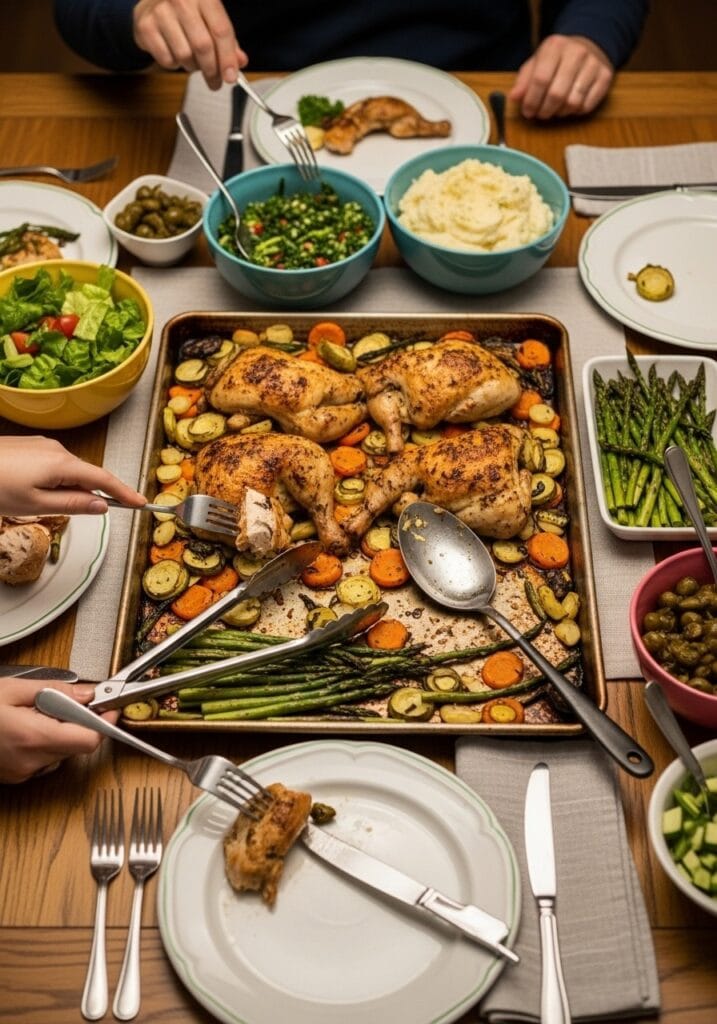
Honestly? Because it makes you look like a better cook than you actually are. The golden-brown chicken with charred lemons looks restaurant-quality, but it requires almost zero skill or technique. You’re basically just mixing things in a bowl and throwing them in the oven.
It’s also incredibly flexible. Use whatever chicken pieces are on sale. Adjust the garlic up or down based on your preferences. Make it spicier or milder. Add different herbs like thyme or rosemary.
The cleanup is minimal – one pan, one bowl, one knife. On nights when I’m exhausted, this recipe saves me from ordering takeout. It’s faster than delivery and tastes infinitely better.
The leftovers are versatile too. Shred the chicken for tacos, slice it for sandwiches, or toss it with pasta. The roasted garlic adds depth to everything. I sometimes blend it into salad dressings or mash it into butter for bread.
Tips for the Best Results
Use room temperature chicken if possible. It cooks more evenly than cold chicken straight from the fridge. Take it out 15-20 minutes before you start.
Don’t skip the resting time. Those 5 minutes make a real difference in juiciness. If you cut into the chicken immediately, all the juices run out onto your cutting board instead of staying in the meat.
Save those pan drippings. They’re liquid gold. Spoon them over rice, mashed potatoes, or use them as a base for gravy. Sometimes I’ll add a splash of white wine to the pan after removing the chicken, scrape up the browned bits, and make a quick pan sauce.
Invest in a meat thermometer if you don’t have one. It takes the guesswork out of cooking chicken and prevents both undercooking (unsafe) and overcooking (dry and disappointing).
For crispier skin, make sure your oven is fully preheated before the chicken goes in. A hot oven creates immediate searing that locks in moisture.
Making It Your Own
This recipe is a template you can adjust based on what’s in your kitchen. Try adding fresh herbs like rosemary or thyme to the marinade. Swap the paprika for cumin for a slightly earthy flavor. Add honey or maple syrup for a hint of sweetness that caramelizes beautifully.
You can make this with a whole spatchcocked chicken too, though it’ll take longer – about 50-60 minutes depending on size. The technique works just as well.
Some people add white wine or chicken broth to the pan before roasting. This creates more liquid for basting and prevents the garlic from burning, though it can also prevent the skin from crisping as well.
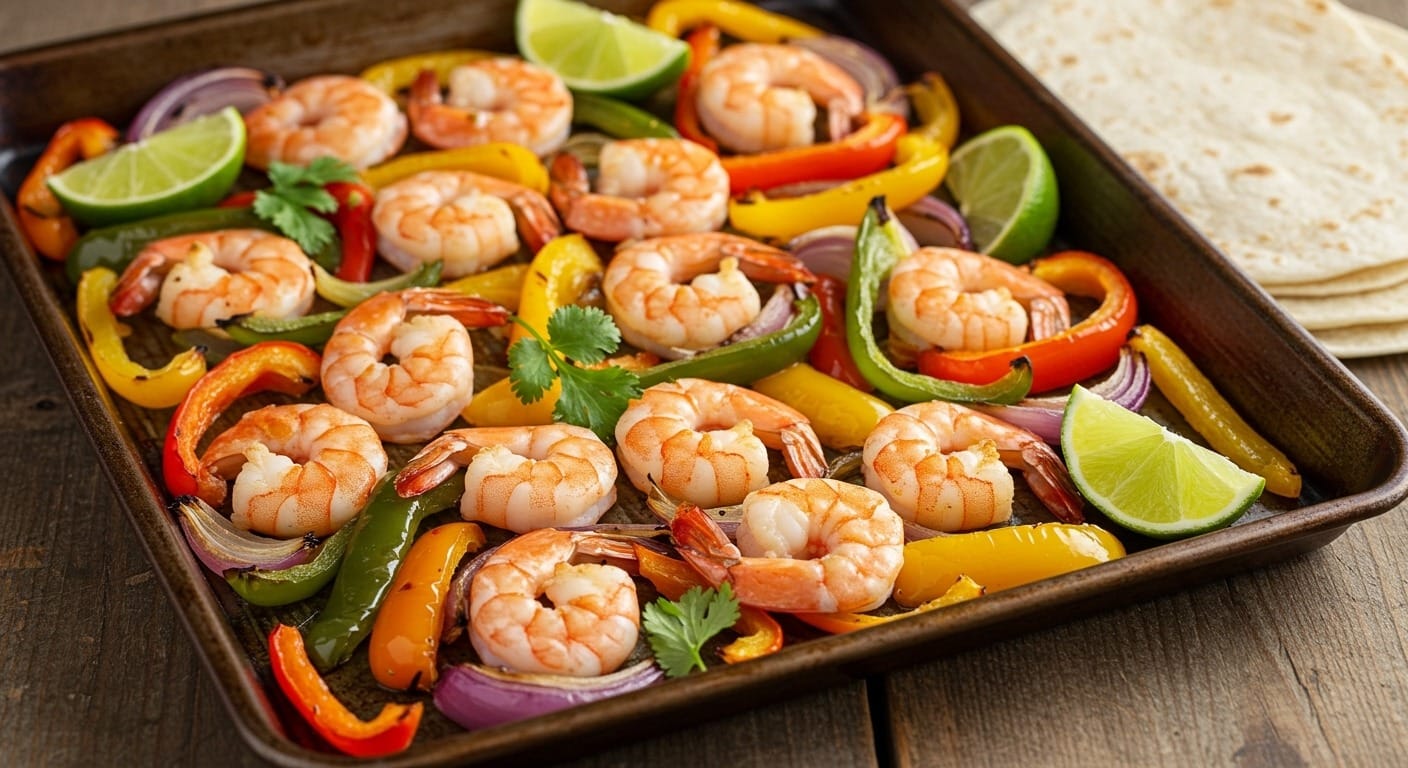
The beauty of sheet pan cooking is that once you understand the basic method, you can apply it to almost anything. The sheet pan fajita dinner and shrimp fajitas sheet pan use the same easy technique with different proteins and seasonings.
Final Thoughts
This sheet pan lemon garlic chicken has become one of those recipes I make without thinking. I don’t measure anymore – just eyeball the olive oil and lemon juice, throw in some garlic, and call it done. That’s how comfortable you’ll get with it too.
It’s the kind of meal that makes weeknight cooking feel manageable instead of stressful. No complicated techniques, no expensive ingredients, no lengthy prep work. Just simple, flavorful chicken that everyone actually wants to eat.
The next time someone asks what’s for dinner and you draw a complete blank, make this. Thirty minutes later, you’ll have a pan of golden, garlicky chicken that smells incredible and tastes even better.
Give it a try this week. I think it might become your new default chicken recipe too.Servings: 4-6 people
Total Time: 30 minutes (plus 15 minutes marinating)
Difficulty Level: Easy
Equipment Needed: Sheet pan, mixing bowl, oven
Still wondering what to cook tomorrow? Take the stress out of dinner with my simple 7-day meal plan.
Get the 7-Day Meal Plan for $2.99