
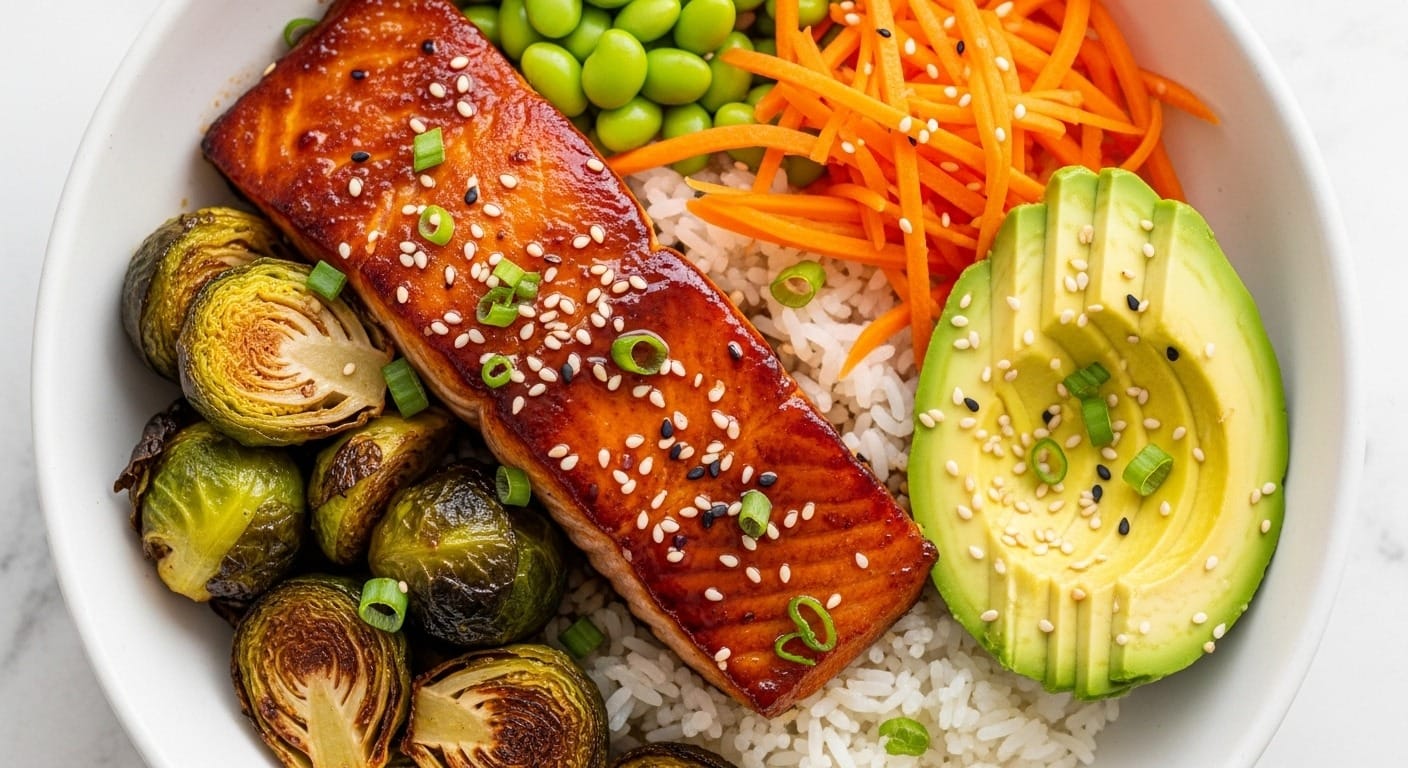
My friend texted me last Tuesday asking for a dinner idea that wasn’t boring chicken again. I sent her this teriyaki salmon bowl recipe, and she replied with three fire emojis an hour later. That’s the thing about a good bowl – it feels like you’re treating yourself to takeout, but you know exactly what went into it.
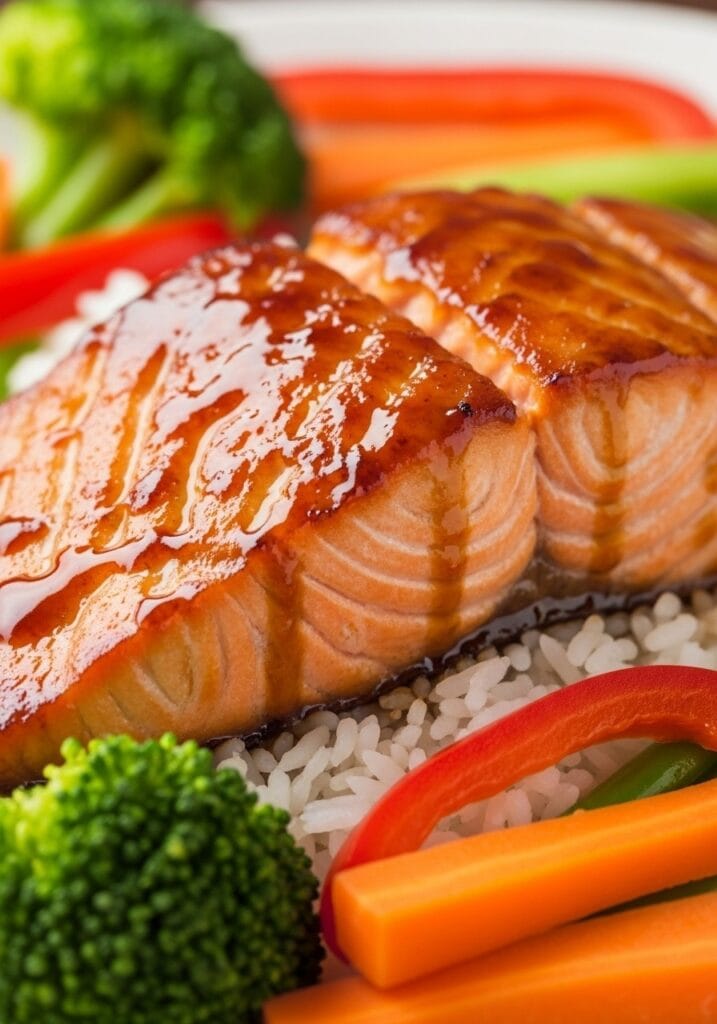
This teriyaki salmon bowl is what I make when I want something that tastes indulgent but keeps me on track with my protein goals. The salmon gets this gorgeous glaze that’s sweet and salty at the same time, and when you pair it with crispy Brussels sprouts and warm rice, it’s just… chef’s kiss. Takes about 30 minutes start to finish, and most of that is hands-off cooking time.
The best part? You can prep the sauce while the salmon marinates, roast your veggies while the rice cooks, and everything comes together like a well-choreographed dance. No fancy techniques required – just a sheet pan, a small saucepan, and your regular cookware.
Tired of Deciding What to Cook Every Night?
I’ve put together a simple 7-day dinner meal plan using my most-loved recipes — complete with a grocery list and flexible swaps.
Just $2.99 – Instant Download
Get the Meal PlanWhy This Teriyaki Salmon Bowl Works
Unlike those teriyaki salmon bowls healthy meal preppers obsess over on social media, this one doesn’t sacrifice flavor for nutrition. The homemade teriyaki sauce – and yes, homemade makes a difference – has the right balance of sweet and umami without the corn syrup overload you get from bottled versions.
Salmon is ridiculously good for you (omega-3s, protein, vitamins), but it’s also rich enough that you feel satisfied. Pair it with fiber-packed veggies and rice, and you’ve got a meal that keeps you full without that heavy, sluggish feeling.
I’ve made teriyaki salmon bowls with crispy brussels sprout variations at least a dozen times now, and the Brussels sprouts always disappear first. Something about roasting them until they’re crispy on the edges while keeping them tender inside – people who claim they hate Brussels sprouts suddenly become fans.
This is beginner-friendly cooking. If you can flip a piece of fish and toss vegetables on a sheet pan, you can nail this recipe.
Ingredients You’ll Need
For the Teriyaki Sauce:
- 60 ml (1/4 cup) soy sauce (use tamari for gluten-free)
- 60 ml (1/4 cup) mirin (substitute: 2 tbsp rice vinegar + 2 tbsp water + 1 tbsp sugar)
- 2 tbsp honey or maple syrup
- 1 tbsp rice vinegar
- 2 cloves garlic, minced
- 1 tsp fresh ginger, grated
- 1 tsp cornstarch mixed with 1 tbsp water
For the Salmon:
- 2 salmon fillets (about 150-180g each), skin-on or skinless
- 1 tbsp olive oil or avocado oil
- Salt and black pepper to taste
For the Bowl:
- 200g (1 cup) uncooked jasmine rice or brown rice
- 300g (about 2 cups) Brussels sprouts, trimmed and halved
- 1 tbsp olive oil
- 1/2 tsp garlic powder
- 1/2 cup shelled edamame (fresh or frozen, thawed)
- 1 medium avocado, sliced
- 1 medium carrot, julienned or shredded
- 2 green onions, sliced
- 1 tbsp sesame seeds (white or black)
Substitutions: No Brussels sprouts? Use broccoli florets or snap peas. Skip the edamame if you want – add cucumber or radish slices instead. For a lower-carb version, swap rice for cauliflower rice.
Step-by-Step Instructions
Step 1: Prepare the Rice
Rinse 200g rice under cold water until the water runs clear. Cook according to package directions (usually 1 cup rice to 1.5 cups water). Bring to a boil, then reduce to low heat, cover, and simmer for 15-18 minutes. Remove from heat and let it sit covered for 5 minutes. Fluff with a fork before serving.
Step 2: Make the Teriyaki Sauce

Combine soy sauce, mirin, honey, rice vinegar, garlic, and ginger in a small saucepan. Bring to a simmer over medium heat, stirring occasionally (about 3 minutes). Add the cornstarch slurry (cornstarch mixed with water). Stir continuously until the sauce thickens (about 1-2 minutes). Remove from heat and set aside. The sauce should coat the back of a spoon.
Step 3: Prep and Roast Brussels Sprouts
Preheat your oven to 200°C (400°F). Toss halved Brussels sprouts with 1 tbsp olive oil, garlic powder, salt, and pepper on a baking sheet. Spread them cut-side down in a single layer. Roast for 20-25 minutes until the edges are crispy and browned, flipping halfway through.
The cut-side-down trick is key – that’s how you get those caramelized, crispy edges that make teriyaki salmon bowls with crispy brussels sprout so addictive.
Step 4: Cook the Salmon
Pat salmon fillets dry with paper towels and season both sides with salt and pepper. Heat 1 tbsp oil in a non-stick or cast-iron skillet over medium-high heat. Place salmon skin-side up in the pan (or presentation side down if skinless). Cook without moving for 4-5 minutes until a golden crust forms. Flip carefully and cook for another 3-4 minutes (internal temperature should reach 63°C/145°F). Brush or spoon teriyaki sauce over the salmon during the last minute of cooking.
Visual cue: The salmon should flake easily with a fork but still be slightly translucent in the very center.
Step 5: Assemble Your Bowl

Divide cooked rice between two bowls. Place a salmon fillet on top of each rice bed. Arrange roasted Brussels sprouts, edamame, avocado slices, and shredded carrot around the salmon. Drizzle remaining teriyaki sauce over everything. Garnish with sliced green onions and sesame seeds.
Recipe Information
Serving Size: 2 bowls Prep Time: 15 minutes Cook Time: 25 minutes Total Time: 40 minutes Difficulty Level: Easy Equipment Needed: Rice cooker or pot with lid, small saucepan, baking sheet, non-stick skillet, cutting board, sharp knife
Tips for the Best Results
Don’t overcook the salmon. It continues cooking slightly after you remove it from heat, so aim for medium rather than well-done. Nobody wants dry salmon.
Reserve some sauce. Set aside about 2-3 tbsp of teriyaki sauce before brushing it on the raw salmon. You’ll want that extra drizzle for serving, and this keeps things food-safe.
Make it crispier. Want those Brussels sprouts even crunchier? After roasting, pop them under the broiler for 1-2 minutes. Watch them closely so they don’t burn.
Meal prep friendly. Cook everything ahead and store components separately. Rice lasts 4-5 days in the fridge, roasted Brussels sprouts stay good for 3-4 days, and cooked salmon keeps for 2-3 days. The sauce stays fresh for up to a week. Just reheat gently and assemble when ready.
If you’re into quick easy meals like I am, this salmon teriyaki recipe fits perfectly into that rotation. Similar to how I approach my sticky salmon rice bowls, the key is getting that glaze just right so it clings to every bite.
Customization Ideas
Go low-carb: Swap white rice for cauliflower rice. It won’t be traditional, but it works if you’re watching carbs.
Add more protein: Throw in a soft-boiled egg or double the edamame. This already has about 40g of protein per bowl, but some days you need more.
Switch up vegetables: I’ve done this with roasted sweet potato cubes, snap peas, and even spiralized zucchini. The teriyaki sauce plays well with most vegetables.
Spicy version: Add 1/2 tsp red pepper flakes to the teriyaki sauce or drizzle with sriracha mayo (mix 2 tbsp mayo with 1 tsp sriracha).
Extra toppings: Pickled ginger, crispy shallots, or furikake seasoning all make excellent additions.
The beauty of bowl recipes is how flexible they are. Once you’ve got the salmon and sauce down, the rest is just playing around with what’s in your fridge.
Pairing Suggestions
This bowl is pretty complete on its own, but sometimes you want a little something extra. A simple cucumber salad with rice vinegar and sesame oil cuts through the richness nicely. Or if you’re feeding a crowd, start with miso soup or a light seaweed salad.
For dessert? Keep it light. Fresh fruit, maybe some chocolate lava mug cake if you’re feeling indulgent. The meal itself is rich enough that you probably won’t want anything too heavy afterward.
If you’re planning a weeknight dinner menu, this pairs well with other Asian-inspired dishes. I’ve served it alongside sesame ginger tofu bowls when I had both vegetarian and non-vegetarian guests, and everyone was happy.
Storage and Reheating
Store each component separately in airtight containers if you’re meal prepping. Rice tends to dry out in the fridge, so add a tablespoon of water when reheating and cover with a damp paper towel in the microwave (1-2 minutes on medium power).
For salmon, reheat gently in a covered pan with a splash of water over low heat for 2-3 minutes, or microwave on 50% power for 30-second intervals until just warmed through. Overheating makes it rubbery.
Brussels sprouts reheat best in a toaster oven or regular oven at 180°C (350°F) for 5-7 minutes to restore some crispness. Microwaving makes them soggy.
The teriyaki sauce keeps well in the fridge for up to a week in a sealed jar. Just give it a good stir before using since it might separate slightly.
Why Homemade Teriyaki Makes a Difference
I used bottled teriyaki for years before I finally tried making it from scratch. The homemade version tastes cleaner somehow – you can actually taste the soy sauce, the ginger, the garlic. Store-bought versions often have caramel coloring, preservatives, and way too much sugar.
Plus, making it yourself means you control the sweetness level. Some people love a sweeter glaze, others prefer more savory. Start with the recipe as written, then adjust next time based on your preference.
The whole process takes maybe 5 minutes, and you’ll have enough sauce for this recipe plus extra for marinating chicken or drizzling over vegetables throughout the week.
Nutritional Benefits
Salmon is one of those rare foods that tastes indulgent but actually checks all the nutritional boxes. You’re getting high-quality protein, omega-3 fatty acids (good for your heart and brain), vitamin D, and B vitamins.
The Brussels sprouts add fiber, vitamin C, and vitamin K. Rice gives you energy from complex carbs. Avocado contributes healthy fats and makes the bowl more filling.
This is what I mean by healthy meal options that don’t taste like health food. You’re eating well without feeling like you’re on some restrictive diet plan.
If you’re tracking macros, each bowl has roughly 40g protein, 55g carbs, and 18g fat. Adjust portions based on your needs – add more rice if you’re more active, skip it if you’re doing lower carb.
Common Mistakes to Avoid
Mistake 1: Crowding the Brussels sprouts on the baking sheet. They steam instead of roast when they’re too close together. Give them space.
Mistake 2: Flipping the salmon too early. Let that crust develop for the full 4-5 minutes before touching it. Patience pays off.
Mistake 3: Using cold salmon straight from the fridge. Let it sit at room temperature for 10-15 minutes before cooking for more even results.
Mistake 4: Drowning everything in sauce. The teriyaki should enhance, not overpower. Start with less – you can always add more.
Mistake 5: Skipping the cornstarch in the sauce. That’s what gives it that glossy, restaurant-quality thickness. Without it, the sauce stays thin and watery.
Making It for Meal Prep
Sunday meal prep people, this one’s for you. Cook a big batch of rice, roast 2-3 sheet pans of Brussels sprouts, and portion everything into containers. The salmon you’ll want to cook fresh or cook it all and reheat carefully.
I usually prep 4 bowls at once. Keeps me fed for half the work week with minimal effort on busy nights. Just reheat, assemble, drizzle with sauce, and you’ve got a restaurant-quality meal in under 5 minutes.
The components stay pretty distinct in the fridge, so flavors don’t bleed together like they do with some meal prep dishes. Each bowl tastes almost as good as freshly made.
Similar to my greek chicken rice bowl approach, keeping components separate is the secret to meal prep that doesn’t get boring by day three.
Frequently Asked Questions
Can I use frozen salmon? Yes, just thaw it completely in the fridge overnight and pat it very dry before cooking. Frozen then thawed salmon releases more moisture, so extra drying is important.
Is this gluten-free? Use tamari instead of soy sauce and verify your mirin is gluten-free (some brands add wheat). Everything else is naturally gluten-free.
Can I grill the salmon instead? Absolutely. Grill over medium-high heat for 4-5 minutes per side, brushing with teriyaki during the last few minutes. Just watch it carefully so the sugars in the sauce don’t burn.
What if I don’t have mirin? The substitute listed in ingredients works well – rice vinegar, water, and a little sugar mimics mirin’s sweet acidity. Or use dry white wine with a pinch of sugar.
Can kids eat this? Most kids who like mild Asian flavors enjoy this. The teriyaki isn’t spicy, just sweet and savory. You might want to serve the sauce on the side for picky eaters.
This teriyaki salmon bowl has become one of those recipes I don’t really think about anymore – I just make it automatically when I want something satisfying without much fuss. It’s got enough protein to keep you full, enough flavor to feel special, and enough vegetables to not feel guilty about that dark chocolate fudge brownies dessert you’re eyeing.
The recipe works for date night, meal prep, or just a regular Tuesday when you’re tired of the same old chicken rotation. Make the sauce once, and you’ll probably never go back to bottled teriyaki again.
Still wondering what to cook tomorrow? Take the stress out of dinner with my simple 7-day meal plan.
Get the 7-Day Meal Plan for $2.99