
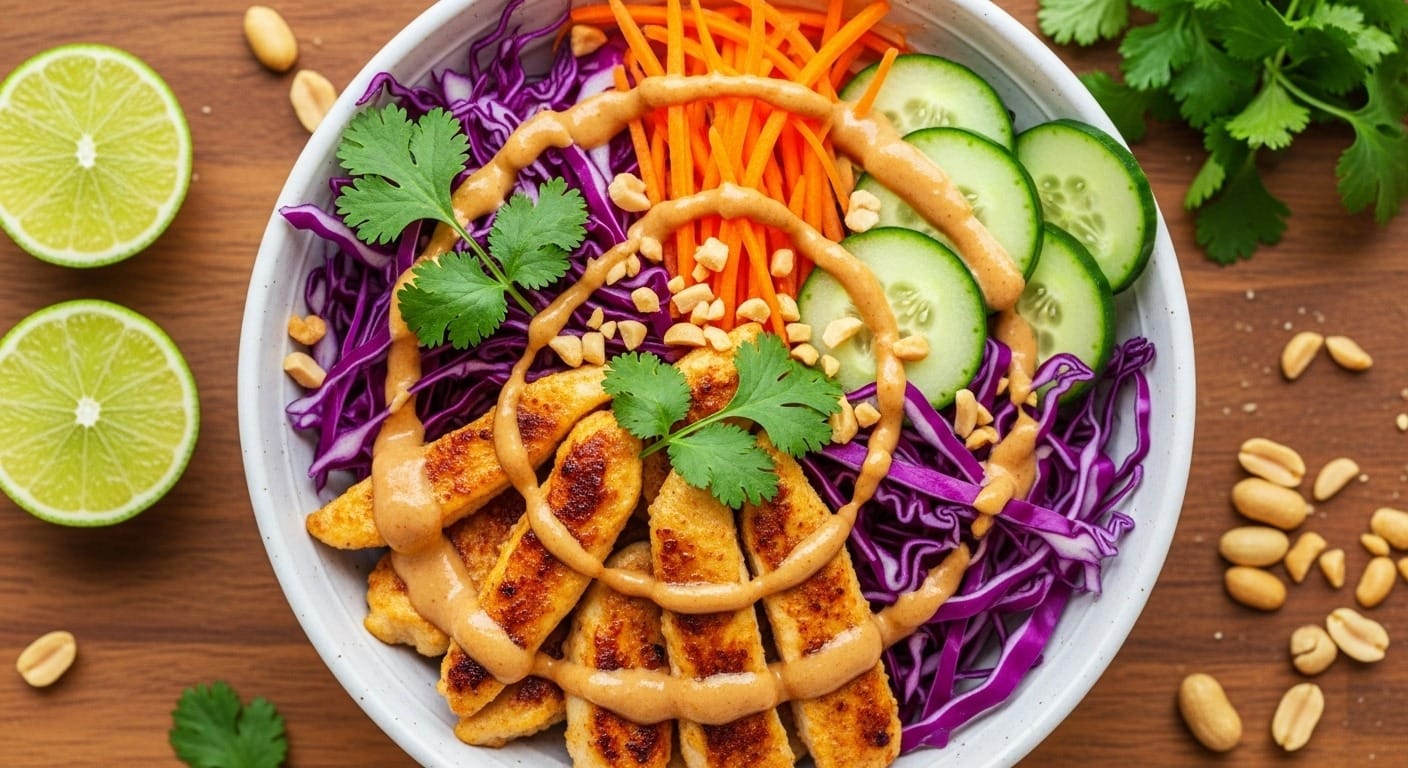
My neighbor knocked on my door last Tuesday with an empty container. “I need that peanut sauce recipe,” she said. “My kids ate three bowls each.” That’s the power of these Thai peanut chicken bowls – they turn picky eaters into clean-plate-club members and make weeknight dinners feel like a restaurant experience.
The magic happens in that creamy peanut sauce. It’s rich without being heavy, slightly sweet with a kick of heat, and it clings to every ingredient like it was meant to be there. Toss in some perfectly seasoned chicken, crunchy vegetables, and fluffy rice, and you’ve got a meal that checks every box: quick (just 30 minutes), healthy, and so flavorful you’ll forget takeout exists.
This recipe works beautifully as meal prep too. I make a big batch on Sunday, and by Wednesday, I’m still excited to open that container. If you’re looking for more quick and easy meals that deliver on flavor, this one needs to be in your rotation.
Tired of Deciding What to Cook Every Night?
I’ve put together a simple 7-day dinner meal plan using my most-loved recipes — complete with a grocery list and flexible swaps.
Just $2.99 – Instant Download
Get the Meal PlanWhy You’ll Love This Thai Peanut Chicken Bowl Recipe
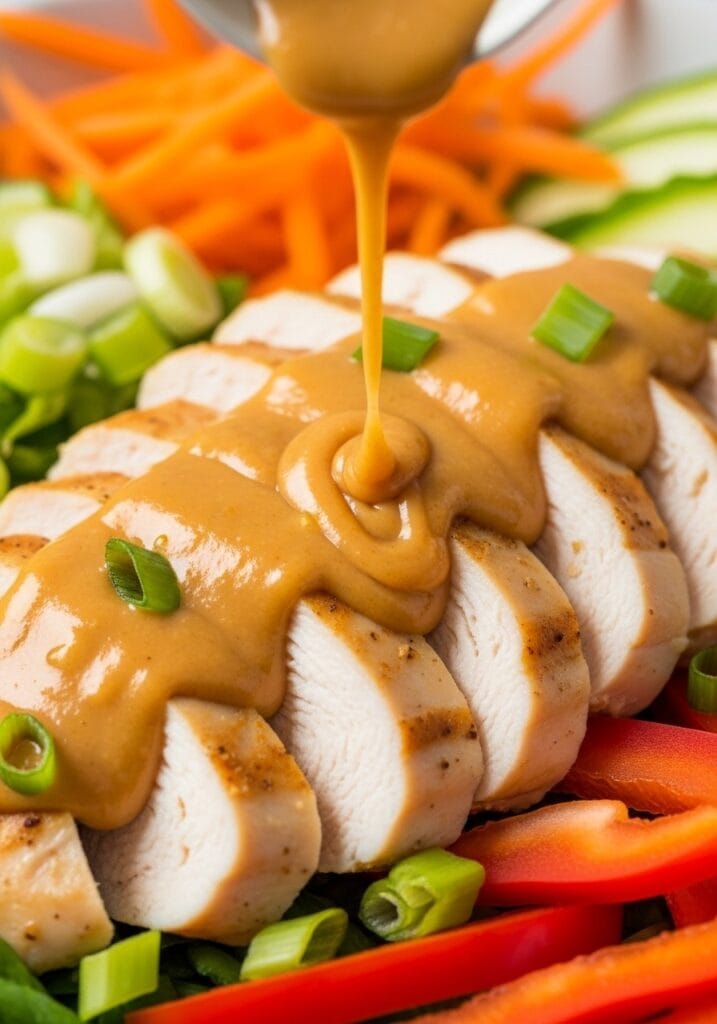
These bowls hit differently than your average dinner. The combination of textures – tender chicken, crisp vegetables, soft rice – keeps every bite interesting. The peanut sauce is naturally creamy from real peanut butter, which means you’re getting protein and healthy fats along with incredible flavor.
Time-wise, you’re looking at 30 minutes from start to finish. That includes cooking the chicken and chopping vegetables. If you use rotisserie chicken or slow cooker thai peanut chicken you’ve prepped ahead, you can cut that down to 15 minutes. It’s faster than waiting for delivery and costs a fraction of the price.
The flavor profile walks that perfect line between savory and slightly sweet, with a gentle heat that builds but never overwhelms. Kids love it (you can dial back the spice), and adults appreciate the complexity. I’ve served this at dinner parties and gotten requests for the recipe every single time.
For anyone following specific diets, this recipe is incredibly flexible. It’s naturally gluten-free if you use tamari instead of soy sauce. Want it lighter? Swap regular rice for cauliflower rice. The base recipe adapts to whatever you need without losing its soul.
Ingredients You’ll Need
For the Peanut Sauce:
- 1/2 cup (130g) creamy peanut butter (natural or regular, but not chunky)
- 3 tablespoons soy sauce or tamari
- 2 tablespoons rice vinegar
- 2 tablespoons honey or maple syrup
- 1 tablespoon sesame oil
- 2 teaspoons fresh grated ginger (about 1-inch piece)
- 2 cloves garlic, minced
- 1-2 teaspoons sriracha or chili garlic sauce (adjust to taste)
- 3-4 tablespoons warm water (to thin)
- Juice of 1 lime
Substitutions: If you don’t have sesame oil, use extra virgin olive oil. Agave nectar works instead of honey. Can’t find fresh ginger? Use 1/2 teaspoon ground ginger, though fresh tastes better.
For the Chicken:
- 1.5 lbs (680g) boneless, skinless chicken breasts or thighs
- 1 tablespoon olive oil
- 1 teaspoon garlic powder
- 1/2 teaspoon ground ginger
- 1/2 teaspoon salt
- 1/4 teaspoon black pepper
- 1/4 teaspoon paprika
Note: Chicken thighs stay juicier and have more flavor, but breasts work perfectly if that’s what you prefer or have on hand.
For the Bowls:
- 3 cups cooked jasmine rice or brown rice (about 1 cup uncooked)
- 2 cups shredded purple cabbage
- 1 cup shredded carrots (about 2 medium carrots)
- 1 cucumber, julienned or thinly sliced
- 1 red bell pepper, thinly sliced
- 1/4 cup fresh cilantro, chopped
- 1/4 cup green onions, sliced
- 1/4 cup crushed peanuts
- Lime wedges for serving
- Sesame seeds (optional, for garnish)
Vegetable Flexibility: Use whatever crunchy vegetables you have. Snap peas, edamame, or shredded lettuce all work beautifully. The key is having a mix of colors and textures.
Kitchen Equipment
- Large skillet or grill pan
- Small mixing bowl or jar with lid (for sauce)
- Whisk or fork
- Sharp knife and cutting board
- Measuring cups and spoons
- Rice cooker or medium pot (for rice)
Step-by-Step Instructions
Prepare the Rice
- Cook rice according to package instructions.
- For jasmine rice, use a 1:1.5 ratio (1 cup rice to 1.5 cups water).
- Bring water to a boil, add rice, reduce heat to low, and cover.
- Cook for 15-18 minutes until water is absorbed.
- Remove from heat and let sit covered for 5 minutes.
- Fluff with a fork before serving.
Tip: Cook rice first so it’s ready when everything else is done. You can also use leftover rice or microwave pouches to save time.
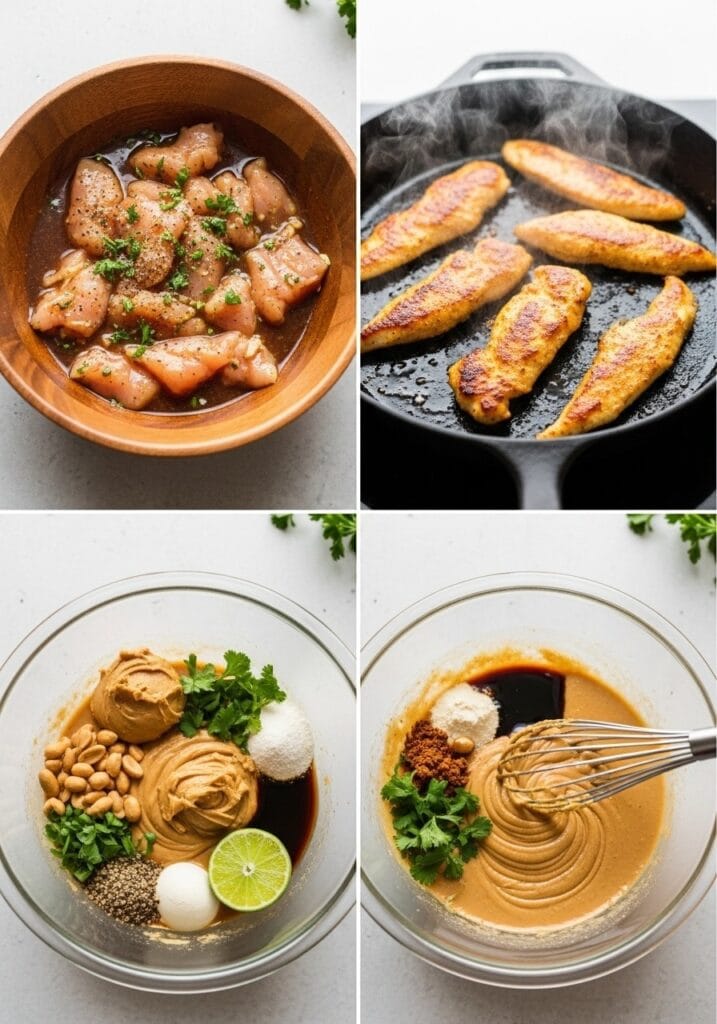
Make the Peanut Sauce
- Add peanut butter to a small bowl.
- Pour in soy sauce, rice vinegar, and honey.
- Add sesame oil, grated ginger, and minced garlic.
- Squeeze in lime juice and add sriracha.
- Whisk everything together until smooth.
- Add warm water, 1 tablespoon at a time, whisking after each addition.
- Continue until sauce reaches pourable consistency (should coat a spoon but drip easily).
- Taste and adjust – add more lime for brightness, honey for sweetness, or sriracha for heat.
Make-Ahead Note: This sauce keeps in the fridge for up to 5 days. It thickens when cold, so add a splash of water and whisk before using.
Cook the Chicken
- Pat chicken dry with paper towels (crucial for good searing).
- If using breasts, pound to even thickness (about 3/4 inch) for consistent cooking.
- Mix garlic powder, ground ginger, salt, pepper, and paprika in a small bowl.
- Rub spice mixture all over chicken pieces.
- Heat olive oil in a large skillet over medium-high heat.
- Wait until oil shimmers (about 1 minute).
- Add chicken without crowding the pan.
- Cook for 6-7 minutes without moving (this creates a golden crust).
- Flip and cook another 6-7 minutes until internal temperature reaches 165°F.
- Remove from heat and let rest for 5 minutes.
- Slice into strips against the grain.
Visual Cue: Chicken should be golden brown with slight char marks. If it’s smoking heavily, reduce heat to medium. If you’re a fan of weeknight dinners that come together quickly, this cooking method works for most proteins.
Prep the Vegetables
- While chicken cooks, thinly slice purple cabbage.
- Peel and julienne carrots (or use pre-shredded from a bag).
- Cut cucumber into matchsticks or thin half-moons.
- Slice bell pepper into thin strips.
- Chop cilantro leaves roughly.
- Slice green onions on the diagonal.
- Crush peanuts in a bag with a rolling pin or pulse in food processor.
Time-Saver: Buy pre-cut vegetables or a coleslaw mix. The recipe police won’t arrest you, and you’ll eat dinner 10 minutes sooner.
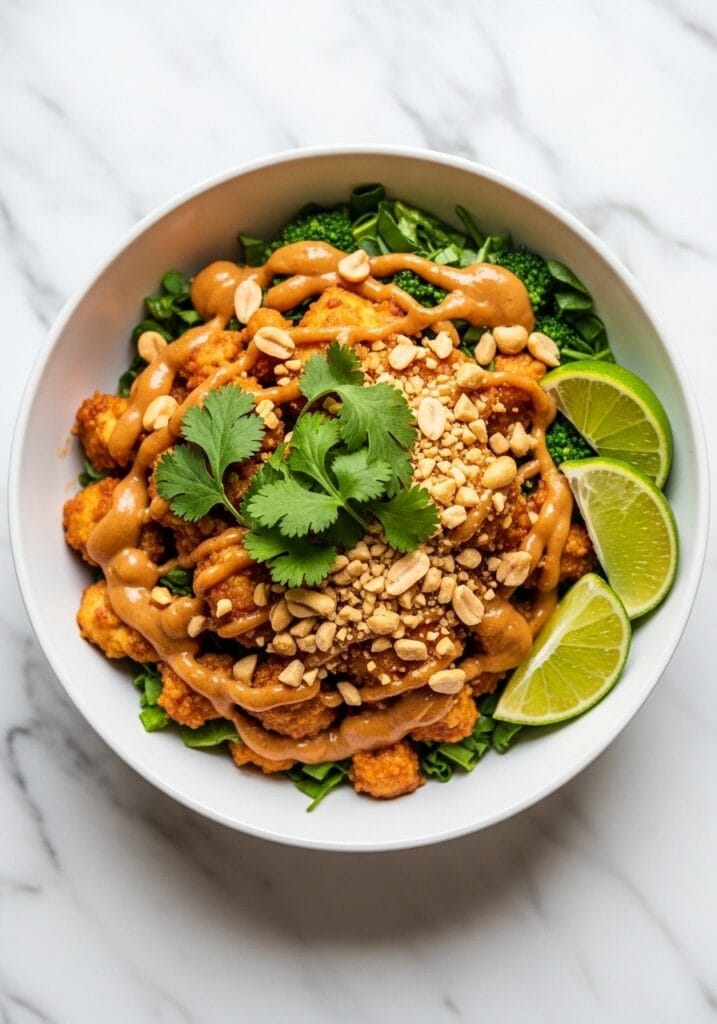
Assemble the Bowls
- Divide rice among 4 bowls (about 3/4 cup each).
- Arrange sliced chicken on one side of each bowl.
- Add purple cabbage in its own section.
- Place carrots next to cabbage.
- Add cucumber slices.
- Arrange bell pepper strips.
- Drizzle generous amount of peanut sauce over everything (about 3 tablespoons per bowl).
- Top with fresh cilantro and green onions.
- Sprinkle crushed peanuts over the top.
- Add sesame seeds if using.
- Serve with lime wedges on the side.
Presentation Tip: Keep ingredients in separate sections for that Instagram-worthy look, or toss everything together if you prefer. Both ways taste incredible.
Recipe Tips for Perfect Thai Peanut Chicken Bowls
Don’t overcook the chicken. Use a meat thermometer – 165°F is your target. Overcooked chicken turns rubbery and dry, which no amount of sauce can fix. If you’re nervous about timing, chicken thighs are more forgiving than breasts.
The sauce should be smooth and pourable. If it’s too thick, it won’t coat the ingredients properly. If it’s too thin, it’ll pool at the bottom of the bowl. Add water gradually until it looks like heavy cream. Similar to the consistency you’d want for teriyaki chicken rice bowls, it should cling without being goopy.
Prep your vegetables while the chicken rests. That 5-minute rest period isn’t negotiable – it lets the juices redistribute so every bite stays moist. Use that time to slice veggies or make extra sauce.
Taste the sauce before serving. Peanut butter brands vary in saltiness and sweetness. Start with the recipe amounts, then adjust. I usually add an extra squeeze of lime and a pinch more sriracha because I like it bright and spicy.
For crunchier vegetables, serve them cold. The temperature contrast between warm rice and chicken against cold, crisp vegetables makes the bowls more interesting. Some people prefer everything room temperature – experiment and see what you like.
Variations to Try
Slow Cooker Thai Peanut Chicken Version
Place chicken in slow cooker with half the peanut sauce. Cook on low for 4 hours or high for 2 hours. Shred with forks and mix with remaining sauce. This method infuses the chicken with flavor and makes the meat incredibly tender. Perfect for busy days when you want dinner ready when you walk in.
Thai Chicken Salad with Peanut Dressing
Skip the rice and serve everything over mixed greens or romaine lettuce. Add extra vegetables like edamame, snap peas, or water chestnuts. This version is lighter and works beautifully for lunch. The peanut sauce doubles as salad dressing, so you’re getting all that flavor with fewer carbs.
Spicy Version
Double the sriracha in the sauce and add red pepper flakes to the chicken seasoning. Slice fresh jalapeños over the top. I make it this way when it’s just adults eating – the heat level jumps considerably but stays balanced with the peanut butter’s richness.
Vegetarian Thai Peanut Bowls
Replace chicken with crispy tofu or roasted chickpeas. Press extra-firm tofu, cut into cubes, toss with cornstarch and spices, then pan-fry until golden. The peanut sauce works perfectly with plant-based proteins.
Meal Prep Version
Cook everything and store components separately. Keep sauce in a small container, chicken sliced in another, rice in a larger container, and vegetables in their own space. Assemble individual portions in meal prep containers. Everything stays fresh for 4 days. Add sauce just before eating so vegetables stay crisp.
Serving Suggestions
These bowls stand alone as a complete meal, but sometimes you want a little extra something on the side. Fresh spring rolls with peanut dipping sauce echo the flavors and add another textural element. Thai-style cucumber salad (sliced cucumbers with rice vinegar, sugar, and crushed red pepper) offers a cooling, acidic contrast.
For drinks, iced Thai tea brings authentic restaurant vibes. Sparkling water with lime stays refreshing without competing with the rich sauce. If you’re serving this for a dinner party, a light lager or wheat beer pairs beautifully – the carbonation cuts through the peanut butter’s richness.
If you’re feeding kids or mixing spice preferences, set up a bowl bar. Put all the components in separate dishes and let everyone build their own. Keep extra sauce on the side with varying heat levels (mild, medium, spicy). This approach eliminates dinner complaints and gets picky eaters excited about trying new vegetables. For more family-friendly options that work with this setup style, check out our collection of healthy meals.
Storage and Reheating
Store components separately for best results. Rice keeps in an airtight container for 4 days in the fridge. Chicken lasts 3-4 days stored separately. Keep vegetables in a container lined with paper towels to absorb excess moisture – this prevents sogginess. The sauce holds up for 5 days in a sealed jar.
To reheat, microwave rice and chicken separately until steaming hot (about 2 minutes on high). Don’t microwave the vegetables – serve them cold or at room temperature for better texture. Warm the sauce slightly if it’s been refrigerated, or just let it come to room temperature while other components heat.
Freezing works for the chicken and rice but not the fresh vegetables or sauce. The peanut butter separates when frozen and thawed, creating an unpleasant grainy texture. If you must freeze, do only the cooked chicken (up to 2 months) and make fresh sauce when ready to serve.
Nutritional Information
Per serving (1 bowl, recipe makes 4):
- Calories: 520
- Protein: 38g
- Carbohydrates: 52g
- Fat: 18g
- Fiber: 6g
- Sugar: 12g
- Sodium: 780mg
Notes: These numbers assume jasmine rice and chicken breast. Using brown rice adds fiber. Chicken thighs increase fat content slightly but also boost flavor. Going light on the rice and heavy on vegetables drops calories while increasing nutrients. The sauce contributes most of the fat, which comes from peanut butter – the good kind of fat with protein, fiber, and vitamins.
Frequently Asked Questions
Can I use chunky peanut butter? Not for the sauce – it won’t blend smoothly and you’ll get peanut chunks that don’t mix well. Use chunky peanuts for garnish instead. Creamy peanut butter creates that silky texture that makes the sauce so addictive.
What if I don’t have rice vinegar? Apple cider vinegar or white wine vinegar work as substitutes. Start with 1.5 tablespoons instead of 2 because they’re slightly more acidic. Regular white vinegar is too harsh, so avoid that if possible.
Can I make this dairy-free? It already is! The sauce contains no dairy. Just double-check your peanut butter ingredients – some brands add milk powder. Most natural peanut butter is just peanuts and salt.
How do I keep the chicken from drying out? Don’t skip the resting period after cooking. Use a meat thermometer instead of guessing. Chicken thighs naturally stay moister than breasts. If using breasts, pounding them to even thickness prevents overcooking.
Can I grill the chicken instead? Absolutely. Preheat grill to medium-high (about 400°F). Oil the grates and grill chicken for 6-7 minutes per side, creating nice char marks. The smoky flavor from grilling adds another layer to the dish. Similar to how we prepare sheet pan salmon and veggies, the char adds complexity.
What’s the best way to shred chicken for this? Use two forks to pull the meat apart, working in the same direction as the muscle fibers. For a faster method, put warm chicken in a stand mixer with the paddle attachment and run on low for 30 seconds. Works like magic.
Why This Recipe Works
The sauce is the star, but it’s scientifically designed to be balanced. Peanut butter provides richness and body. Soy sauce adds umami and salt. Rice vinegar cuts through the fat with acidity. Honey rounds everything out with sweetness. Ginger and garlic bring aromatic complexity. Lime juice brightens the whole thing. Each ingredient has a specific job, and together they create something much greater than the sum of parts.
The vegetables aren’t just filler – they provide textural contrast that keeps your palate interested. Cabbage offers crunch and a slight bitterness that balances the sweet sauce. Carrots add earthy sweetness. Cucumber brings cooling freshness. Bell peppers contribute a mild sweetness and satisfying snap. Every bite delivers multiple textures and temperatures.
The chicken serves as a protein-rich base that soaks up the sauce without overpowering other flavors. By seasoning it simply with pantry spices, you let the peanut sauce shine while ensuring the meat isn’t bland on its own. This layering of flavors – seasoned protein, bold sauce, fresh vegetables – creates depth that simple chicken-and-rice dishes lack.
Final Thoughts
These Thai peanut chicken bowls rescued my weeknight dinner routine. Before I found this recipe, I was stuck in a rotation of the same five boring meals. Now I look forward to Tuesdays (my designated Thai bowl night) all week. My kids request it constantly, which means they’re eating vegetables without complaint – a miracle I don’t question.
The recipe scales beautifully whether you’re cooking for one or feeding a crowd. Double the sauce and freeze half for next time. Prep the chicken on Sunday and you’ve got four lunches sorted. Make it spicy for yourself and mild for kids by separating the sauce before adding heat. However you adapt it, the core recipe delivers every time.
Start with this basic version, then make it your own. Maybe you’ll add mango for sweetness or swap in shrimp for variety. Perhaps you’ll discover that adding extra lime juice is your signature touch. That’s the beauty of a solid foundational recipe – it gives you room to experiment while guaranteeing something delicious lands on the table. If you’re exploring more Asian-inspired dishes, our quick Thai noodle stir fry follows similar principles with different results.
Give these bowls a try this week. Make extra sauce. You’ll thank me later.
Recipe Summary
- Prep Time: 15 minutes
- Cook Time: 15 minutes
- Total Time: 30 minutes
- Servings: 4 bowls
- Difficulty Level: Easy
Main Equipment: Large skillet, mixing bowl, rice cooker or pot
Still wondering what to cook tomorrow? Take the stress out of dinner with my simple 7-day meal plan.
Get the 7-Day Meal Plan for $2.99