

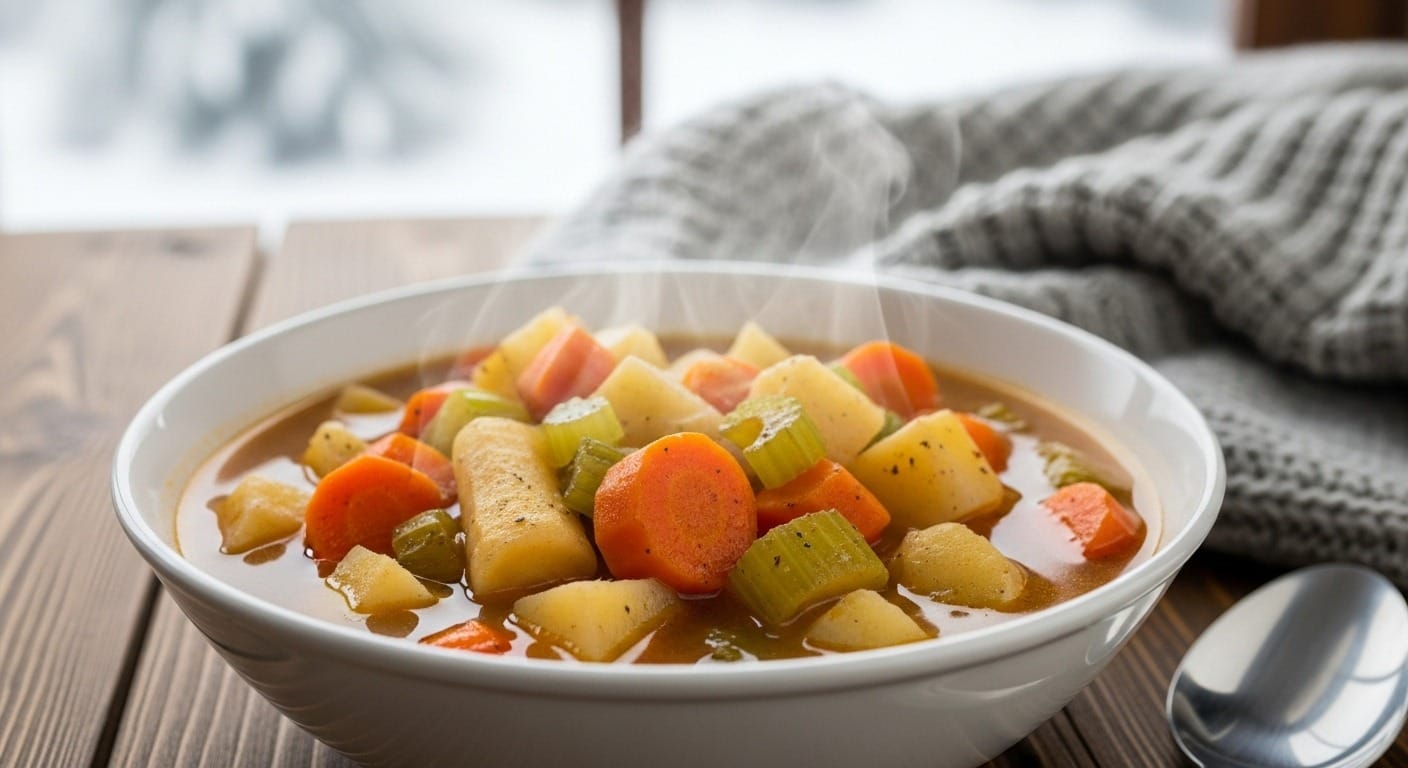
My grandmother used to say that a good stew could fix just about anything – a bad day, a cold evening, or even a grumpy mood. I think about that every time I make this winter vegetable stew. There’s something deeply satisfying about chopping vegetables, letting them simmer slowly, and watching them transform into something warm and comforting.
This isn’t just another vegetable stew recipe. It’s the kind of meal that makes your kitchen smell like home, fills you up without weighing you down, and tastes even better the next day. You’ll spend about 15 minutes prepping and then let the stove do the rest of the work. Perfect for busy weeknights or lazy Sunday afternoons when you want something nourishing without the fuss.
The best part? You probably have most of these ingredients already. Root vegetables, some herbs, a good broth – that’s really all you need. It’s hearty enough to satisfy even the biggest appetites, yet light enough that you won’t feel sluggish afterward. Plus, it’s naturally vegetarian, though I’ll show you how to add meat if that’s your thing.
Tired of Deciding What to Cook Every Night?
I’ve put together a simple 7-day dinner meal plan using my most-loved recipes — complete with a grocery list and flexible swaps.
Just $2.99 – Instant Download
Get the Meal PlanWhy This Winter Vegetable Stew Works
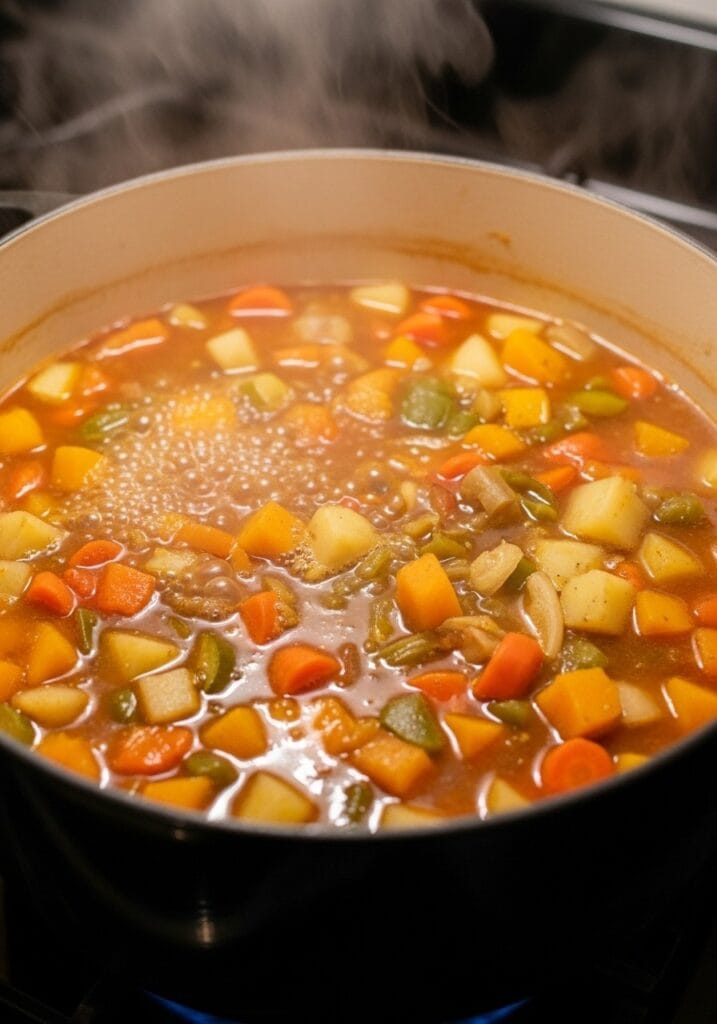
I’ve tested this recipe more times than I can count, tweaking it season after season. What makes it special is the balance. The vegetables stay tender but not mushy. The broth is rich and flavorful without being too heavy. And the herbs? They add just enough depth without overpowering everything else.
Winter vegetables like carrots, parsnips, and potatoes hold up beautifully during the long simmer time. They release their natural sweetness into the broth, creating layers of flavor you just can’t get from summer vegetables. If you’re looking for more hearty meal ideas, this stew fits right into that rotation.
The cooking method is forgiving too. Unlike some recipes that demand precise timing, this one gives you wiggle room. Need to let it simmer an extra 10 minutes? No problem. Want to prep everything in the morning and cook it later? Absolutely. It’s the kind of flexible recipe that works with your schedule, not against it.
What You’ll Need
Serving Size: 6-8 servings
Prep Time: 15 minutes
Cook Time: 45 minutes
Total Time: 1 hour
Difficulty Level: Easy
Equipment Needed: Large Dutch oven or heavy-bottomed pot, cutting board, sharp knife, wooden spoon
For the Stew Base:
- 2 tablespoons olive oil
- 1 large yellow onion, diced (about 200g)
- 3 garlic cloves, minced
- 2 celery stalks, chopped (about 150g)
- 3 medium carrots, peeled and cut into 1-inch chunks (about 250g)
- 2 medium parsnips, peeled and cut into 1-inch chunks (about 200g)
- 3 medium Yukon gold potatoes, cut into 1-inch cubes (about 400g)
- 1 small turnip, peeled and cubed (about 150g) – substitute with extra potato if unavailable
- 6 cups vegetable broth (1.4 liters)
- 1 can (400g) diced tomatoes with juices
- 2 bay leaves
- 1 teaspoon dried thyme (or 3-4 fresh sprigs)
- 1 teaspoon dried rosemary
- 1/2 teaspoon black pepper
- 1 teaspoon salt (adjust to taste)
- 2 cups chopped green cabbage (about 150g)
- 1 cup frozen or fresh green beans (about 120g)
For Finishing:
- 2 tablespoons fresh parsley, chopped
- 1 tablespoon lemon juice (optional, for brightness)
- Salt and pepper to taste
Substitution Notes:
No parsnips? Use extra carrots or sweet potato. Can’t find turnip? Skip it or add rutabaga instead. Want to make it heartier? Add a can of white beans or chickpeas in the last 10 minutes. For a protein-packed version, stir in cooked lentils or serve with crusty bread.
Step-By-Step Instructions
Step 1: Heat the olive oil in a large Dutch oven over medium heat for about 1 minute until shimmering.
Step 2: Add the diced onion and cook for 4-5 minutes, stirring occasionally, until it turns translucent and slightly golden at the edges.
Step 3: Stir in the minced garlic and cook for 30 seconds until fragrant. Don’t let it brown or it’ll taste bitter.
Step 4: Add the celery and cook for 3 minutes, stirring every minute or so. The celery should start to soften but still have some crunch.
Step 5: Toss in the carrots, parsnips, potatoes, and turnip. Stir everything together and cook for 5 minutes. You want the vegetables to start picking up some color from the bottom of the pot.
Step 6: Pour in the vegetable broth and diced tomatoes with their juices. Use your wooden spoon to scrape up any browned bits stuck to the bottom – that’s flavor.
Step 7: Add the bay leaves, thyme, rosemary, black pepper, and salt. Stir well to combine everything.
Step 8: Bring the mixture to a boil over medium-high heat. This should take about 5-7 minutes. You’ll see bubbles breaking the surface consistently.
Step 9: Once boiling, reduce the heat to medium-low and cover the pot with a lid slightly ajar. Let it simmer for 25 minutes. The vegetables should be fork-tender but not falling apart.
Step 10: Add the chopped cabbage and green beans. Stir them in and continue simmering uncovered for another 10 minutes. The cabbage will wilt and the beans will turn bright green.
Step 11: Remove the bay leaves and thyme sprigs if you used fresh ones. Taste the broth and adjust the seasoning with more salt and pepper if needed.
Step 12: Stir in the fresh parsley and lemon juice if using. The lemon adds a nice brightness that cuts through the richness.
Step 13: Let the stew rest off the heat for 5 minutes before serving. This helps the flavors settle and makes it easier to serve without burning your tongue.
Tips For The Best Winter Vegetable Stew

Cut your vegetables uniformly. I know it sounds basic, but when everything’s roughly the same size, it all cooks evenly. Nothing worse than mushy carrots and crunchy potatoes in the same bowl.
Don’t skip the step where you cook the onions first. Those few minutes of caramelization add sweetness and depth that you just can’t replicate later. Same goes for scraping the bottom of the pot – those browned bits are pure flavor.
Use a good quality broth. Since the broth is such a big part of this recipe, it really matters. I prefer low-sodium so I can control the salt level myself. If you’re using regular broth, go easy on the added salt at first.
Want to meal prep? This stew freezes beautifully for up to 3 months. Just let it cool completely, portion it into containers, and freeze. Thaw overnight in the fridge and reheat gently on the stove. You might need to add a splash of water or broth when reheating since the vegetables will absorb liquid as they sit.
For a creamier texture, mash a few of the potato chunks against the side of the pot during the last few minutes of cooking. They’ll break down and naturally thicken the broth without adding any cream or flour.
Making It Your Own
Sometimes I’ll add a splash of balsamic vinegar at the end instead of lemon juice. It adds a subtle sweetness and acidity that’s really nice with root vegetables. Or try a teaspoon of Dijon mustard for a gentle kick.
If you want to turn this into a vegetable beef stew, brown 1 pound of cubed beef chuck in the pot before you start with the onions. Remove it, cook the vegetables as directed, then add the beef back in with the broth. You’ll need to simmer it longer – about 1.5 hours total – until the beef is tender.
For a lighter version, skip the potatoes and serve the stew over cauliflower rice. Or go the opposite direction and add cooked pasta shells in the last few minutes for something more filling. Similar to how I approach quick easy meals, this recipe adapts to whatever you need it to be.
Fresh herbs make a difference. If you have fresh thyme or rosemary, use them. Just remember that fresh herbs are less concentrated than dried, so you’ll need about three times as much. Add the woody stems during cooking and the tender leaves at the end.
Serving Suggestions
I usually serve this with thick slices of crusty bread for soaking up the broth. Sourdough works great, but honestly any good bread will do. Sometimes I’ll toast the bread and rub it with a cut garlic clove for extra flavor.
A simple green salad on the side balances the heartiness of the stew nicely. Nothing fancy – just mixed greens with a lemon vinaigrette. Or if you want something more substantial, a Mediterranean chickpea salad pairs really well.
For toppings, keep it simple. A sprinkle of grated Parmesan cheese, a dollop of sour cream, or some extra fresh herbs all work. I’m not big on fussy toppings for something this rustic, but a drizzle of good olive oil never hurts.
Leftovers are genuinely better the next day. The vegetables soak up more of the broth, and all the flavors meld together overnight. I’ve been known to eat this cold straight from the fridge, though I know that’s probably weird.
Storage and Reheating
Store the cooled stew in an airtight container in the fridge for up to 5 days. The vegetables will continue to absorb liquid, so when you reheat, add a bit of water or broth to loosen it up.
For freezing, portion into individual servings before freezing. It makes weeknight dinners so much easier when you can just grab one serving instead of defrosting the whole batch. Freezer-safe containers or heavy-duty freezer bags both work fine.
Reheat on the stovetop over medium-low heat, stirring occasionally. Microwave works too, though I find the vegetables heat more evenly on the stove. Either way, heat until it’s steaming throughout, which usually takes about 5-7 minutes depending on portion size.
Why Root Vegetables Are Perfect For Stew

There’s a reason people have been making stews with root vegetables for centuries. They’re available when other produce isn’t, they store well, and they hold their shape during long cooking times. Plus, they’re packed with nutrients and natural sweetness.
Carrots add color and a subtle sweetness. Parsnips bring an earthy, slightly nutty flavor that’s different from carrots but just as good. Potatoes provide substance and help thicken the broth naturally. Turnips add a gentle peppery note that keeps things interesting.
Each vegetable contributes something different to the final dish. That’s why I don’t recommend swapping too many at once – you might end up with something that tastes flat or one-dimensional. Though honestly, this recipe is forgiving enough that you can experiment and probably still end up with something delicious.
Common Questions About Vegetable Stew Recipe
Can I use frozen vegetables? Fresh is better here since frozen vegetables can get mushy during the long simmer time. If you must use frozen, add them in the last 10 minutes like you would the cabbage and green beans.
How do I make this thicker? Mash some of the potatoes against the side of the pot, or add a slurry made from 2 tablespoons cornstarch mixed with 2 tablespoons cold water. Pour it in during the last 5 minutes and let it simmer until thickened.
Can I make this in a slow cooker? Yes, but you’ll lose some of the caramelized flavor from sautéing. If you do, sauté the onions, garlic, and celery on the stovetop first, then transfer everything to the slow cooker. Cook on low for 6-7 hours or high for 3-4 hours.
Why did my vegetables get mushy? Probably overcooked or cut too small. Bigger chunks hold up better during the 35-minute simmer time. Also, make sure your heat isn’t too high – a gentle simmer is what you want, not a rolling boil.
Final Thoughts
This winter vegetable stew has earned its place in my regular rotation. It’s one of those recipes I turn to when I want something comforting but don’t want to spend hours in the kitchen. The kind of meal that makes you feel good while you’re making it, better while you’re eating it, and grateful when you find leftovers in the fridge two days later.
What I love most is how it changes slightly every time I make it, depending on what vegetables look good at the store or what I have sitting in the crisper drawer. Sometimes there’s extra carrot, sometimes more potato. It always works out.
Whether you’re new to making stews or you’ve been doing this for years, I think you’ll find this recipe hits that sweet spot between simple and satisfying. Give it a try on the next cold evening when you need something warm and nourishing. And if you do, I’d love to know what you think – maybe you’ll discover your own perfect variation.
Stay warm, eat well, and enjoy every spoonful.
Still wondering what to cook tomorrow? Take the stress out of dinner with my simple 7-day meal plan.
Get the 7-Day Meal Plan for $2.99