
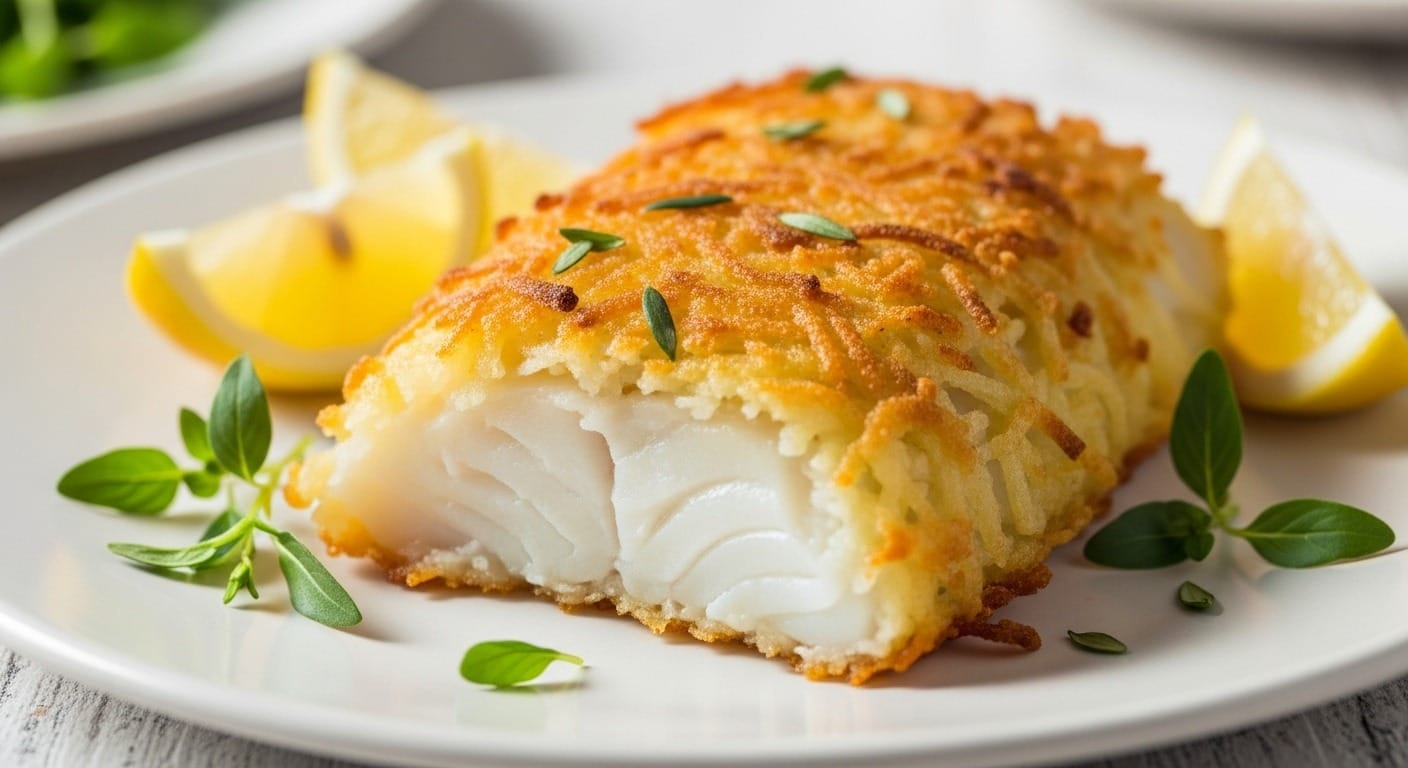
My grandmother used to say that the secret to perfect fish isn’t fancy techniques – it’s the coating. She’d shred potatoes by hand, press them gently onto the fillets, and pan-fry them until they turned into something magical. That memory came rushing back when I made potato crusted cod filets for the first time in my own kitchen. The satisfying crunch, the way the potato gets golden and crispy while the fish stays moist – it’s comfort food that looks elegant enough for guests.
This potato crust fish recipe is surprisingly simple. You’ll have dinner on the table in 30 minutes, and the ingredients are probably already in your kitchen. The cod stays tender and flaky while the shredded potato creates a crispy, golden shell that’s way better than breadcrumbs. It’s become one of my go-to weeknight dinners when I want something special without the fuss.
Why This Cod Filet Recipe Works
The potato acts as both breading and seasoning. As it cooks, the starch crisps up while keeping moisture locked inside the fish. Unlike traditional breaded fish that can turn soggy, the potato coating stays crispy even after resting for a few minutes. The key is removing excess moisture from the potatoes and using enough butter in the pan.
Tired of Deciding What to Cook Every Night?
I’ve put together a simple 7-day dinner meal plan using my most-loved recipes — complete with a grocery list and flexible swaps.
Just $2.99 – Instant Download
Get the Meal Plan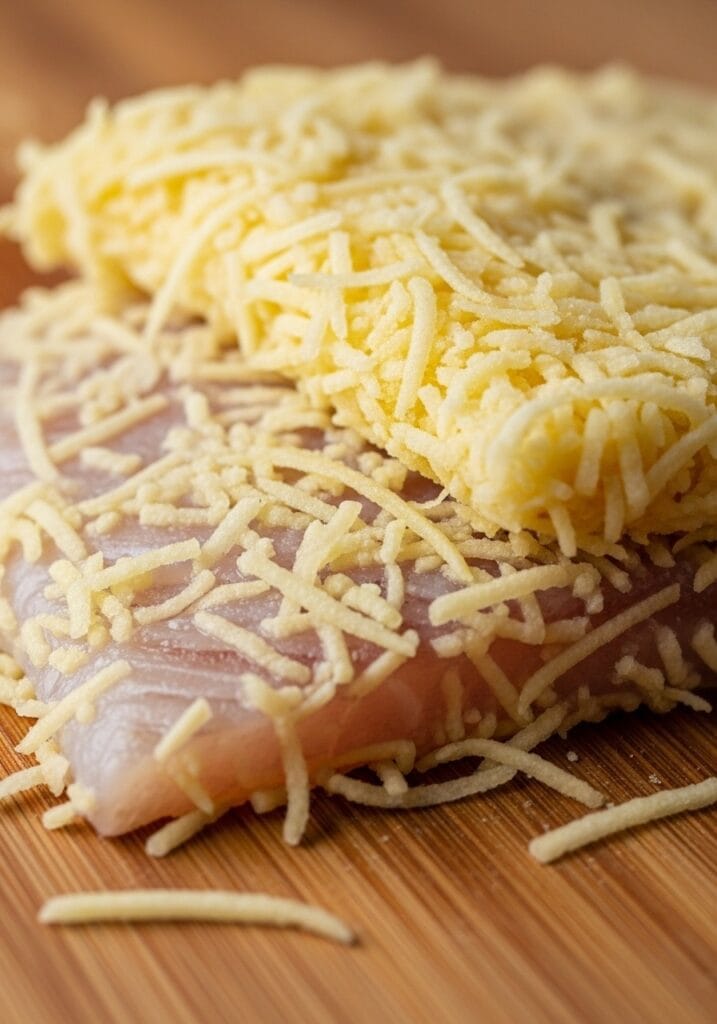
I love that this works with frozen cod too. Just thaw it completely and pat it very dry before coating. The recipe is flexible – sometimes I add a pinch of smoked paprika to the potato mixture, other times I keep it simple with just salt and pepper.
Ingredients You’ll Need
For the Cod Filets:
- 4 cod fillets (about 150-180g each, 1-inch thick)
- 2 large russet potatoes (about 400g total)
- 3 tablespoons butter (45g), divided
- 2 tablespoons olive oil (30ml)
- 1 teaspoon salt (6g)
- 1/2 teaspoon black pepper (1g)
- 1/2 teaspoon garlic powder (1.5g)
- Fresh lemon wedges for serving
For Garnish (Optional):
- Fresh parsley, chopped
- Extra lemon wedges
- Tartar sauce or aioli
Substitutions: Can’t find russet potatoes? Yukon gold works too, though they have slightly less starch. For a different flavor, swap garlic powder with onion powder or add 1/4 teaspoon of paprika to the potato mixture.
Equipment Needed
- Box grater or food processor with shredding attachment
- Clean kitchen towel or cheesecloth
- Large non-stick skillet or cast-iron pan
- Fish spatula or wide turner
- Paper towels
Step-by-Step Instructions

1. Prepare the Potatoes
Peel the potatoes and shred them using the large holes of a box grater. Place the shredded potato in the center of a clean kitchen towel. Gather the edges and twist tightly to squeeze out as much liquid as possible. This step is crucial – the drier the potato, the crispier your crust will be. You should be able to squeeze out about 3-4 tablespoons of liquid.
2. Season the Potato Mixture
Transfer the dried potato shreds to a bowl. Add 1/2 teaspoon salt, black pepper, and garlic powder. Toss gently with your hands to distribute the seasonings evenly. The potato should look fluffy, not clumped together.
3. Prepare the Cod
Pat the cod fillets completely dry with paper towels. Any surface moisture will prevent the potato from sticking. Season both sides lightly with the remaining 1/2 teaspoon salt.
4. Coat the Fillets
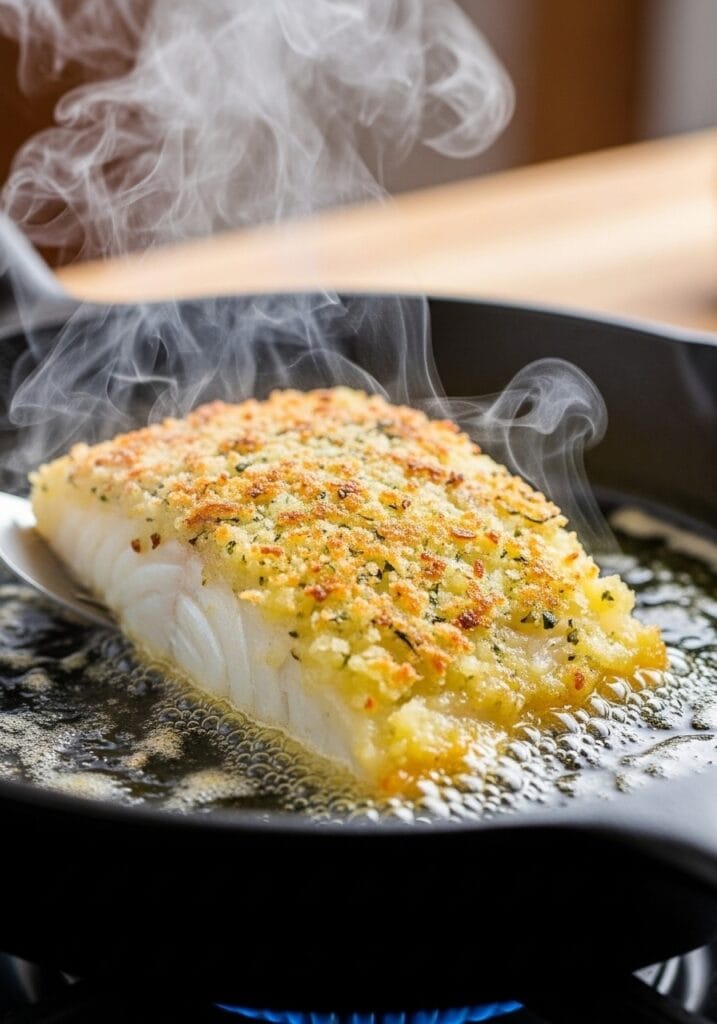
Take a handful of seasoned potato shreds and press them firmly onto one side of each cod fillet. The layer should be about 1/4-inch thick. Press down gently but firmly so the potato adheres. Flip and repeat on the other side. Some potato will fall off during cooking – that’s normal.
5. Heat the Pan
Place your skillet over medium-high heat. Add 2 tablespoons of butter and the olive oil. Let it heat until the butter melts and just begins to foam, about 1-2 minutes. The pan should be hot but not smoking.
6. Cook First Side
Carefully place the coated fillets in the pan, potato-side down. Don’t move them. Let them cook undisturbed for 5-6 minutes. You’ll see the edges start to turn golden. The potato needs time to form a crust before flipping.
7. Flip and Finish
Add the remaining 1 tablespoon of butter to the pan, letting it slide under the fillets. Using a fish spatula, carefully flip each fillet. Cook for another 4-5 minutes until the second side is golden and the fish flakes easily with a fork. The internal temperature should reach 145°F (63°C).
8. Rest and Serve
Transfer the fillets to a plate lined with paper towels for 1 minute to absorb excess oil. Serve immediately with fresh lemon wedges and chopped parsley.
Recipe Information
Serving Size: 4 fillets Prep Time: 15 minutes Cook Time: 12 minutes Total Time: 27 minutes Difficulty Level: Easy Cuisine: American Diet: Gluten-free, Low-carb
Cooking Tips for Perfect Results
The thickness of your cod matters. Fillets that are too thin will overcook before the potato crisps. Aim for 1-inch thick pieces. If your fillets vary in size, adjust cooking time accordingly – thicker pieces need an extra minute or two per side.
Don’t overcrowd the pan. If your skillet isn’t large enough for all four fillets with space between them, cook in two batches. Crowding creates steam, which makes the potato coating soggy instead of crispy.
Watch your heat carefully. Medium-high works for most stoves, but if the potato starts browning too quickly (under 3 minutes), reduce to medium. You want golden brown, not burnt.
What to Serve With Potato Crusted Cod Filets
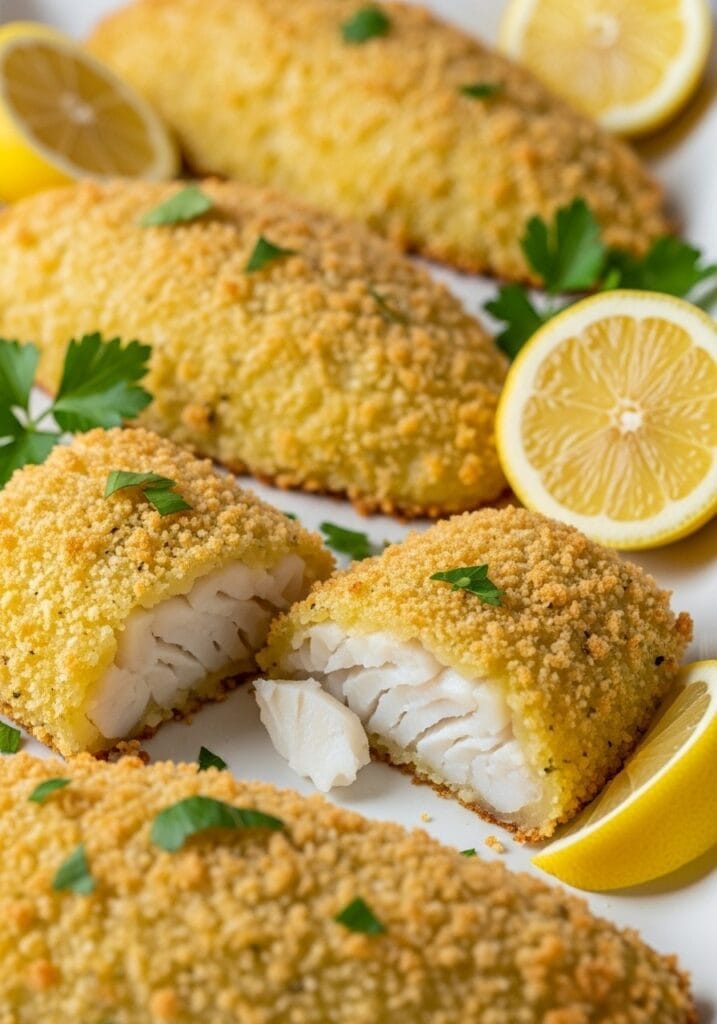
This easy seafood dinner pairs beautifully with simple sides that don’t compete with the crispy potato crust. I usually serve it with roasted vegetables or a light salad.
Roasted asparagus with garlic is my favorite pairing – just toss them with olive oil and roast at 400°F while you cook the fish. A Mediterranean chickpea salad adds freshness and protein if you want a heartier meal.
For a complete dinner, add some steamed green beans or sautéed spinach. The mild flavor of cod works well with bright, acidic sides. Sometimes I’ll make a quick cucumber salad with dill and lemon juice – it takes 5 minutes and tastes amazing with the crispy fish.
Storage and Reheating
Leftover potato crusted cod filets keep in the refrigerator for up to 2 days in an airtight container. I won’t lie – the potato crust loses some crispiness when stored, but it’s still tasty.
To reheat, skip the microwave. It’ll make everything soggy. Instead, place the fillets on a baking sheet and reheat in a 375°F oven for 8-10 minutes. The crust won’t be quite as crispy as fresh, but it’s much better than microwaving.
You can also reheat in an air fryer at 350°F for 5-6 minutes. This method actually brings back some of the original crispiness.
Common Mistakes to Avoid
Not drying the potatoes enough is the biggest issue I see. If you skip the squeezing step or don’t squeeze hard enough, you’ll end up with a pale, soft coating instead of a crispy crust. Your arms might get tired, but it’s worth it.
Using the wrong potato variety matters more than you’d think. Waxy potatoes like red potatoes have less starch and won’t crisp up properly. Stick with russet or Yukon gold.
Flipping too early breaks the crust. I know it’s tempting to check, but resist for at least 5 minutes. The potato needs time to form a solid golden layer before it can handle being moved.
Variations to Try
Once you’ve mastered the basic recipe, there are fun ways to change it up. Add 1/2 teaspoon of Old Bay seasoning to the potato mixture for a coastal Maryland twist. Or mix in 1/4 cup of grated Parmesan cheese with the potato for extra flavor and crispiness.
For a spicy version, add 1/4 teaspoon of cayenne pepper and some smoked paprika to the potato coating. It gives a nice kick without overwhelming the delicate fish.
You can use this same technique with other white fish too. Tilapia, halibut, or haddock all work beautifully. Just adjust cooking time based on thickness – tilapia fillets are usually thinner and cook faster.
Why This Recipe Is Perfect for Busy Nights
I make this when I want something that feels fancy but doesn’t require complicated steps or hard-to-find ingredients. The entire recipe uses one pan and takes less than 30 minutes from start to finish. That’s faster than most quick and easy meals that involve fish.
The prep work is minimal – just shredding potatoes and patting fish dry. There’s no marinating time, no complicated sauce to make, and cleanup is simple. One pan, one bowl, one grater. That’s it.
Kids tend to love it too. The potato crust makes the fish less intimidating for picky eaters, and the crispy texture is fun to eat. My nephew, who claims to hate fish, asks for this specifically.
Frequently Asked Questions
Can I bake this instead of pan-frying? Yes, but you’ll sacrifice some crispiness. Preheat your oven to 425°F and bake on a greased sheet pan for 15-18 minutes, flipping halfway through. Brush the tops with melted butter before baking.
Do I need to use fresh cod? Fresh is ideal, but thawed frozen cod works fine. Just make sure it’s completely thawed and very dry before coating. Frozen fillets often release more liquid, so extra patting is important.
What if I don’t have a grater? You can use a food processor with a shredding disk. Some grocery stores even sell pre-shredded hash browns in the refrigerated section – just make sure to squeeze out the liquid very well since they can be wetter than freshly shredded potatoes.
Why is my potato coating falling off? Usually this means the fish was too wet or the potatoes weren’t pressed firmly enough. Make sure to pat the cod completely dry and really press that potato layer into the fish. Also, don’t flip too early – the crust needs time to set.
Making It a Complete Meal
Turn this into a full dinner with minimal extra effort. While the fish cooks, you can quickly put together a simple side. I often start some sheet pan vegetables in the oven before I begin the fish – by the time the cod is ready, everything’s done together.
A light soup makes a nice starter too. Something simple like tomato bisque or a clear vegetable broth doesn’t compete with the fish. For heartier appetites, add some roasted baby potatoes or a small serving of rice pilaf.
Don’t forget about sauce options. While the fish is delicious on its own, a dollop of tartar sauce, lemon aioli, or even just melted butter with fresh herbs takes it to another level. I keep it simple most nights, but when guests come over, I’ll make a quick dill yogurt sauce that everyone loves.
The Secret to Restaurant-Quality Results
Professional chefs use a few tricks that make a big difference. First, they let the butter get hot but not brown before adding the fish. That initial sizzle when the fish hits the pan is what starts the crisping process.
Second, they don’t flip more than once. Every time you move the fish, you risk breaking that beautiful crust. Put it in the pan, leave it alone, flip once, done.
Third, they serve immediately. Potato crusted fish is at its absolute best right out of the pan. The crust is crispiest, the fish is hottest, and the texture contrast is perfect. If you need to hold it for a few minutes, keep it in a warm oven (200°F) uncovered so the crust doesn’t steam and soften.
Why Cod Works So Well
Cod has a mild, slightly sweet flavor that doesn’t compete with the potato crust. Its firm texture holds up well during cooking and doesn’t fall apart when you flip it. The thick fillets provide enough surface area for a generous potato coating.
The flaky texture of cooked cod creates a nice contrast with the crispy exterior. When you cut into it, the fish should separate into large, moist flakes. That’s how you know it’s cooked perfectly – not rubbery, not dry, just tender and flaky.
If you enjoy healthy meals that don’t taste like diet food, cod is excellent. It’s high in protein, low in fat, and rich in B vitamins. The potato adds some carbs, but this is still a relatively light dinner compared to breaded and deep-fried options.
This potato crusted cod filets recipe has earned a permanent spot in my weekly rotation. It’s reliable, delicious, and impressive enough for company but simple enough for a Tuesday night. The crispy potato crust turns ordinary cod into something special, and isn’t that what good cooking is all about?
Still wondering what to cook tomorrow? Take the stress out of dinner with my simple 7-day meal plan.
Get the 7-Day Meal Plan for $2.99